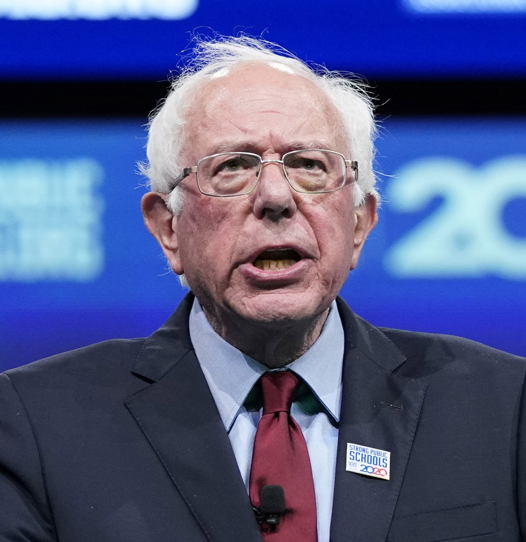
Says high-speed rail would have created 60,000 jobs.


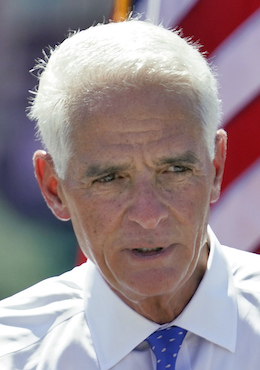
Charlie Crist: Rick Scott rejected high-speed rail that would have created 60,000 jobs in Florida
In an exchange during Florida’s final gubernatorial debate that was emblematic of the race, Gov. Rick Scott and former Gov. Charlie Crist cast accusations over who was to blame for the nasty campaign.
Scott said his Democratic challenger was a divider and a mudslinger. Crist shot back that the Republican incumbent was unwilling to work with a Democratic president to the detriment of the state.
His proof? Scott’s rejection of federal high-speed rail money in 2011.
“I reached across the aisle when I was your governor. I worked with the president to get the recovery funds. This governor, Gov. Rick Scott, won’t work with the president, even to get high-speed rail, which is so important to central Florida and eventually the whole state. It would’ve been $2.4 billion to Florida, some say 60,000 jobs.” He later repeated the number saying the state was “offered” 60,000 jobs.
Scott refused $2.4 billion in federal funds for a proposed Tampa-to-Orlando high-speed line when he first came into office in 2011, joining several other Republican governors in rejecting federal stimulus money and squashing President Barack Obama’s vision for a modernized light-rail network.
But would the project have created 60,000 jobs?
The Crist campaign didn’t get back to us, but it’s not the first time someone claimed the rail line would have created 60,000 jobs. The number stood out to us in February 2011 when Rep. Corrine Brown, D-Jacksonville, said it on the House floor because it was the largest estimate we had heard.
It was, and still is, a misleading figure.
By the Florida Department of Transportation’s own estimates, the project would have created 49,990 jobs — 23,600 direct jobs, like construction and design, and 26,300 indirect jobs, like those created for equipment suppliers.
So right away, claiming this new high-speed rail would create 60,000 jobs is highballing the state’s estimate by about 10,000.
But even the 50,000-job figure is fuzzy. Here’s why.
The state transportation department calculated these jobs in something called “job-years,” which, in short, refers to the number of jobs that will be funded each year.
The project would have taken place over a four-year period and in each year a different number of workers would have been needed to facilitate construction. Some people could work all four years, others might just be needed for a few months.
A report by the Central Florida Partnership, an Orlando-area economic development group, explained it more bluntly: Peak rail employment would occur between fall 2012-14 and require about 10,000 workers. That excludes indirect jobs. So at the height of construction, about 10,000 people would be needed.
But those jobs would be temporary. After the rail line is up and running, FDOT said it will create 600 permanent jobs to operate the 84-mile line and 500 permanent spinoff jobs.
The best way to look at the rail project is to say that it would have employed directly or indirectly 6,200 workers in 2011, 21,600 workers in 2012, 18,900 workers in 2013, 2,100 workers in 2014. About 1,100 permanent jobs would be needed after the rail was operational.
That’s a far cry from 60,000 jobs.
Our ruling
Crist said “some say 60,000 jobs” would have been created by a Tampa-to-Orlando high-speed rail line.
Some may say that, but they would be wrong. Even a cursory reading of the state’s estimates put the figure at about 50,000, significantly less than what Crist claimed.
A detailed explanation shows a more nuanced forecast. Basically, the project pays for 50,000 one-year salaries over the course of four years. At the high-point, 21,600 workers would be needed in 2011, but just 2,100 in 2014. About 1,100 permanent jobs would be created thereafter.
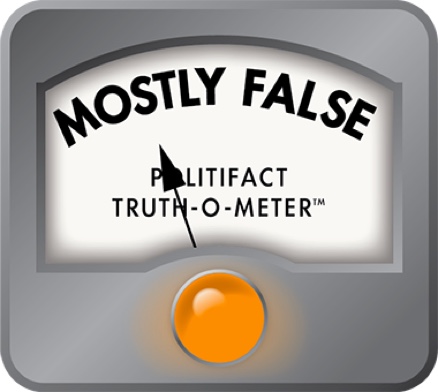
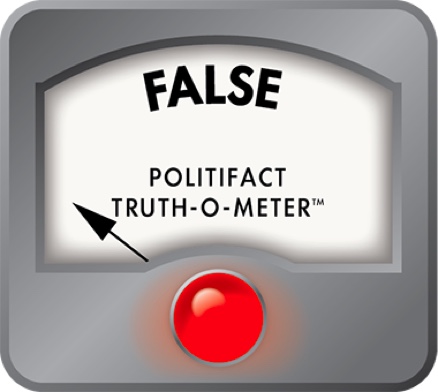
We rate the statement False.
Our Sources
Transcript of Florida gubernatorial debate provided by CNN, Oct. 21, 2014
PolitiFact Florida, Rail proponent says high-speed rail creates 60,000 jobs, March 2, 2011
WESH-TV, "Lawmakers Scramble to Save High-Speed Rail," Feb. 17, 2011
Florida Department of Transportation, Application for federal funding for Tampa-Orlando high-speed rail line, Oct. 2, 2009
E-mail interview with Dick Kane, Florida Department of Transportation spokesman, March 2, 2011
Interview with David Simon, spokesman for Rep. Corrine Brown, March 1, 2011
Central Florida Partnership, Facts and Figures Regarding High Speed Rail in Florida, accessed on March 1, 2011
Rep. Corrine Brown speech on House floor, accessed March 1, 2011
Cached version of Florida High Speed Rail Association timeline, accessed March 2, 2011
Rep. Corrine Brown press release, Feb. 25, 2011