The deal to raise the nation’s debt ceiling will “directly link a debt ceiling increase to spending cuts for the first time ever.”
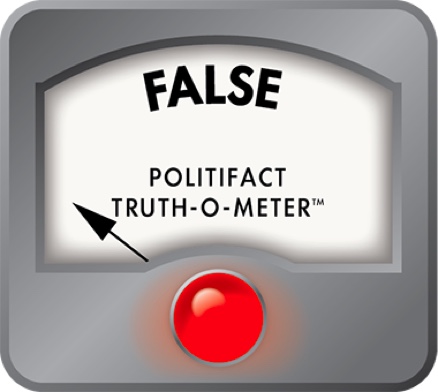
New Jersey Rep. Jon Runyan claims debt ceiling compromise links “a debt ceiling increase to spending cuts for the first time ever”
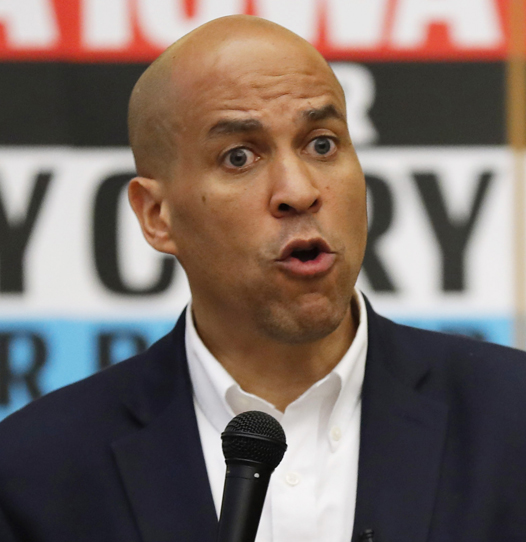
With a recent deal to raise the nation’s debt ceiling, U.S. Rep. Jon Runyan said he is helping to make history.
About a month after voting for the bipartisan proposal, Runyan (R-3rd Dist.) distributed a mailer highlighting some of the benefits of the legislation, known as the Budget Control Act of 2011. The mailer was posted Sept. 3 on bluejersey.com, a left-leaning blog.
According to the mailer, Runyan’s support of the bill will “directly link a debt ceiling increase to spending cuts for the first time ever.”
Fact checkers across the country have been busy investigating the same claim from other congressmen.PolitiFact reviewed a statement from Rep. Allen West (R-Florida), and PoliGraph at Minnesota Public Radio took on comments by Rep. Keith Ellison (D-Minn.).
As in PolitiFact’s and PoliGraph’s cases, PolitiFact New Jersey found that Runyan is wrong.
The Budget Control Act of 2011 ties debt ceiling increases to spending cuts, but that’s nothing new. In one form or another, a debt ceiling increase has been linked to spending cuts in at least four cases within the past 30 years.
Drew Fasoli, Runyan’s press secretary, acknowledged spending cuts have been tied to a debt ceiling increase in the past. He said the mailer meant to say the recent deal marked the first time that a spending cut was equal to or greater than the debt ceiling increase.
But we’re not going to look into that claim, because that’s not how the mailer was written.
“Maybe we could have done a better job explaining it further,” Fasoli said.
First, let’s briefly explain the debt ceiling deal.
In early August, President Barack Obama reached an agreement with members of Congress to increase the debt limit for a total of between $2.1 trillion and $2.4 trillion. The legislation also would reduce the deficit by at least $2.1 trillion between 2012 and 2021, according to the Congressional Budget Office.
Part of those savings comes from the following provision: if the enactment of legislation from a new committee does not achieve the requisite estimated savings by Jan. 15, 2012, automatic spending cuts totaling up to $1.2 trillion would kick in. Those spending cuts would be spread over fiscal years 2013 through 2021.
But Jason Peuquet, a policy analyst with the bipartisan Committee for a Responsible Federal Budget, pointed to four similar cases, going back to 1985, where a debt ceiling increase was tied to spending cuts or related budget enforcement procedures.
In 1985, the Gramm-Rudman-Hollings (GRH) Act was enacted as part of a nearly $175 billion increase in the debt limit. That act set targets to reduce the deficit. If those targets were not met, automatic spending cuts would be instituted through a process called sequestration.
Referring to that act, political science professor Steven Smith of Washington University in St. Louis, Mo., said in an email: “The first time ever claim (from Runyan) is only narrowly technically correct. The debt limit increase in 1985 provided for ratcheting down the deficit, which surely required spending cuts but could have been achieved through revenue increases.”
Five years later, the Omnibus Budget Reconciliation Act (OBRA) of 1990 also tied spending cuts to a debt limit increase. That legislation increased the debt ceiling by $915 billion, but also mandated spending cuts to help achieve nearly $500 billion in deficit reduction over a five-year period.
In 1997, then-President Bill Clinton and the Republican-controlled Congress would reach a similar agreement with the Balanced Budget Act of 1997. In addition to increasing the debt limit from $5.5 trillion to $5.95 trillion, the bill also made net reductions in direct spending of $122 billion over five fiscal years.
Just last year, when federal officials approved a $1.9 trillion increase in the debt limit, they also attached a measure known as the Statutory PAYGO Act of 2010. Under that act, if tax cuts or spending increases are not fully offset, across-the-board spending cuts would be made to a select group of mandatory programs.
All of these examples carry the same punch line: the new deal is not the first time that spending cuts have been linked to a debt ceiling increase.
“This recent August deal is nothing new,” Peuquet said.
Our ruling
In a recent mailer, Runyan claimed the Budget Control Act of 2011 marked the “first time ever” that a debt ceiling increase was linked to spending cuts. But our research shows that similar connections have been made at least four times within the past three decades.
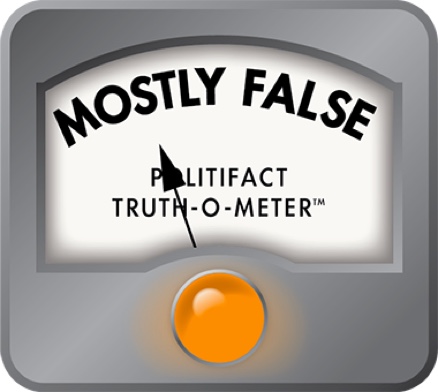
We rate the statement False.
To comment on this ruling, go to NJ.com.
Our Sources
Bluejersey.com, Jon "Frank" Runyan, Sept. 3, 2011
PolitiFact, Allen West says spending cuts are part of a debt ceiling increase for the first time in history, July 29, 2011
Minnesota Public Radio, PoliGraph: Ellison gets debt limit history wrong, Aug. 3, 2011
Email interview with Steven Smith, Washington University in St. Louis, Sept. 7-8, 2011
Interview with Jason Peuquet, The Committee for a Responsible Federal Budget, Sept. 7, 2011
Committee for a Responsible Federal Budget, Understanding the Debt Limit, July 14, 2011
Congressional Budget Office, CBO Analysis of August 1 Budget Control Act, Aug. 1, 2011
Congressional Research Service, The Budget Reconciliation Process: House and Senate Procedures, Aug. 10, 2005
Congressional Research Service, Votes on Measures to Adjust the Statutory Debt Limit, 1978 to Present, May 10, 2011
Harvard Law School, Analysis & Critique of Specialized Rules: Discretionary Caps, Spending Targets, and Committee Allocations, March 9, 2008
Congressional Budget Office, The Economic and Budget Outlook: Fiscal Years 1992-1996, January 1991
Omnibus Budget Reconciliation Act of 1990, accessed Sept. 8, 2011
Congressional Budget Office, The Economic And Budget Outlook: An Update, September 1997
Phone and email Interviews with Drew Fasoli, spokesman for Congressman Jon Runyan, Sept. 8, 2011
The American Presidency Project, George Bush’s Statement on Signing the Omnibus Budget Reconciliation Act of 1990, Nov. 5, 1990
White House Office of Management and Budget, The Statutory Pay-As-You-Go Act of 2010: A Description, accessed Sept. 8, 2011