Because of Democratic tax hikes, New Jersey ended a decade with fewer private sector jobs for the first time in recorded history.
Sen. Steve Oroho claims Democratic tax hikes are to blame for private-sector job losses in New Jersey over the last decade
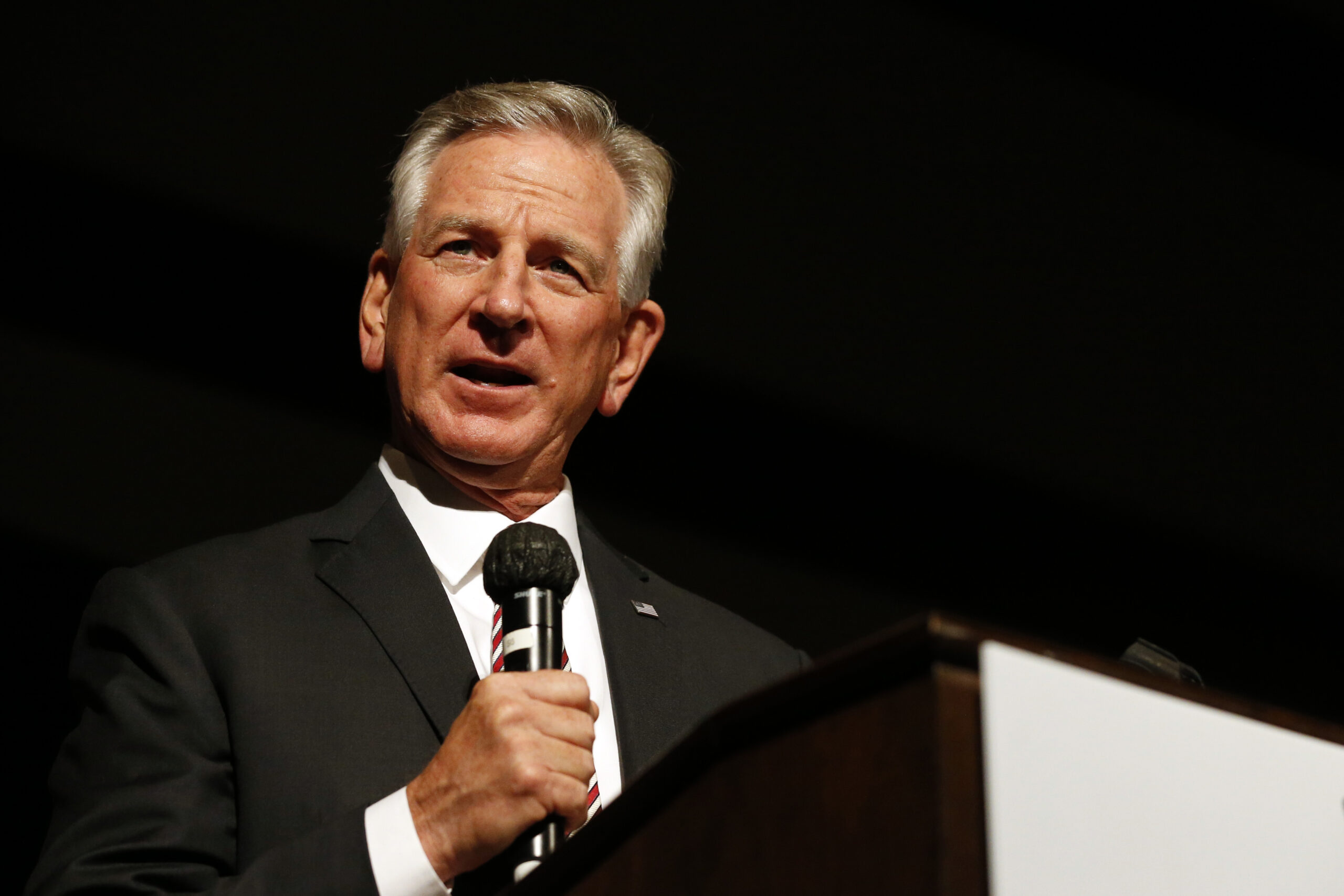
Amid the recent budget battle raging between Democratic legislators and Gov. Chris Christie, Republican Sen. Steve Oroho offered an interesting lesson in how New Jersey had already made history when it comes to private-sector job losses during the last decade.
In a June 29 press release, Oroho criticized the fiscal year 2012 budget passed by the Democratic majority, but later scaled back by Christie and argued that Democratic tax hikes during the past 10 years contributed to those job losses. In fact, Oroho said the last decade was the “first time in recorded history” that the state had fewer private-sector jobs at the end than at the beginning of the decade.
“Over the past 10 years, the Democrat majority have been intent on pushing through dramatic tax increases, and irresponsible budget gimmicks to fund an insatiable desire to spend taxpayer dollars,” said Oroho, who represents Sussex County and parts of Hunterdon and Morris counties.
Oroho added, “It is no coincidence that during this same period it was the first time in recorded history where the state had less private sector jobs at the end of the decade than we had at the beginning.”
PolitiFact New Jersey soon learned that Oroho’s statistic is accurate — New Jersey had a net loss of private-sector jobs in a decade for the first time since payroll employment statistics were first collected.
But the causes go beyond the tax increases imposed by Democrats, according to economic experts.
First, let’s talk about where Oroho received his information.
Oroho directed us to a May 3, 2010 article on NJ Spotlight written by James Hughes and Joseph Seneca of the Edward J. Bloustein School of Planning and Public Policy at Rutgers University in New Brunswick.
The article points to a net loss of 156,100 private-sector jobs between 2000 and 2010, marking the first such reduction for a decade since 1939. Hughes, dean of the Bloustein school, told us their analysis was based on state and federal employment data from December 1999 to December 2009.
Following our own review of data from the U.S. Bureau of Labor Statistics, we reached a similar conclusion. For non-seasonally adjusted figures, New Jersey lost 152,700 private-sector jobs between December 1999 and December 2009, or about 4 percent, according to the federal data.
Every other decade dating to 1939 saw private-sector job increases of between 8 percent and 26 percent, according to the federal data for non-seasonally adjusted figures.
“We’ve never had a decade where we lost private-sector jobs before,” Hughes said.
So Oroho is right about that history lesson, but how much blame should be given to the tax hikes?
After talking to experts and taking a closer look at the private-sector job numbers between December 1999 and December 2009, we found a major element missing from Oroho’s statement: the recession.
According to federal data for non-seasonally adjusted figures, New Jersey saw private-sector job growth annually between 2003 and 2007. Then between 2008 and 2009 — after the recession had hit — the state lost 226,800 private-sector jobs, according to federal data.
Bill Rodgers, chief economist at the John J. Heldrich Center for Workforce Development at Rutgers University, argued that the recession and the weak recovery preceding it had a greater impact on job losses.
“The taxes are not the main contributor,” Rodgers said.
Oroho acknowledged that other factors contributed to the job losses, including the general downturn in the economy, but he said the tax increases turned away capital investment, leading to the private-sector job losses. Those tax hikes included increases in the income, sales and corporate business taxes, according to the senator.
“Capital’s like water,” Oroho said. “It follows the path of least resistance.”
Hughes agreed that the tax hikes increased the cost of doing business in New Jersey and affected job figures. He also noted the impact of corruption scandals, saying: “Corporations don’t want to be near controversy.”
Michael Riccards, executive director of Trenton-based The Hall Institute of Public Policy, argued that tax hikes were not a major cause behind the job losses. The global economy and poor business practices in certain industries contributed to the loss of jobs, Riccards said.
Let’s review:
Pointing to Democratic tax hikes, Oroho said the last decade marked the first time since 1939 that New Jersey ended a decade with fewer private-sector jobs than it started with. He’s right, based on research by Rutgers professors and our own analysis of federal data.
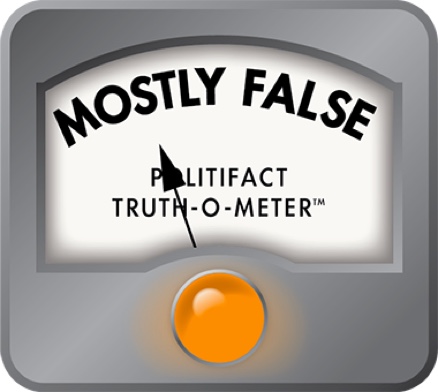
But given the impact of the recession on job losses — and as the senator acknowledges himself — tax hikes are not the only factors involved. We rate his statement Barely True.
To comment on this ruling, go to NJ.com.
Editor’s note: This statement was rated Barely True when it was published. On July 27, 2011, we changed the name for the rating to Mostly False.
Our Sources
Oroho: Democrat Budget Built on Fantasy and Faulty Assumptions, June 29, 2011
Interviews with Sen. Steve Oroho, July 6-11, 2011
NJ Spotlight, Opinion: The Great Recession and NJ’s Lost Employment Decade, May 3, 2010
Interview with James Hughes, Edward J. Bloustein School of Planning and Public Policy at Rutgers University, July 6, 2011; email interviews with Hughes, July 6 and 11, 2011
U.S. Bureau of Labor Statistics, State and Area Employment, Hours, and Earnings, accessed July 6-8, 2011
Interview with Michael Riccards, The Hall Institute of Public Policy, July 8, 2011
Interview with Deborah Howlett, New Jersey Policy Perspective, July 8, 2011
Interview with Bill Rodgers, John J. Heldrich Center for Workforce Development at Rutgers University, July 8, 2011