The federal health care law raises taxes and cuts Medicare.

The health care law raises taxes and cuts Medicare, says Scott Brown
Republicans have had plenty of ammo to criticize President Barack Obama’s health care reform law in recent days. From the sputtering online insurance marketplaces to the millions of Americans who will lose insurance plans that don’t meet the new law’s standards, it has been a feeding frenzy for conservatives.
But speaking Nov. 3, 2013, on Fox News Sunday, senator-turned-commentator Scott Brown dredged up some old claims about the Affordable Care Act to add to the ongoing criticism. Brown was a Massachusetts state senator when then-Gov. Mitt Romney passed what would become the blueprint for Obamacare, and he compared his own state’s effort to the federal law.
“When the president was in Boston, it made my blood boil,” Brown said. “I worked on the Massachusetts plan. It didn’t raise taxes or cut Medicare, and this one does.”
We’ll put aside for now Brown’s claims about what the Massachusetts law did and didn’t do. (For starters, it couldn’t cut Medicare because that’s a federal program). Instead, we’ll focus on Brown’s statement that Obamacare raises taxes and cuts Medicare.
Raising taxes?
We’ll start with Brown’s claim on taxes.
The health care law requires most uninsured Americans to purchase health insurance. Individuals who don’t comply with the law face a tax penalty when they file their taxes next year.
In its decision to uphold the individual mandate, the U.S. Supreme Court ruled 5-4 that the penalty was basically a tax that Congress was imposing on people who failed to buy insurance. The contentious decision allowed Obama’s signature legislative achievement to survive a constitutional battle.
There’s still plenty of debate on whether that penalty is a tax or just analogous to one. But there are other tax hikes in the law we’ve reviewed before that give Brown clearance to make his claim.
A good part of the law’s new taxes are on the wealthy. High earners — defined as households making make more than $250,000 or single people making more than $200,000 — will see their Medicare payroll taxes go up by 0.9 percentage points, according to the Joint Committee on Taxation. Also, they will pay an additional tax on investment income of 3.8 percent.
Other taxes in the law hit the insurance companies, the health care industry and even indoor tanning salons, including:
-
A 2.3 percent excise tax on manufacturers and importers of certain medical devices.
-
A 40 percent excise tax on employer-provided “Cadillac” health insurance plans costing more than $10,200 for individuals and $27,500 for families. Takes effect Jan. 1, 2018.
-
A 10 percent excise tax on indoor tanning services.
So regardless of whether the penalty imposed on people who don’t buy insurance is a tax, there are other taxes that raise revenue to offset the costs of the new law.
Cuts Medicare?
This is one of the claims we’ve checked the most since the start of the 2010 midterm campaigns, and we typically rate it Mostly False or Half True, depending on the specific claim. It became a big issue in the 2012 election as well, when Romney, the Republican nominee, hoped to win over support from older voters in swing states like Florida by accusing Obama of slashing the popular entitlement program for seniors.
Written into the health care law is a reduction in future Medicare spending. It is not a cut in current services. The reductions take place over the next decade (the last estimate pegged it at $716 billion over 10 years) and are achieved by offering incentives and penalties to health care providers to promote more efficient care.
In an email to PolitiFact, Brown specifically pointed to stories written about cuts to Medicare Advantage, which make up about a third of the projected savings.
Medicare Advantage is a program started under President George W. Bush that provides some seniors with private insurance plans. In recent years it has proven to be more costly than traditional Medicare, and the Affordable Care Act seeks to rein in the program by decreasing reimbursements and pressuring the plans to be more efficient.
The Republican budget proposed by Rep. Paul Ryan, R-Wis., takes advantage of Medicare savings as well. Romney continued to criticize Obama and refer to them as “cuts” to Medicare even as he tapped Ryan to be his 2012 running mate.
It should be noted that while representing Massachusetts in the U.S. Senate, Brown voted against the Ryan plan. So we can’t call him a hypocrite. But it’s an exaggeration to say Obama is cutting Medicare.
Our ruling
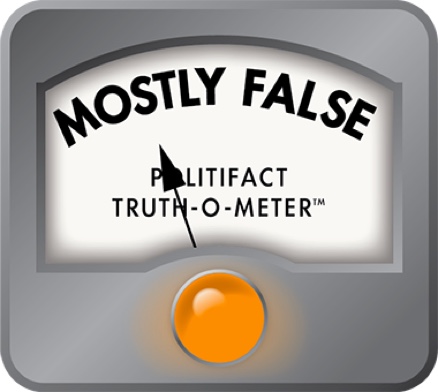
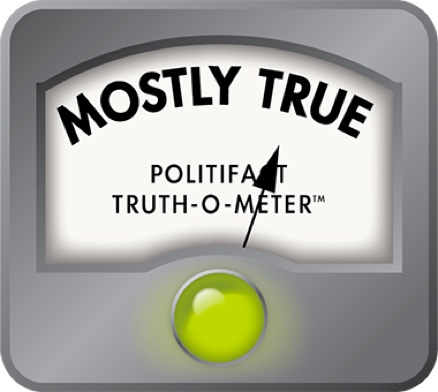
Brown said Obamacare raises taxes and cuts Medicare, a two-pronged attack. The law definitely raises taxes. As to whether it cuts Medicare, that’s a more complicated picture. The standard benefits for people on Medicare were largely left intact. The law does try to prod the health care industry and insurers who are part of Medicare to operate with more efficiency. Considering both points, we rate his statement Mostly True.
Our Sources
Fox News Sunday, Interview with Scott Brown, Nov. 3, 2013
PolitiFact, "Paul Ryan says a dozen 'Obamacare' taxes hit middle-class Americans," Sept. 30, 2012
PolitiFact, "Medicare 'cuts' and a talking point that won't die," Nov. 2, 2012
PolitiFact, "Mitt Romney said Barack Obama robs Medicare of more than $700 billion to pay for Obamacare," August 12, 2012
Politico, "Why I don’t back Paul Ryan’s Medicare Plan," May 23, 2011
Email interview with Scott Brown, Nov. 3, 2013