“The top 1 percent of income earners pay 40 percent of all state income taxes, and those at the bottom pay little or nothing.”
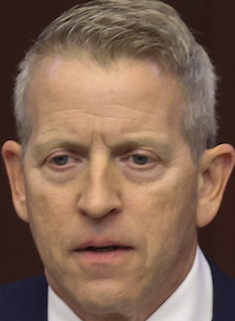
Sen. Mike Doherty says minority of New Jersey income earners pay nearly half state’s income taxes
It’s a statistic long touted in New Jersey to demonstrate the tax-paying discrepancy among residents:
A very small percentage of New Jersey’s top income earners pay about 40 percent of New Jersey’s income taxes.
In recent months the statistic has been cited in arguments about whether to reinstate the so-called millionaire’s tax, and state Sen. Michael Doherty (R-Warren) mentioned it in a May 24 guest editorial in The Star-Ledger. In explaining New Jersey’s progressive income tax, Doherty described how he wants an equal amount of money spent on educating every New Jersey child, regardless of need.
HIs column came in the wake of a state Supreme Court ruling that New Jersey must give an additional $500 million to the state’s 31 low-income – or Abbott – districts.
“In 1976, New Jersey instituted a state income tax to provide sufficient funding for our public schools,” Doherty wrote. “After the income tax is collected, it is distributed to towns as school aid. New Jersey’s income tax rate is very progressive. The top 1 percent of income earners pay 40 percent of all state income taxes, and those at the bottom pay little or nothing.”
Doherty added in his column that New Jersey’s progressive tax structure accounts for economic differences among residents: those who earn more pay more, those who earn less pay less – one reason why those at the lower end of the income scale aren’t paying as much in income taxes.
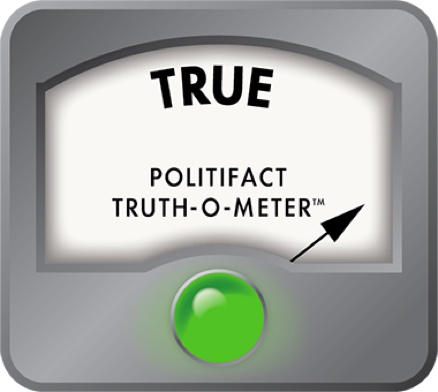
PolitiFact New Jersey checked the statistic and found Doherty’s claim to be true.
Andy Pratt, a state Treasury Department spokesman, confirmed Doherty’s math for us.
“The senator’s statement is indeed accurate,” Pratt said in a June 2 email. “In some years the number is a little higher than 40 percent, in others a bit lower. But historically, it’s been around 40 percent.”
Pratt pointed to 2009 as a good example of Doherty’s statistic.
“The total take from the gross income tax was $9.135 billion,” Pratt wrote. “The take from the top 1 percent of filers (both resident and non-resident) was $3.715 billion or about 40.7 percent. Note that, historically, half of the top 1 percent make more than a million (dollars).”
Steve Lonegan, state director of the New Jersey chapter of Americans For Prosperity, which leans conservative, also backs up Doherty’s numbers. He blasts the state’s progressive income tax structure as making New Jersey bad for business and a reason why the state has highest tax burden in the country.
“It’s worse than not a good thing,” Lonegan said of the state’s progressive tax structure. “It’s a destructive thing. It’s based on the whole concept of the people who have the votes can take from those who can’t.”
A flat, or flatter tax in New Jersey, would improve the economic scales for all, said Lonegan, also a former mayor of Bogota in Bergen County.
Mark Robyn, an economist with the pro-business Tax Foundation in Washington, DC, told PolitiFact New Jersey that there are other states that have even higher progressive tax rate structures than New Jersey: Hawaii, California and Oregon, among them.
“There are states with higher marginal tax rates, but whether that relates to a greater reliance on the top 1 percent (of income earners), it’s hard to say,” Robyn told us.
Robyn also noted that New Jersey ranks number one in total state and local tax burden by percentage of income for 2009, the most recent year that data is available.
Returning to Doherty’s statement, let’s review. The senator said the top 1 percent of income earners in New Jersey pay 40 percent of all state income taxes and those at the bottom pay little or nothing. The state Treasury Department and two conservative-leaning organizations back up that claim, noting that the Garden State’s progressive income tax structure accounts for economic differences among residents by requiring those who earn more to pay more. A liberal-leaning organization notes that looking at all taxes, not just income tax, would show the impact of New Jersey’s tax structure on its residents.
We rate Doherty’s statement True.
To comment on this ruling, go to NJ.com.
Our Sources
Michael Doherty, "Divide all money equally among N.J. students," May 24, 2011
Phone interview with state Sen. Michael Doherty (R-Dist. 24), May 26, 2011
E-mail interview with Andrew Pratt, communications director, New Jersey Treasury Department, June 2, 2011
Phone interview with Steve Lonegan, director, Americans for Prosperity, New Jersey chapter, June 24, 2011
Phone and email interviews with economist Mark Robyn, The Tax Foundation, June 27, 2011
The Star-Ledger, "N.J. residents were highest-taxed in U.S. in 2009, report shows," Feb. 24, 2011
The Heartland Institute, "Utah Cuts Income Tax, Offers Flat Tax Option to All," December 2006
Phone interview with Elizabeth McNichol, senior fellow, The Center on Budget and Policy Priorities, June 28, 2011