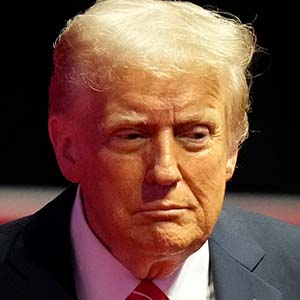
As president, Donald Trump “marshaled the full power of government to stop deadly drugs, opioids, and fentanyl from coming into our country. As a result,…


Trump touts one year’s decline in drug overdoses, ignoring three years of increases
If your time is short
• The overdose death rate did drop in 2018. However, this is a cherry-picked view of the trends on Trump’s watch.
• In the other three of his four years in office, the overdose death rate rose, including a record increase in 2020.
• Looking at overdose deaths from synthetic opioids — the closely watched category that accounts for the largest share of all opioid overdose deaths — the rate rose every year of Trump’s presidency.
As former President Donald Trump launched his bid to regain the presidency in 2024, his team produced a campaign website that outlined his agenda on such issues as the economy, international trade, energy, immigration, crime and foreign policy.
In one section headlined “War on the Drug Cartels,” Trump touted his record of curbing drug abuse:
“President Donald J. Trump marshaled the full power of government to stop deadly drugs, opioids, and fentanyl from coming into our country. As a result, drug overdose deaths declined nationwide for the first time in nearly 30 years. Joe Biden has allowed drug cartels to wage war on America, steal innocent lives, and ravage our communities.”
Trump has a point: A review of the data shows overdose deaths did drop incrementally in his second year in office. However, this data point is cherry-picked. Overdose deaths rose again during Trump’s third year in office and by a record degree in his fourth year.
Trump’s campaign pointed us to New York Times coverage in July 2019 when the Centers for Disease Control and Prevention released provisional overdose data for 2018. The article reported that in 2018, drug overdose deaths fell nationally by about 5% from the level in 2017, after having risen every year after a small decline in 1990.
This downtick is visible in the CDC’s annual data, not just for overall deaths from overdoses but specifically those caused by opioids. Opioids account for the largest share of overdose deaths and are considered the most urgent because of their rapid rise in recent years. (The annual patterns for overdose deaths overall and for opioid overdoses specifically are not significantly different, CDC data shows.)
The drop in 2018 is part of the story of drug overdose deaths on Trump’s watch, but it is not the whole story: The death rate went up during three of Trump’s four years in office.
In Trump’s first year, 2017, the opioid overdose death rate rose. And after the 2018 decline, it rose again for 2019 and 2020. The coronavirus pandemic in 2020 drove isolation and despair for many Americans — and that year’s increase remains the biggest single yearly increase on record.
Meanwhile, the biggest contributor to opioid deaths — synthetic opioids, which include fentanyl, which Trump referred to specifically in his statement — rose all four years that Trump was in office. 2018 data show that synthetic opioid overdose deaths increased, though at a slower rate than in the previous few years.
So why was there a decline in 2018?
Trump and Congress provided $3.3 billion in grants to states since 2017 for opioid treatment, the Times reported in 2019. But it’s hard to draw a direct connection between the administration’s efforts and the statistical decline. And some experts have suggested that the decline had other roots.
In a 2020 academic paper, two University of Pittsburgh researchers suggested that the decline may have stemmed from the sudden rise and fall of the availability of carfentanil, a drug similar to fentanyl that is 10,000 times more potent than morphine. The drug began appearing in significant amounts in 2016 and 2017, then seemed to disappear in 2018, they found.
In the paper, the researchers, Hawre Jalal and Donald S. Burke, cautioned against assuming that policy changes produced the decline in 2018. “The analysis we present here suggests an alternative explanation, that the decline in overdose deaths in 2018 was just a return to baseline exponential trajectory after a transient supply-side shock of highly potent illicit drugs,” they wrote.
Our ruling
Trump said that as president, he “marshaled the full power of government to stop deadly drugs, opioids, and fentanyl from coming into our country. As a result, drug overdose deaths declined nationwide for the first time in nearly 30 years.”
The overdose death rate did drop from 2017 to 2018. But this is a cherry-picked view of the trends on Trump’s watch.
In the other three of his four years in office, the overdose death rate rose, including a record increase in 2020. The rate did not turn a corner in 2018 and continue declining; the reality was just the opposite.
And looking just at overdose deaths from synthetic opioids — the closely watched category that accounts for the largest share of all opioid overdose deaths — the rate rose every year of Trump’s presidency.
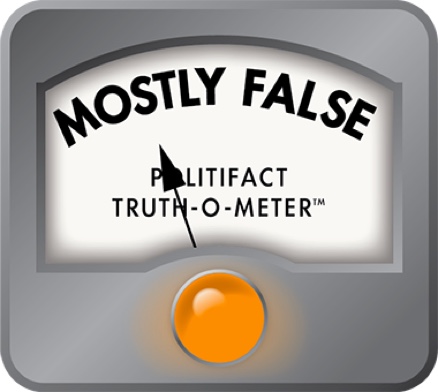
The statement contains an element of truth but ignores critical facts that would give a different impression. We rate it Mostly False.
Our Sources
Donald Trump, campaign website agenda section, accessed Jan. 6, 2023
Centers for Disease Control and Prevention, "Drug Overdose Deaths in the United States, 2001–2021," Dec. 2022
Centers for Disease Control and Prevention, "NCHS Data Brief, Number 457," Dec. 2022
Centers for Disease Control and Prevention, "Overdose Death Rates Involving Opioids, by Type, United States, 1999-2020," accessed Jan. 6, 2023
Hawre Jalal and Donald S. Burke, "Carfentanil and the Rise and Fall of Overdose Deaths in the United States" (Addiction), Sept. 15, 2020
New York Times, "Drug Overdose Deaths Drop in U.S. for First Time Since 1990," July 17, 2019
Email interview with Jonathan Caulkins, drug policy researcher at Carnegie Mellon University, Jan. 6, 2023