“According to the Congressional Budget Office,” the Inflation Reduction Act “will save the federal government $160 billion over the next 10 years because Medicare will…


Is Joe Biden right that a new Medicare drug law will save $160 billion over 10 years?
If your time is short
-
The nonpartisan Congressional Budget Office projects 10-year cumulative savings of $161.7 billion from two provisions of the 2022 Inflation Reduction Act.
-
These provisions are a phased-in effort to negotiate with drugmakers for lower prices and a rebate for drug price increases above the overall inflation rate.
-
However, not all of these savings will be permanent. Some $44.3 billion of those savings over 10 years will be immediately funneled into related provisions that expand access and lower out-of-pocket costs for Medicare beneficiaries.
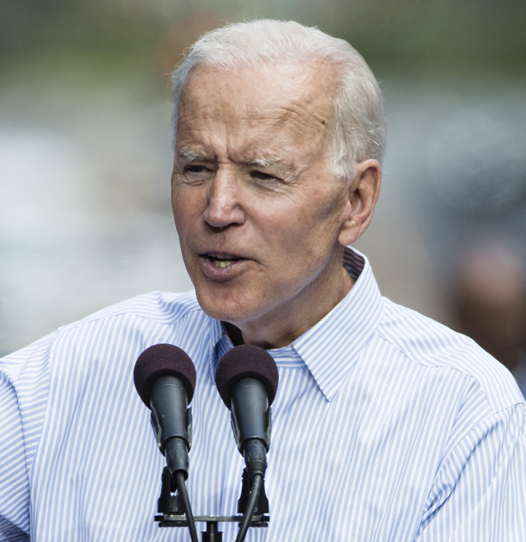
President Joe Biden, who has been discussing the benefits of “Bidenonmics,” recently touted one of his legislative accomplishments — the ability to negotiate prescription drug prices with Medicare, the federal health insurance program for people older than 65.
Biden campaigned on lifting the longstanding legal barrier to such negotiations, arguing that the government could leverage its market power to secure lower drug prices, which would save taxpayers money.
In August 2022, such legislation passed as part of the Inflation Reduction Act, and we awarded Biden a Promise Kept.
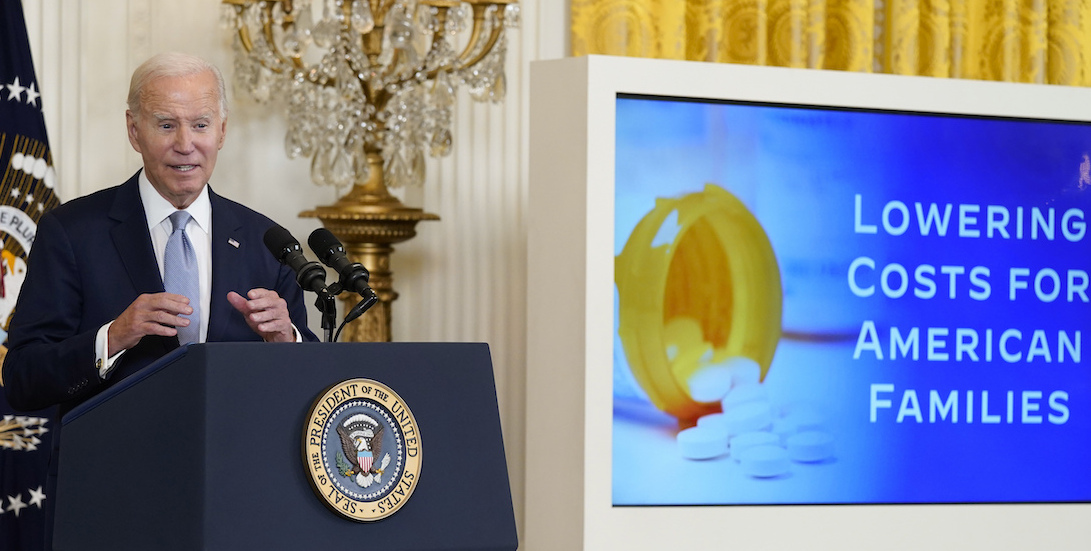
On Aug. 29, Biden discussed the first 10 drugs up for price discussions and promoted what he said were the law’s other benefits.
“By the way,” Biden said, “negotiating drug prices, alongside other provisions of this law, isn’t just going to put more money back in the pockets of millions of Americans across the country. It’s also going to lower the federal deficit. According to the Congressional Budget Office, it will save the federal government $160 billion over the next 10 years because Medicare will be paying less for the prescription drugs they’re making available to seniors.”
Is this correct? Largely.
Two provisions related to Medicare drug purchasing are poised to save that much money, according to the CBO, an independent arm of Congress that produces widely trusted federal budget analyses. However, CBO found that other bill provisions would cost the government more money on net, thereby reducing the total amount saved by about $44 billion over the next decade.
What the new law does
Biden was focusing primarily on two provisions of the Inflation Reduction Act that will, in different ways, reduce costs for Medicare drug purchases.
The first involves price negotiations for 10 brand-name medications that lack generic equivalents.
Biden’s remarks were timed to coincide with the announcement of these first 10 drugs, which include the blood thinners Eliquis and Xarelto; the diabetes drugs Januvia, Jardiance and NovoLog; Enbrel, for rheumatoid arthritis; the blood-cancer drug Imbruvica; Entresto, for heart failure; Stelara, for psoriasis and Crohn’s disease; and Farxiga, a drug for diabetes, heart failure and chronic kidney disease.
The negotiations for these 10 drugs would define the prices to be paid for prescriptions starting in 2026. For 2027 and 2028, 15 more drugs per year will be chosen for price negotiations. Starting in 2029, 20 more will be chosen annually.
The drugs up for price negotiation must be chosen from among the 50 drugs with the highest Medicare spending. The negotiated prices will be applied first for drugs paid for under Medicare Part D (which patients take at home) and then later for drugs paid for under Medicare Part B (which medical professionals administer in health care facilities).
The second mechanism involves caps on prescription price increases, which have often outpaced inflation. The new law requires drugmakers to rebate to the government any price increases over the general inflation rate. These rules began to be enforced this year.
How much money will these two provisions save?
No one will know how much taxpayer money will be saved over 10 years until the government’s ledgers in 2031 are finalized. Absent that, the CBO’s projections are considered the gold standard.
For the first mechanism — drug price negotiations — CBO projected savings of about $98.5 billion between 2022 and 2031.
For the second mechanism — inflation rebates — CBO projected savings of about $63.2 billion.
Together, that totals $161.7 billion, or right around what Biden said.
However, not all $161.7 billion will end up as permanent savings, because the law then spends some of this money on other provisions to expand Medicare coverage or reduce out-of-pocket costs.
For instance, one would cap out-of-pocket spending by people enrolled in Medicare Part D. This would cost an additional $30 billion over 10 years.
An extra $5.1 billion over 10 years will go toward reducing out-of-pocket costs of insulin for diabetics, another legislative accomplishment that Biden has often touted.
Also, $7 billion over 10 years will be spent to enhance certain aspects of coverage under Medicare, Medicaid (the federal-state health insurance program for low-income Americans), and the Children’s Health Insurance Program.
Finally, $2.2 billion over 10 years will be spent on expanding eligibility for subsidies for low-income Americans under Medicare Part D.
These four additional provisions total $44.3 billion over 10 years. This means that, on net, the savings from the bill’s key provisions relating to Medicare will total about d $117.4 billion.
Our ruling
Biden said, “According to the Congressional Budget Office, it will save the federal government $160 billion over the next 10 years because Medicare will be paying less for the prescription drugs they’re making available to seniors.”
The CBO projects 10-year cumulative savings of $161.7 billion from two provisions of the Inflation Reduction Act, passed in 2022: A phased-in effort to negotiate with drugmakers for lower prices and a rebate for price increases above the overall inflation rate.
However, not all of these savings will be permanent. Some $44.3 billion of those savings over 10 years will be funneled into related provisions that expand access and lower out-of-pocket costs for Medicare beneficiaries.
The statement is accurate but needs additional information, so we rate it Mostly True.
Our Sources
Joe Biden, remarks on health care costs, Aug. 29, 2023
Congressional Budget Office, "Estimated Budgetary Effects of Public Law 117-169, to Provide for Reconciliation Pursuant to Title II of S. Con. Res. 14," Sept. 7, 2022
Congressional Budget Office, "How CBO Estimated the Budgetary Impact of Key Prescription Drug Provisions in the 2022 Reconciliation Act," February 2023
KFF, "Explaining the Prescription Drug Provisions in the Inflation Reduction Act," Jan. 24, 2023
NBC News, "Medicare names first 10 drugs up for price negotiations with the government," Aug. 29, 2023
PolitiFact, "Democrats’ Inflation Reduction Act will allow Medicare to negotiate drug prices," Aug. 10, 2022
Statement to PolitiFact from the White House, Aug. 30, 2023
Interview with Juliette Cubanski, deputy director of the program on Medicare policy at KFF, Aug. 30, 2023