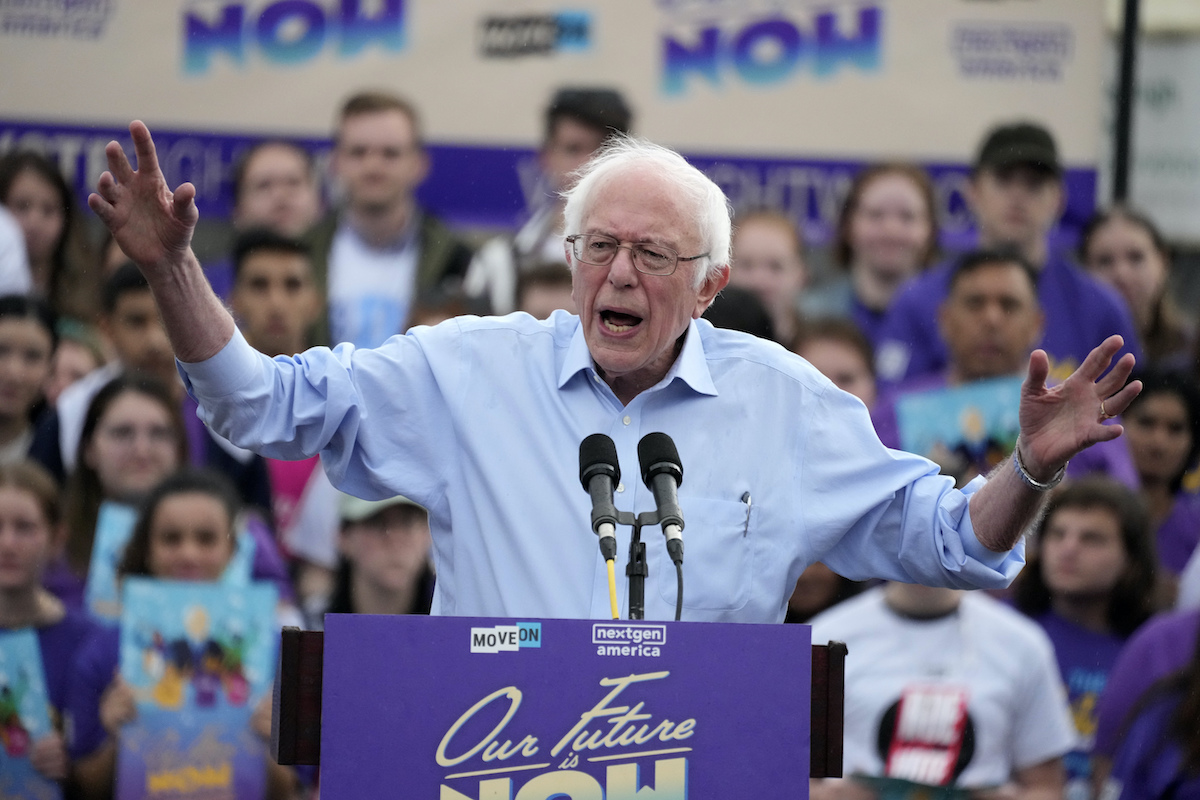

Bernie Sanders said 85 million Americans have no health insurance. That includes underinsured.
If your time is short
-
The Commonwealth Fund, a respected source of data on health care research, found in 2022 that 43% percent of working-age adults ages 19 to 64 were uninsured or inadequately insured. That adds up to about 85 million adults.
-
About 17.7 million adults were uninsured, according to the Commonwealth analysis.
-
People who were uninsured for a year or longer were disproportionately young, Hispanic, poor, unhealthy and living in the South.
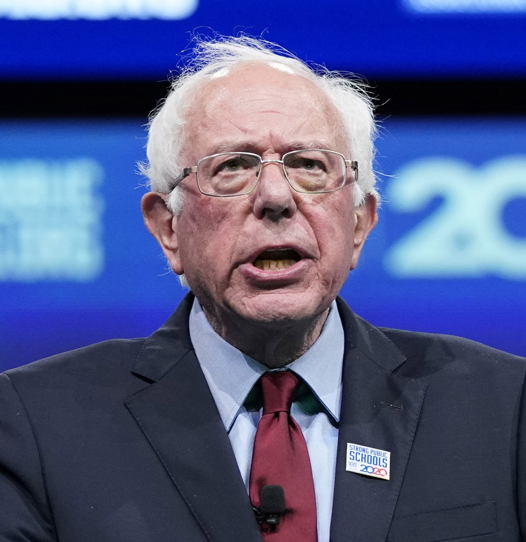
Sen. Bernie Sanders, I-Vt., who has pushed the Democratic Party to expand access for health care, said a high number of Americans lack insurance.
“We have 85 million Americans who have no health insurance,” Sanders said Dec. 11 on CNN’s “State of the Union.”
That number caught our eye because when we fact-checked statements about health insurance in the past, we found a much lower number of around 30 million between 2016 and 2018.
Sanders spokesperson Mike Casca said the senator was referring to the number of uninsured and underinsured Americans and cited a report about those numbers for adults. Sanders referred to both categories of uninsured and underinsured when he cited the 85 million figure in an October op-ed in The Guardian.
Sanders drew from Commonwealth survey showing uninsured and underinsured
Casca referred us to a 2022 survey by the Commonwealth Fund, a private foundation that is a respected source of health care research. The survey found that 43% of working-age adults 19 to 64, or about 85 million Americans, were uninsured or inadequately insured. Specifically:
-
9 % were uninsured
-
11% had a gap in coverage over the past year, meaning that at some point during the year they did not have health coverage but weren’t without it for the entire year
-
23% were underinsured, meaning that they were insured all year but their coverage didn’t provide them with affordable access to health care.
The Commonwealth Fund analysis defines underinsured as people who fit one of the following categories:
-
Out-of-pocket costs over the prior 12 months, excluding premiums, were 10% or more of household income
-
Out-of-pocket costs over the prior 12 months, excluding premiums, were 5% or more of household income for individuals living under 200% of the federal poverty level ($27,180 for an individual or $55,500 for a family of four in 2022)
-
The deductible constituted 5% or more of household income.
People who were uninsured for a year or longer were disproportionately young, Hispanic, poor, unhealthy and living in the South.
The most recent federal survey data from the Centers for Disease Control and Prevention for the 18-to-64 age group shows a slightly higher uninsured rate through 2022’s first half: 12.1%. When the CDC included all age groups, it showed 27.4 million people of all ages (8.3% of the population) were uninsured at the time of interview.
Since the pandemic started in early 2020, Congress passed measures to improve access to health insurance. Federal and state policies contributed to an increase in public coverage in 36 states, leading to lower uninsured rates in 28 states in 2021 compared with 2020.
Larry Levitt, executive vice president for health policy at Kaiser Family Foundation, told us that if including people who lack health insurance or are underinsured, the 85 million Sanders cited is “certainly a defensible statement.”
“The number of Americans uninsured is at or near an all-time low,” Levitt said. “But, even among those who are insured, many have little savings and face high deductibles that leave them financially vulnerable if they get sick.”
There’s not a strict definition of underinsurance, Levitt said. But, one commonly used yardstick is that people are underinsured if their out-of-pocket health care expenses, not including premiums, exceed 10% of their income.
Our ruling
Sanders said, “we have 85 million Americans who have no health insurance.”
Sanders omitted that his figure included people who either have no health insurance or are underinsured.
Sanders’ spokesperson referred us to data from the Commonwealth Fund that found about 85 million Americans ages 19 to 64 were uninsured or inadequately insured (meaning they had a gap in coverage over the past year or coverage that didn’t provide affordable access to health care).
Sanders accurately cited the Commonwealth Fund report in an October op-ed. His statement on CNN was partially accurate but left out important details and context.
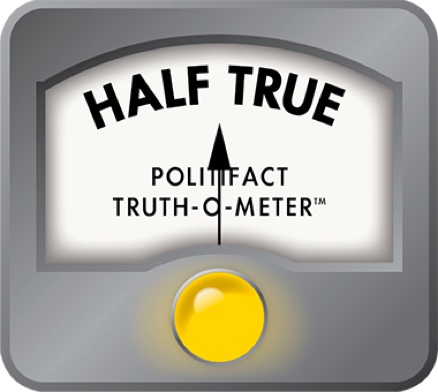
We rate it Half True.
RELATED: Uninsured rate for Black Americans declined in Biden’s first year in office
Our Sources
CNN, State of the Union transcript and video, Dec. 11, 2022
U.S. Census Bureau, Health Insurance Coverage in the United States: 2021, Sept. 13, 2022
U.S. Census Bureau, Uninsured Rate Declined in 28 States 2019-2021, Sept. 15, 2022
National Center for Health Statistics, Health Insurance Coverage: Early Release of Estimates From the National Health Interview Survey, January–June 2022
National Health Statistics Reports, Demographic Variation in Health Insurance Coverage: United States, 2021, Nov. 3, 2022
The Commonwealth Fund, The State of U.S. Health Insurance in 2022, Sept. 29, 2022
Peterson-KFF Health System Tracker, How many people have enough money to afford private insurance cost sharing? March 10, 2022
Sen. Bernie Sanders op-ed in The Guardian, Democrats shouldn’t focus only on abortion in the midterms. That’s a mistake, Oct. 10, 2022
Email interview, Larry Levitt, Kaiser Family Foundation executive vice president for health policy, Dec. 12, 2022
Email interview, Cynthia Cox, Kaiser Family Foundation, vice president and director for the program on the ACA, Dec. 12, 2022
Email interview, Mike Casca, Sen. Bernie Sanders spokesperson, Dec. 12, 2022
Telephone and email interview, Sara R. Collins, senior scholar, vice president, health care coverage and access at the Commonwealth Fund, Dec. 12, 2022