Merriam-Webster recently changed its definition of the word “vaccine” and removed the immunity portion.
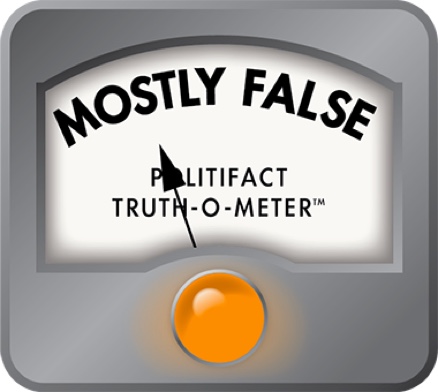


Merriam-Webster didn’t remove the immunity portion to its vaccine definition. It changed the wording
If your time is short
-
The dictionary recently revised its definition of vaccine to be more detailed — and it didn’t eliminate the portion that deals with immunity.
-
The updated definition says that vaccines stimulate the body’s immune response against a specific infectious agent or disease.
First, people claimed that Merriam-Webster sneakily changed the definition of the word “anti-vaxxer” to include people who oppose laws that mandate vaccination. (It didn’t. It has always had the same definition.)
Now, social media posts are making another gripe with the online dictionary with assertions that it changed the definition of the word “vaccine.”
“Vaccine used to be defined as a substance that provides ‘immunity’ to a specific disease,” a post shared on Facebook said. “Now, Merriam Webster has literally changed the definition of ‘vaccine’ and removed the ‘immunity’ portion to possibly cover for the fact that Covid ‘vaccines’ don’t actually provide immunity from Covid.”
This is misleading. Merriam-Webster has revised its entry for the word “vaccine” as part of its continual revision of entries, but it did not remove references to immunity. Rather, it changed the phrase “increase immunity” to say, “stimulate the body’s immune response.” The current entry better captures how mRNA-based vaccines work compared with traditional vaccines.
The post was flagged as part of Facebook’s efforts to combat potential false news and misinformation on its News Feed. (Read more about our partnership with Facebook.)
For years, the dictionary definition for the word “vaccine” had had the following wording:
“A preparation of killed microorganisms, living attenuated organisms, or living fully virulent organisms that is administered to produce or artificially increase immunity to a particular disease.”
On May 24, 2021, dictionary editors revised it to read, in part:
“A preparation that is administered (as by injection) to stimulate the body’s immune response against a specific infectious agent or disease.
It then goes on to include 10 examples of the word in use; with some being typical uses and some being quotations that show how vaccine is used in context. (These examples appear in light blue text in the online dictionary.)
“This definition has been revised to reflect both more scientifically accurate language and the fact that we have more space in the online dictionary,” said Peter Sokolowski, editor at large of Merriam-Webster.com. “We are now able to provide much more context and detail than previously possible in print dictionaries. The wording had originally been drafted in order to accommodate the space restrictions of our print editions, where definitions necessarily had to be as brief as possible.”
The dictionary further explains and links to related terms such as “attenuated” and “adjuvant,” as well as “messenger RNA” and “immune response.” These explanations and links, Sokolowski said, serve to give broader coverage to the term being defined.
“In particular, the definition for immune response provides a detailed description of how a vaccine actually works, and is therefore more specific, scientific, and complete than the more general term immunity,” he added.
Here is the definition of “immune response,” which readers can find linked in the vaccine entry:
“A bodily response to an antigen that occurs when lymphocytes identify the antigenic molecule as foreign and induce the formation of antibodies and lymphocytes capable of reacting with it and rendering it harmless — called also immune reaction.”
Our ruling
A Facebook post claims that Merriam-Webster changed the definition of vaccine and removed the portion about immunity.
This is misleading. The dictionary did recently revise its definition of vaccine to be more detailed. But it didn’t eliminate the portion about immunity. Rather, it changed the wording to say that vaccines stimulate the body’s immune response against a specific infectious agent or disease. The entry also references the definition of “immune response,” which is more detailed than before.
This claim presents an element of truth but leaves out critical facts that would give a different impression. That’s our definition for Mostly False.
Our Sources
Facebook post, Nov. 4, 2021
Wayback Machine, Merriam-Webster vaccine definition, archived Nov. 5, 2020
Merriam-Webster, vaccine, Accessed Nov. 4, 2021
Merriam-Webster, immune response, Accessed Nov. 8, 2021
PolitiFact, No, Merriam-Webster didn’t change the definition of ‘anti-vaxxer’, May 17, 2021
Email interview, Peter Sokolowski, editor at large of Merriam-Webster.com, Nov. 8, 2021