The government must have planned the coronavirus pandemic because the coronavirus relief bill had been introduced three years earlier.

Early date on CARES Act is due to a legislative quirk, not a plot
If your time is short
• The introduction date of the legislation that ultimately became the CARES Act doesn’t signify anything about when the government knew about the coronavirus pandemic.
• Tax-related bills need to originate in the House. But to speed the passage of coronavirus relief, the senators who drew up the CARES Act used a common workaround by which they stripped out the text of an existing House-passed bill and inserted the new text into it.
• The House bill they used was introduced in 2019, and was unrelated to the coronavirus. The post misstated the introduction date.
The coronavirus pandemic has generated a torrent of conspiracy theories. One of them is that the U.S. government somehow planned the pandemic.
An April 26 Facebook post sought to prove its case by showing a screenshot of a Wikipedia-like page describing the Coronavirus Aid, Relief, and Economic Security Act, more commonly known as the CARES Act.
The $2.2 trillion act, which was signed into law on March 27, 2020, included direct payments to most Americans, enhanced unemployment aid, loans for small business and other relief measures.
The page captured in the screenshot lists the bill as having been introduced on Jan. 24, 2017. That’s more than three years before the novel coronavirus was declared a pandemic, which the post cites as evidence that the pandemic was a long-planned event.
The poster added the comment, “Clearly a PLAN-DEMIC. Guess what they have planned next for you. Hint — None of it is in your best interest. Hint 2 — It’s much worse than you could ever imagine.”
This post was flagged as part of Facebook’s efforts to combat false news and misinformation on its News Feed. (Read more about our partnership with Facebook.)
In reality, there’s a mundane explanation for why the bill was introduced well before the pandemic itself, and it has nothing to do with a government plot. But explaining it requires a short lesson in constitutional law and how Congress works.
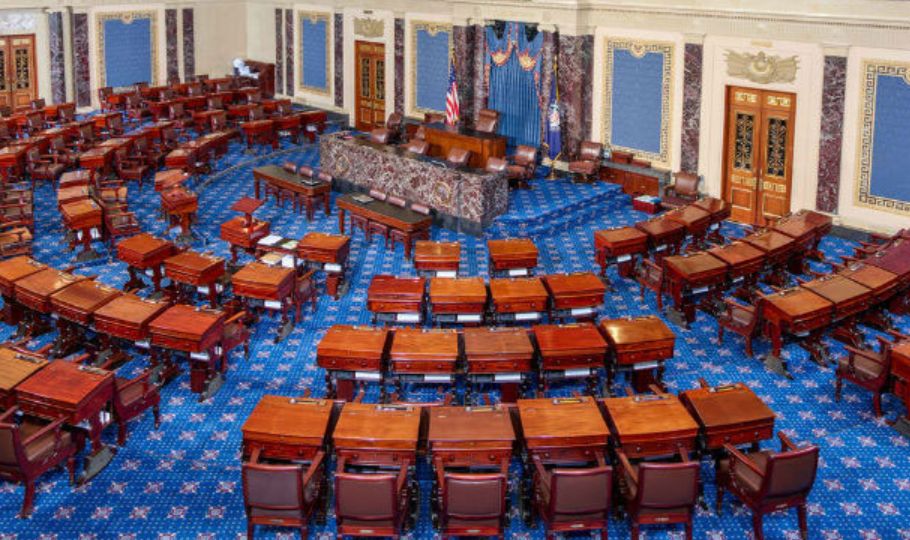
Article I, Section 7 of the Constitution says that bills related to raising revenue must originate in the House of Representatives before moving to the Senate for consideration.
Sometimes, lawmakers decide that revenue-related legislation must pass urgently, and the shortest path is to skip the normal House-to-Senate process.
That was the case with the CARES Act.
While the Democratic House majority did offer a version of the bill, negotiators from the White House and the Senate were already deep into talks about what should be in the bill. When the Senate came up with a version of the bill that the leaders in both parties could support, they drew up the legislative text to be voted on.
However, because of the constitutional rule on tax-related bills, the senators didn’t create a new Senate bill. Instead, they took an existing bill that had been passed by the House but not by the Senate. The Senate stripped out the language, inserted the new CARES Act wording into the shell, and voted on it. It passed unanimously, and was later passed by the House and signed by President Donald Trump.
What the Senate did is a “commonly used workaround,” said Gregory Koger, a University of Miami political scientist who specializes in legislative procedure.
The original House bill had been to repeal the “Cadillac tax” on high-cost insurance plans, which was part of President Barack Obama’s Affordable Care Act. It was introduced on Jan. 24, 2019, (not 2017, as the image in the post says) and easily passed the House on July 17, 2019, 419-6.
The bill never made it to a vote in the Senate, making the measure ripe for the picking when Senate leaders went looking for a House-passed measure where the CARES Act language could be swapped in. The bill that passed the Senate “bears zero resemblance to the original bill,” Koger said. And the introduction date signifies nothing about when the government knew of the coronavirus.
This same tactic was used in the subsequent coronavirus response bill that added more funding for small-business loans, said Donald R. Wolfensberger, director of the Congress Project at the Woodrow Wilson International Center for Scholars.
The process used to enact the CARES Act, Koger said, shows that “the modern Congress often bears little resemblance to the ‘How a Bill Becomes a Law’ lessons” people learn in school.
Our ruling
Facebook posts said the government must have planned the coronavirus pandemic because the coronavirus relief bill had been introduced three years earlier.
The introduction date cited in the post was off by two years, and the post is a misunderstanding of how the bill moved through Congress.
Because of a constitutional requirement that tax-related bills originate in the House, the senators who drew up the CARES Act used a common workaround, stripping an existing House-passed bill of its old text and inserting the new text into it.
So there’s nothing fishy about a coronavirus relief bill having been introduced prior to the pandemic’s emergence. The original text of the bill that eventually became the CARES Act was on an entirely different topic.
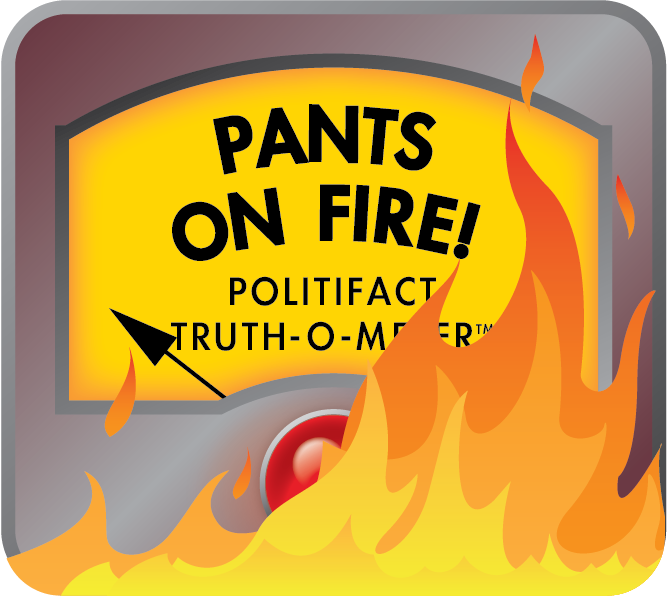
We rate the statement Pants on Fire.
Our Sources
Facebook post, April 26, 2020
Congress.gov, CARES Act summary page, accessed April 27, 2020
U.S. Constitution, Article I, Section 7
Donald Wolfensberger, "Procedural politics: What just happened with the coronavirus bill?" March 30, 2020
Donald Wolfensberger, "COVID-19: The week that was in Congress," April 25, 2020
Email interview with Josh Ryan, Utah State University political scientist, April 27, 2020
Email interview with Gregory Koger, University of Miami political scientist, April 27, 2020
Email interview with Donald R. Wolfensberger, director of the Congress Project at the Woodrow Wilson International Center for Scholars, April 27, 2020