Donna Howard says condoms ‘used to be tax-exempt’ in Texas
An Austin legislator talking up her proposal to exempt feminine hygiene products from the state sales tax asserted that condoms were sold tax-free in Texas for a spell.
Democratic state Rep. Donna Howard, speaking to reporters for the Dallas Morning News during a Facebook Live presentation, brought up condom tax history just after suggesting that ever-costly diapers also should not be subject to the state sales tax of 6.25 percent; local governments are allowed to levy up to 2 percent more of sales tax.
Condoms, Howard went on, “used to be tax-exempt here in Texas until we changed something in the statute; the wording was such that it … put them back out there where they were taxed.”
We wondered about that, ultimately finding changes in law against a governor’s wishes resulted in a type of condom not being subject to sales tax for more than seven years–though no longer.
To gauge this claim, we mostly relied on the Texas state comptroller’s office, which oversees state tax collections.
By email, spokeswoman Lauren Willis pointed out that a tax-cut package signed into law by Gov. George W. Bush in 1999 included language exempting condoms from the Texas sales tax.
Bush’s desire, comptroller’s ruling
That’s what was reported at the time, we confirmed, though the tax details rest on a medical angle.
Willis emailed us a web link to a March 2000 news story stating that contrary to Bush’s campaign-trail intentions, condoms would soon rank among products not subject to the state sales tax. Starting April 1, 2000, the Morris News Service story said, “Texans won’t have to pay sales tax on non-prescription medications, ointments to treat sunburns, laxatives or condoms.”
Before his re-election in 1998, the story said, Bush had proposed a $400 million tax-cut package including a sales tax break on over-the-counter health items although Bush, an advocate of abstinence education for teenagers, had said the cut wouldn’t apply to condoms.
Seeking re-election, Bush said in September 1998 that his proposed tax cut would not extend to nonprescription contraceptives, including condoms, the Morning News reported. “The governor is being touted by some in the GOP has a potential presidential candidate in 2000,” the story said, “and some social conservatives have taken a strong stand against promiscuity and premarital sex.”
But in March 2000, State Comptroller Carole Keeton Rylander announced she had no choice but to include condoms among items made tax-exempt in the tax-cut measure passed into law the year before. Calling her decision a “matter of law,” Rylander pointed out the new law required a drug, medicine or health care product to be exempt from taxes if it has a drug code number issued pursuant to FDA regulations. National drug codes, or NDCs, are three-digit segments that serve as universal product identifiers, the FDA says.
Condoms as medicinal
A March 2000 Houston Chronicle news story said the legislated tax exemption would apply to all 100,000 nonprescription products carrying an NDC. That story noted that the original legislation, Senate Bill 441 by Sen. Rodney Ellis, D-Houston, would have exempted only children’s nonprescription medicines from the sales tax but was expanded in Senate-House negotiations to include adult over-the-counter medicines–with the FDA code limitation intended to preclude tax breaks for herbal and folk remedies not sanction by that agency.
We confirmed, from SB 441 signed into law by Bush, the inclusion of language exempting from the sales tax any drug or medicine with an FDA-issued “national drug code.”
We suspect, though, that not all condoms had the codes.
When we checked with the FDA about condoms having NDCs, spokeswoman Deborah Kotz replied by email that the agency considers condoms to be “devices” that don’t need NDCs, unlike medicines. Kotz later emailed that regardless, some condom manufacturers have put NDCs on condoms sold over the counter, “often for reimbursement purposes.” Some condoms, Kotz said, still have the numbers.
Meantime, Willis shared a December 2000 letter from Rylander to a Victoria resident outlining another reason condoms became tax-exempt.
Rylander wrote that as agency staff pinned down what would be exempt from the sales tax due to the 1999 law, they recognized that some drugs and medicines didn’t have NDCs. So in building the list of exempt items, Rylander advised, agency staff relied on an FDA list of drugs and medicines and also included items, such as condoms, that fit the state’s statutory definition of a drug or medicine as “an article or substance applied to, ingested, or inhaled by humans marketed for the use in the diagnosis, cure, mitigation, treatment or prevention of disease, illness, injury, or pain.”
Rylander’s conclusion: The “medicated prophylactic devices, which aid in the prevention of disease, qualify for the exemption. However,” she wrote, “prophylactic devices that are not medicated are not exempt.”
Willis confirmed, when we asked, that only condoms containing medication ended up being tax-exempt.
No longer
Lawmakers didn’t immediately restore taxation of all condoms.
Willis said, and we confirmed, that the NDC language was removed by a 2001 law yet Senate Bill 1125 left spermicidal condoms tax-exempt by simultaneously adding language exempting products “labeled or required to be labeled with a ‘Drug Facts’ panel in accord” with FDA regulations. By email, Klot separately told us condoms, mostly regulated as devices and not medicines, might have “facts” panels, but the FDA hasn’t required as much.
A 2007 change in law limited items exempt from the sales tax to products required to have the “Drug Facts” panels, Willis told us by email, which ended the condom tax exemption as of September 2007.
In the fiscal year through August 2016, Willis said, the state sales tax on condoms yielded an estimated $7 million in revenue.
Our ruling
Howard said condoms “used to be tax-exempt here in Texas.”
Under a tax-cut measure approved by lawmakers and Bush in 1999, condoms containing spermicide were exempt from the state sales tax starting in April 2000. Another change in law ended that exemption as of September 2007.
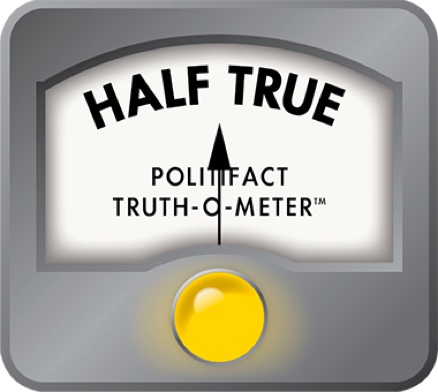
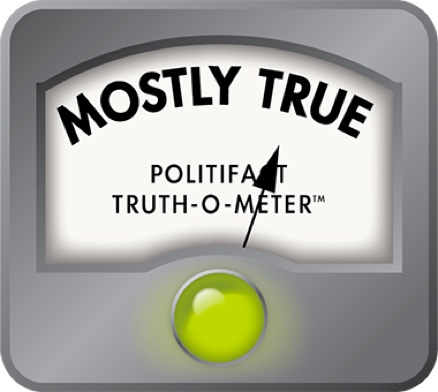
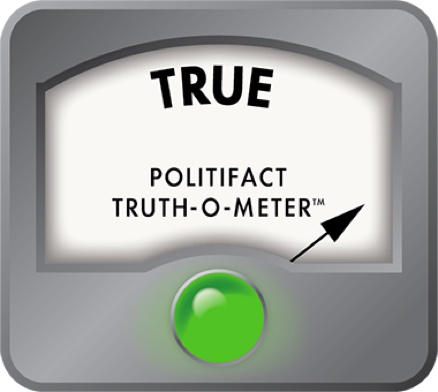
We rate the claim True.
TRUE – The statement is accurate and there’s nothing significant missing. Click here for more on the six PolitiFact ratings and how we select facts to check.
https://www.sharethefacts.co/share/003d1658-4ac0-48c0-9ba4-d2d0cccd8876
Our Sources
Facebook Live, interview of state Rep. Donna Howard by the Dallas Morning News, Feb. 27, 2017 (condom claim at 12:56 mark)
Emails (excerpted), Lauren Willis, director of communications, Office of the Texas State Comptroller, March 2-March 8, 2017
News story, "Condoms make state's tax-exempt list," Lubbock Avalanche-Journal, March 22, 2000
News story, "State cash surplus fuels Bush, Mauro tax-cut proposals," Dallas Morning News, Sept. 4, 1998 (Nexis search)
News story, "Texans due break on over-counter medicine," Corpus Christi Caller-Times, March 22, 2000 (Nexis search)
News story, "Condoms on list to get tax break; Foes say it fosters promiscuity," Houston Chronicle, March 22, 2000 (Nexis search)
Web page, "National Drug Code Directory," U.S. Food and Drug Administration, last updated Feb. 24, 2017 (accessed March 6, 2017)
Legislation and bill history, Senate Bill 441, 1999 Texas Legislature, Texas Legislature Online, Texas Legislative Council (accessed March 7-8, 2017)
Legislation and bill history, Senate Bill 1125, 2001 Texas Legislature, Texas Legislature Online, Texas Legislative Council (accessed March 7, 2017)
Emails, Deborah Kotz, public affairs specialist, Food and Drug Administration, March 7-8, 2017
News story, "Texas lawmakers push bipartisan effort for tax-free tampons," the Texas Tribune, Dec. 6, 2016
Story, "Texas lawmakers demand tax-free tampons," Breitbart News, Dec. 7, 2016
News story, "Texas lawmakers want to help women by removing the tampon tax, 'period,’" Dallas Morning News, Dec. 27, 2017