“One would have to go back more than a century to find a scenario where a president’s nominee for the Supreme Court was confirmed by…
Arizona senator claims confirming Supreme Court nominees in an election year is rare
As President Barack Obama is on the brink of selecting a U.S. Supreme Court nominee to replace the late Justice Antonin Scalia, Republican lawmakers have made a slew of historical statements related to vacant Supreme Court seats.
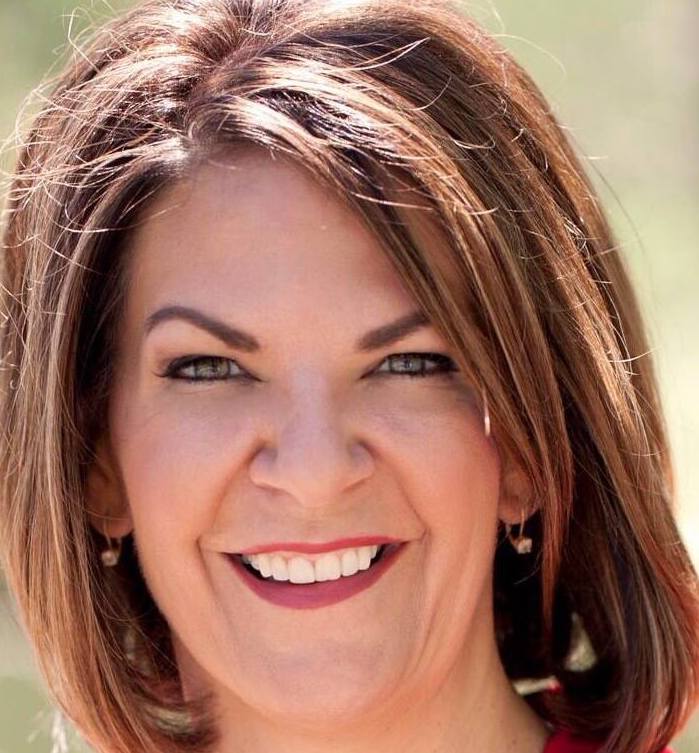
Sen. Jeff Flake, R-Ariz., joined the party in a Feb. 22 statement.
“One would have to go back more than a century to find a scenario where a president’s nominee for the Supreme Court was confirmed by the opposition party in the Senate when the vacancy occurred during an election year,” Flake said. “I’m not about to break new ground in the Senate, particularly when any nominee could so drastically shift the balance of the court.”
PolitiFact has researched similar claims of late:
-
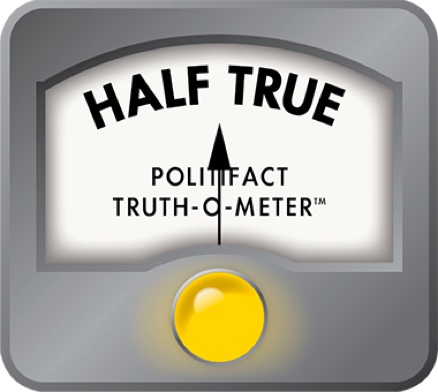
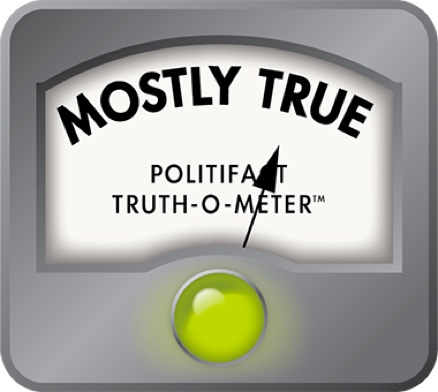
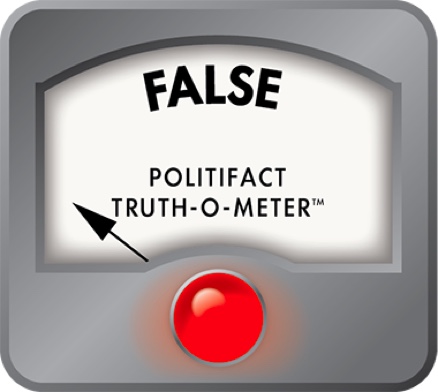
Texas Sen. Ted Cruz said in February that “it’s been 80 years since a Supreme Court vacancy was nominated and confirmed in an election year,” also saying that not approving a nomination in an election year is a long tradition. It’s been 76 years, but these openings are rare, so it’s not much of a tradition. We rated Cruz’s claim Half True.
-
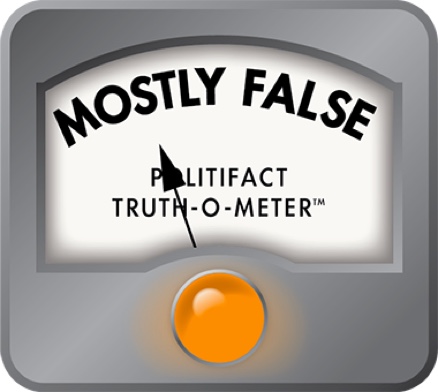
Florida Sen. Marco Rubio also claimed in February that “it’s been 80 years since a lame-duck president appointed a Supreme Court Justice.” President Ronald Reagan, in his second term, nominated Justice Anthony Kennedy in November 1987. He confirmed Kennedy while still in office in February 1988. We rated Rubio’s claim Mostly False.
So, turning back the history book once again, we decided to look at Flake’s claim.
Checks out
Flake spokesman Jason Samuels emphasized that the Arizona senator’s statement included “confirmed by the opposition party” and “vacancy occurred during an election year” when we reached out.
Samuels referred us to the Senate’s list of Supreme Court nominations going back to 1789.
Experts we spoke with generally agreed with Flake’s claim.
Sarah Binder, a political scientist at George Washington University, said Flake’s statement is “technically correct.” She noted that there are no 20th century examples of a Supreme Court vacancy in an election year that the opposition party in the Senate refused to consider.
“The only seat left vacant was Sherman Minton’s, who resigned in October 1956, one month before the election. The (Democratic-controlled) Senate had already adjourned for the elections, so (Republican) President Eisenhower gave William Brennan a recess appointment, and he was later nominated and confirmed in 1957,” Binder said.
A recess appointment isn’t the same as submitting a nominee, according to Russell Wheeler, an expert on federal courts at the Brookings Institution.
“Eisenhower didn’t submit a nominee; he recess appointed Brennan then nominated him the following January. It helped that Brennan was a Democrat,” Wheeler said.
The Justice Kennedy instance aids Flake’s statement too.
“Jeff chose his words very, very carefully. There have been vacancies during election years that were filled — including Anthony Kennedy — by an opposition Senate. But the vacancy occurred shortly before the election year,” said Norman Ornstein, a scholar at the conservative American Enterprise Institute. “Fundamental to this statement is the reality that we have not had a vacancy occurring in an election year with an opposition Senate.”
Our ruling
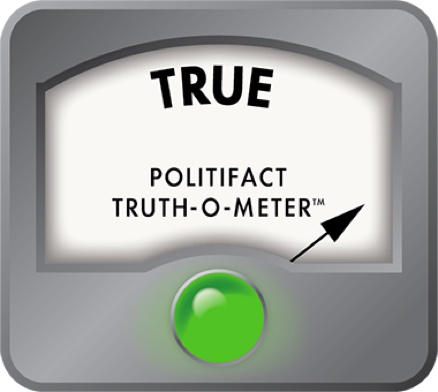
Flake said, “One would have to go back more than a century to find a scenario where a president’s nominee for the Supreme Court was confirmed by the opposition party in the Senate when the vacancy occurred during an election year.”
He’s right.
Flake’s carefully crafted statement rules out potential exceptions, such as Justice Kennedy’s 1988 election year confirmation, but 1987 nomination, or the 1950s case with President Eisenhower and a Democratic Senate in adjournment when a Supreme Court vacancy came up a month before the November election. This seems to be because a vacancy just hasn’t happened to occur under these circumstances.
We rate Flake’s claim as True.
Our Sources
Sen. Jeff Flake, "Flake: No Scalia Replacement This Year," Feb. 22, 2016
Interview with George Washington University political scientist Sarah Binder, Feb. 24, 2016
Interview with Flake spokesman Jason Samuels, Feb. 24, 2016
Interview with American Enterprise Institute scholar Norman Ornstein, Feb. 24, 2016
Interview with Brookings Institution federal courts expert Russell Wheeler, March 11, 2016
National Public Radio, "Obama Begins Interviewing Potential Supreme Court Nominees," March 9, 2016
U.S. Senate, "Supreme Court Nominations, present-1789," accessed March 11, 2016