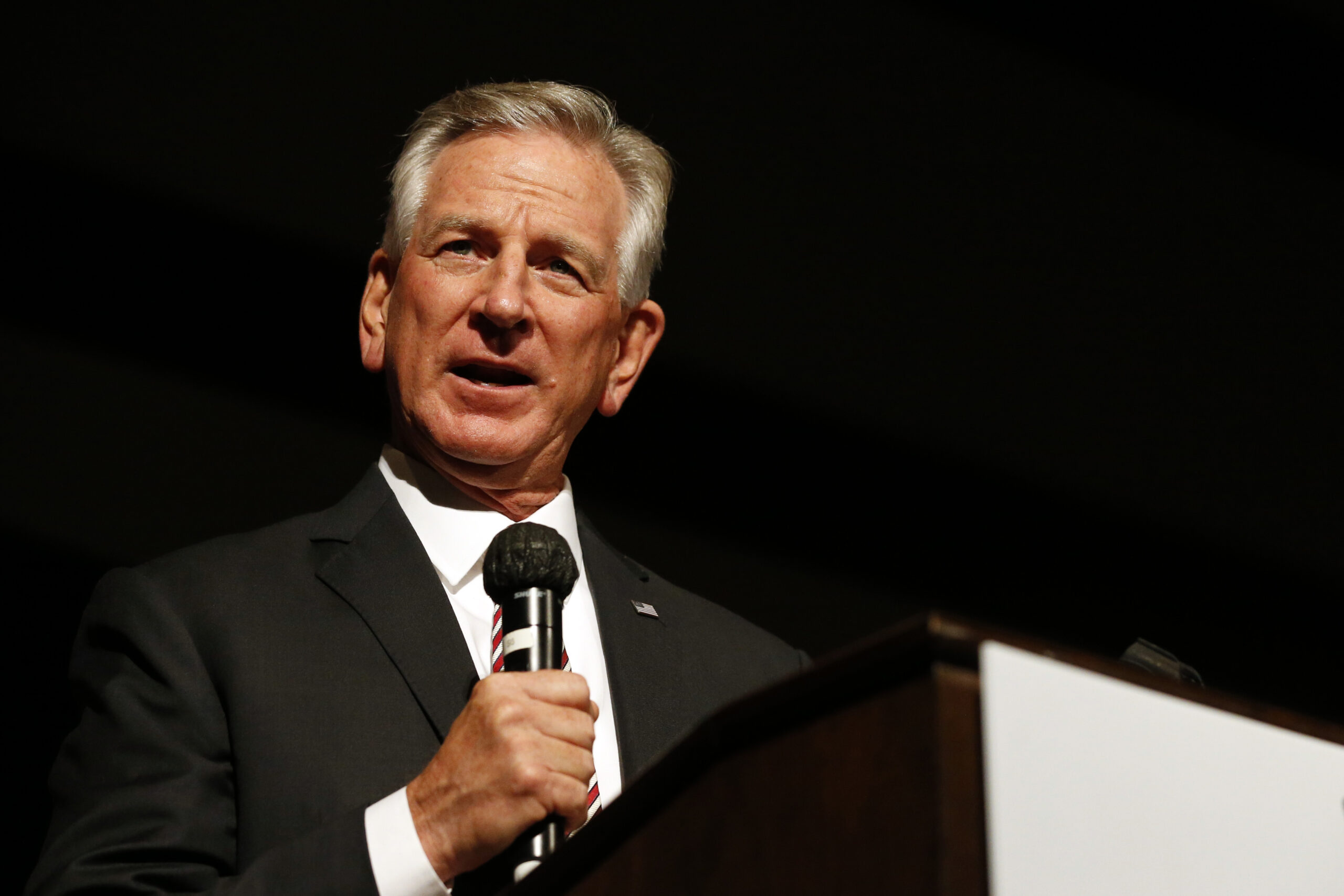
“90 percent of all pain medications are prescribed in the United States.”
Jeb Bush says Americans consume vast majority of addictive painkillers
Editor’s note (May 10, 2017): Since the publication of this fact-check, PolitiFact Missouri has found additional information and analysis about this topic. To read the latest, see this fact-check.
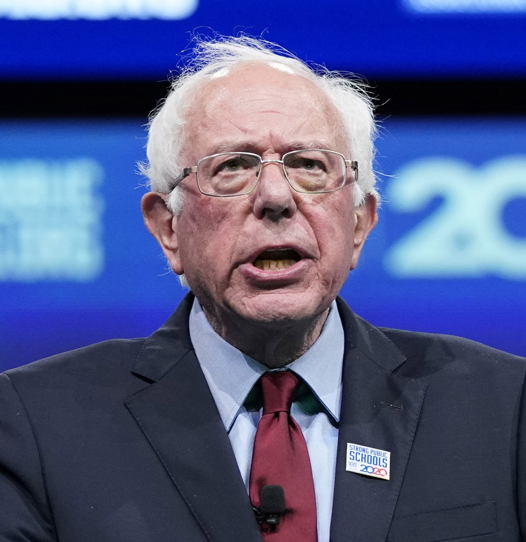
As New Hampshire officials work to contain the state’s opioid crisis, presidential candidates have been called upon to address the problem and offer solutions. At an editorial board meeting with Monitor staff, former Florida Gov. Jeb Bush outlined his plan — and dropped an interesting statistic.
Bush said Americans have a tendency to overmedicate in general, but addictive painkillers are even worse. “I read this, I believe, that 90 percent of all pain medications are prescribed in the United States in the world,” Bush said.
Could this be true? Are so many of the world’s pain medications dispensed in this country alone? We decided to check out the number and its origins.
Bush’s New Hampshire campaign staff said the candidate misspoke; he meant to say 80 percent, not 90. The article Bush was referring to was by Dr. Sanjay Gupta and published last year on CNN.com.
“We were stunned to learn 80 percent of the world’s pain pills are consumed in the United States,” Gupta writes.
That number doesn’t just appear in CNN’s reporting, though. ABC News cited it in 2011. The BBC mentioned it in coverage a year later.
As noted by the Bush campaign — and independently verified by PolitiFact New Hampshire — the statistic originates with the American Society of Interventional Pain Physicians, a group based in Kentucky with some 4,500 members.
The group reports in a fact sheet that the United States, with “only 4.6 percent of the world’s population, has been consuming 80 percent of the global opioid supply, and 99 percent of the global hydrocodone supply, as well as two-thirds of the world’s illegal drugs.”
Papers published in Pain Physician — ASIPP’s quarterly journal — are the source of those numbers. That 80 percent figure appeared in a paper published in 2008, and has been repeated in the organization’s literature, including testimony to the U.S. Senate.
But while these numbers were the source of Bush’s statement, they date from 2008. Out of curiosity, we decided to search for another, more recent version of the information.
Luckily, there’s a separate source for such data, and it’s the United Nations. The group’s International Narcotics Control Board issues yearly papers about narcotic drug use around the world. While it publishes a general report, it also puts out technical reports, which detail the actual use of such substances globally.
And according to the group’s 2014 report, its most recent, the United States consumes 78 percent of the world’s oxycodone (known as Oxycontin). It’s also reported to use 99 percent of the world’s hydrocodone (it’s Vicodin when combined with acetaminophen) and used 51 percent of the world’s hydromorphone (Dilaudid).
Earlier versions of this set of statistics appear in a 2012 Newsday piece, a 2013 New Yorker article and a 2014 New York Times blog post.
And Bush’s larger point that Americans generally over-medicate is supported, too.
According to the National Institute on Drug Abuse, the United States uses 75 percent of all of the world’s prescription drugs, period. Again, the United States has just under 5 percent of the world population.
Our ruling
Bush said that, globally, “90 percent of all pain medications are prescribed in the United States.” In the context of the conversation, it was clear that Bush was referring to opioid painkillers.
The most up-to-date information suggests that the United States uses the majority of the world’s supply of popular versions of such drugs. And statistics from a few years ago put that overall percentage at 80 percent.
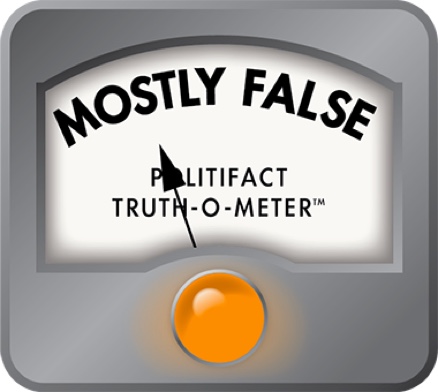
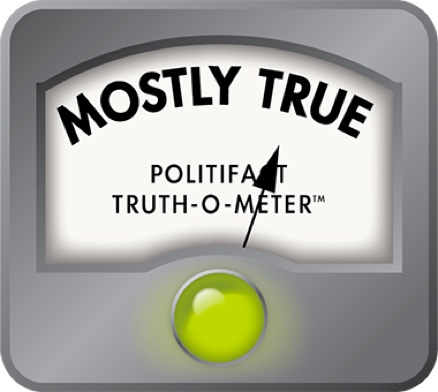
The exact number Bush used isn’t far off from commonly available statistics, and his campaign acknowledged that he misspoke. His overall point, however, was correct. We rank his statement Mostly True.
Our Sources
"Jeb Bush swipes at Trump, doubles down on ideas of reform," Concord Monitor, Jan. 21, 2016
Editorial board meeting with Jeb Bush, Jan. 21, 2016
Correspondence with Jeb Bush campaign, Jan. 25-Feb. 2, 2016
"Unintended consequences: Why painkiller addicts turn to heroin," CNN.com, Jan. 3, 2015
"Prescription painkiller use at record high for Americans," April 20, 2011
"Why do Americans consume 80% of world's painkiller drugs?" BBC News, May 9, 2012
American Society of Interventional Pain Physicians website
"Therapeutic Opioids: A Ten-Year Perspective on the Complexities and Complications of the Escalating Use, Abuse, and Nonmedical Use of Opioids," Pain Physician, Opioid Special Issue, 2008
The American Society of Interventional Pain Physicians (ASIPP) Fact Sheet, October 2011
International Narcotics Control Board website, Feb. 1, 2016
"Narcotic Drugs 2014: Estimated World Requirements for 2015, Statistics for 2013," International Narcotics Control Board, 2014
"UN: U.S. consumes 80% of world's oxycodone," Newsday, Jan. 21, 2012
"Who is responsible for the pain-pill epidemic?" The New Yorker, Nov. 8, 2013
"Painkiller Abuse, a Cyclical Challenge," New York Times, Dec. 22, 2014
"Popping Pills: Prescription Drug Abuse in America," National Institute on Drug Abuse, January 2014