“Homicides against blacks have tripled” since Florida’s “stand your ground” law has been in existence.

Homicides of blacks have tripled since ‘stand your ground’ was passed in Florida, Jesse Jackson says
Rev. Jesse Jackson called for a boycott of Florida, which he labeled an “apartheid state” after George Zimmerman was acquitted in the fatal shooting of Trayvon Martin.
“No doubt … the inclination (is) to boycott Florida, to stop conventions, to isolate Florida as a kind of apartheid state given this whole ‘stand your ground’ laws,”Jackson said on CNN July 18. “Homicides against blacks have tripled since this law has been in existence. Now more homicides and more guns make us less secure.”
On July 13, a jury acquitted Zimmerman, a white Hispanic volunteer neighborhood watchman, in the death of Martin, an unarmed black teenager killed in Sanford in 2012. Zimmerman claimed self-defense. The case has sparked much discussion about the impact of the “stand your ground” law in Florida — particularly for the black community.
After Jackson made his remarks, several readers emailed us: Is Jackson correct that since the law passed, homicides of black victims have tripled?
Data on black homicide victims in Florida
Signed into law by then-Gov. Jeb Bush in 2005, Florida’s “stand your ground” law says a person has “no duty to retreat and has the right to stand his or her ground and meet force with force, including deadly force if he or she reasonably believes it is necessary to do so to prevent death or great bodily harm to himself or herself or another or to prevent the commission of a forcible felony.”
The Florida Department of Law Enforcement emailed PolitiFact data showing the number of black homicide victims each year. Since “stand your ground” went into effect part way through 2005, we started the clock ticking in 2006.
Here are the number of black homicide victims each year:
2006: 524
2007: 573
2008: 564
2009: 494
2010: 452
2011: 476
2012: 532
That shows the sheer number of black homicide victims between 2006 and 2012 barely changed: it rose from 524 to 532.
(Even if we did include 2005 — which wouldn’t be a fair analysis since the law went into effect part way through the year — we would not find the number of homicides of black people tripled. The number rose from 428 in 2005 to 532 in 2012, or a 24 percent increase.)
We also looked at the number of homicides of black people as a percentage of the total number of homicides and did not find they tripled.
Justifiable homicides
So where did Jackson get this idea that homicides of black people had tripled?
We aren’t certain, since Jackson’s Rainbow PUSH Coalition did not respond to our questions. However, we suspect that he might have been referring to justifiable homicides by civilians.
Reports of justifiable homicides tripled after “stand your ground” went into effect, the Tampa Bay Times reported in October 2010 based on FDLE data. (The Times and Miami Herald are partners in PolitiFact Florida.)
Later in the CNN interview, Jackson seems to be referring to these numbers. After a question specifically about the “stand your ground,” Jackson said, “There has been a triple increase in these shootings since this law has been in effect.”
If what he meant by “these shootings” were justifiable homicides, then Jackson was on track. But that’s different from the statement he made earlier. (Read more about the increase in justifiable homicides.)
Our ruling
During an interview on CNN about Florida’s “stand your ground” law Jackson said: “Homicides against blacks have tripled since this law has been in existence.”
The law was enacted part way through 2005. The number of homicides in which black people were the victims fluctuated from year to year between 2006 and 2012 and didn’t come anywhere close to tripling.
It’s possible Jackson is confusing homicides with justifiable homicides, but that’s a key qualifier that he omitted in part of his comments.
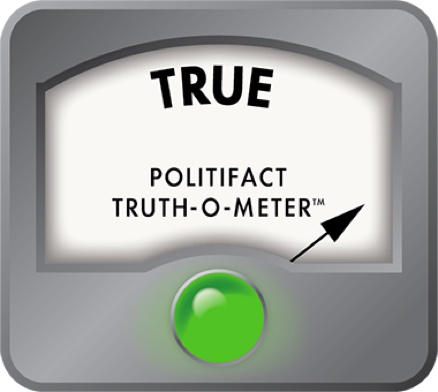
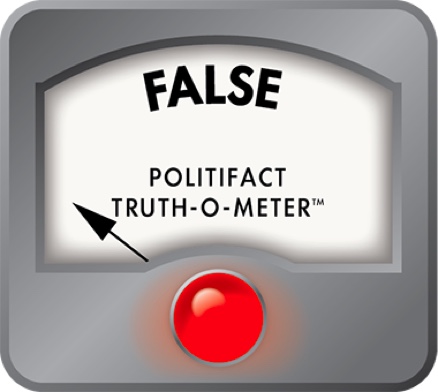
We’re rating his statement that homicides against blacks have tripled. That’s not accurate, so we rate the statement False.
https://www.sharethefacts.co/share/f87b2e8f-1ede-48fa-a331-d1dca3f923e7
Our Sources
Florida Department of Law Enforcement, Homicide data, 2001-2012
Florida statutes, 776.013 Justifiable use of force, 2005
The Hill, "Jesse Jackson suggests boycotting Florida as ‘apartheid state,’" July 19, 2013
Tampa Bay Times,"Florida’s Stand your ground law,"June 3, 2012
Miami Herald’s Naked Politics blog, "Jesse Jackson’s false sermon on Trayvon Martin,"April 30, 2012
Orlando Sentinel database, Justifiable homicides in Florida, 2000-2010
Washington Post, "Stand your ground laws coincide with jump in justifiable homicide cases," April 7, 2012
Interview, Gretl Plessinger, spokeswoman for the Florida Department of Law Enforcement, July 23, 2013