Despite President Barack Obama’s promise to cut healthcare costs, “the average cost of a family policy is up $1,300.”

RNC ad blames Obama for $1,300 spike in family health care premiums
Republicans are expecting to use health care as a wedge issue in the 2012 elections — an approach made clear in a web ad released by the Republican National Committee on March 19, 2012.
“Barack Obama promised to cut health care costs,” the ad says. After airing a clip of Obama saying, “We will bring down premiums by $2,500 for the typical family,” the ad continues: “But it didn’t happen. Six in 10 americans are seeing their premiums rise. The average cost of a family policy is up $1,300. And a key part of Obama’s health care takeover will cost $100 billion more than promised. Higher costs for patients, higher costs for taxpayers. Another broken promise for Obama.”
Elsewhere, we’ve given Obama a rating of Stalled for his promise to lower family premiums by $2,500. So the RNC has a point that Obama over-promised on family premiums.
But is the RNC on safe ground when it blames Obama for “the average cost of a family policy” rising by $1,300?
The ad references a widely respected study produced annually by the Kaiser Family Foundation, an independent group that studies health care, and the Health Research and Educational Trust. It’s a sample based on surveys of benefits administrators working for about 2,000 employers that offer health care plans.
The 2011 edition of this survey found that the average cost of all private plans was $15,073, which was up from the $13,770 found in 2010 — a difference of $1,303, almost exactly what the ad said.
So the RNC’s number is legitimate. But we think it’s worth adding some context.
First, the figure in question refers to the entire cost of the health coverage — that is, both the portion paid by the employee and by the employer. And as it happens, most of the $1,300 increase between 2010 and 2011 was picked up by the employer — not the employee.
Employees and their families saw their cost of health care increase by a much smaller amount — $132. Employers, by contrast, had to foot a $1,171 increase. The ad is technically correct when it uses the $1,300 figure, and additional employer health care costs don’t simply disappear; they can directly reduce the amount of money available for employee pay, meaning that employees may indirectly bear that burden. “Workers sooner or later pay pretty much all of the cost of the insurance that employers ‘provide,’ ” said Henry Aaron, a health care specialist at the Brookings Institution.
Still, when watching the ad, it’s easy for a viewer to assume that the average family is shelling out $1,300 more — but that’s not the case. It’s only about one-tenth of that, at least directly.
Second, the link between Obama’s policies and health care premium increases is more nuanced than the ad makes it, because most of the health care law hasn’t taken effect yet. Jonathan Oberlander, a health policy professor at the University of North Carolina School of Medicine, said that he is uncertain about how the law will affect health costs in the long run, but he added that it’s premature to draw a straight-line link between the law and rising premiums.
“Blaming the health care law for rising premiums or faulting it for failing to lower them is misleading,” Oberlander said.
One private-sector study of health insurance premiums, by the firm Aon Hewitt found that overall, the new law “is anticipated to increase costs by an average of 1.5 percent in 2011,” which the firm said was in line with other studies. The increase was greater than that for individually purchased plans and smaller for large employer plans.
This average increase of 1.5 percent is well below the overall increase in premiums found in the Kaiser/HRET study, which suggests that factors other than the law were driving the overall increase.
One piece of evidence to support this view can be found in the Kaiser/HRET report itself. Since 1999, both the employee’s and the employer’s health care premium costs have each risen at an average of 13 percent to 14 percent a year. So these increases have been going on for a long time, primarily because of technological advances and rising physician and pharmaceutical costs.
Such longer term trends are more important benchmarks anyway, experts say. “What happens over a year or two typically means little,” said Aaron of Brookings. “What happens over longer period does matter.”
Our ruling
The RNC ad uses a legitimate figure, though its meaning can’t be fully understood without additional context. Families aren’t shelling out $1,300 more for health coverage this year; they are paying $132 more, with their employers picking up the rest, a financial burden that may, or may not, be passed on indirectly to the employee.
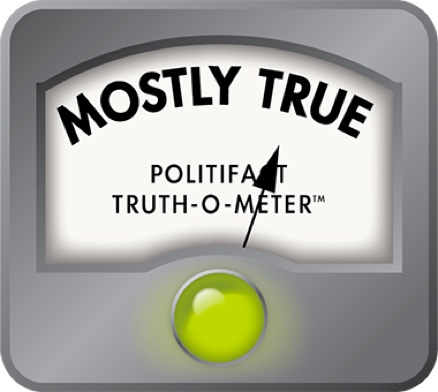
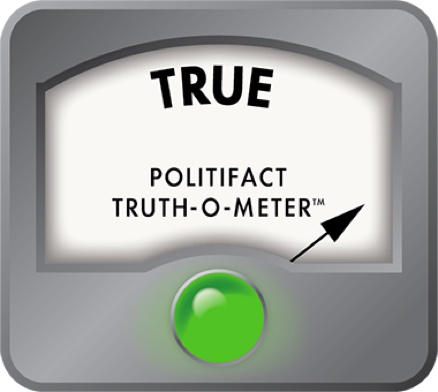
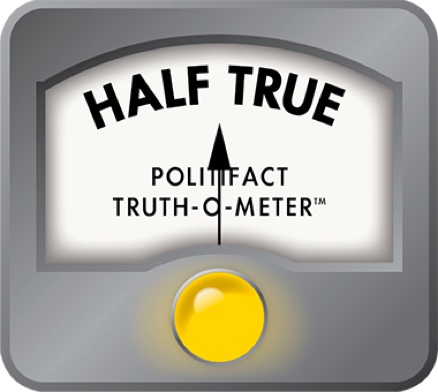
Meanwhile, uncertainty remains about why premiums have risen in the past year. Given that some provisions of Obama’s health care law are already in effect, such as the requirement that health plans include children to age 26, the law has probably had some impact. However, premiums were already on an upward track well before the law was passed. On balance, we rate the claim Half True.
Our Sources
Republican National Committee, "Higher Costs" (ad), March 19, 2012
Kaiser Family Foundation/Health Research and Educational Trust, "Employer Health Benefits," 2011
Aon Hewitt, "2011 Health Insurance Trend Driver Survey," 2011
Email interview with Jonathan Oberlander, health policy professor at the University of North Carolina School of Medicine, March 20, 2012
Email interview with Henry Aaron, senior fellow at the Brookings Institution, March 20, 2012