“There is little if any evidence that the use of red light cameras in New Jersey has reduced the number or severity of accidents at…
Michael Doherty says evidence is lacking that red-light cameras in New Jersey reduce accidents
Big Brother, New Jersey Sen. Michael Doherty has his eye on you.
And the Warren County Republican isn’t the only one watching those eyes in the sky known as red-light cameras.
Enough people have questioned the reliability of the cameras that the state Department of Transportation on June 19 suspended a five-year pilot program for the devices because of concerns about yellow light timing with most of the cameras in the state.
But Doherty has questioned the cameras’ reliability for some time, citing concerns about privacy, revenue and actual impact on reducing collisions.
“There is little if any evidence that the use of red light cameras in New Jersey has reduced the number or severity of accidents at the intersections where they are used,” Doherty said in a May 14 news release about a bill he introduced to ban the cameras in New Jersey.
So far the evidence seems stacked in Doherty’s corner, PolitiFact New Jersey found
First, some data about the cameras: they work with a traffic control device to photograph or record vehicles that disregard a red signal. Police review the images to verify if a violation happened. Summonses are mailed to drivers. Communities and the companies that installed the cameras share the revenue.
In New Jersey’s case, we reviewed a November 2011 report presented to the Legislature about the first year of the cameras’ effectiveness, through June 1, 2011. A second-year report has not yet been sent to the Legislature, according to DOT spokesman Joe Dee.
At the time of its report, the DOT noted that just two intersections (of 59 studied) – both in Newark — had been recording violations for a full year: Broad and Market streets, and Broad Street at Raymond Boulevard.
Crash and accident cost data for both locations prior to the cameras’ installation and after showed decreases of near 50 percent for three types of crashes and damages cost decreases of $149,000.
But the DOT questioned that data.
“Although these calculations suggest a potential positive effect on safety as a result of the pilot program, we believe the data are too limited to draw any meaningful conclusions at this time,” the report states. “The Department therefore recommends continued data collection and monitoring of RLR (Red Light Running) program intersections.”
We also reviewed studies and data from organizations such as the U.S. Public Interest Research Group, Safer Streets L.A., the National Motorists Association and the Insurance Institute for Highway Safety that address concerns that more accidents result at camera-controlled intersections, in part because the yellow signal isn’t long enough.
“Providing adequate yellow time and a brief phase when all signals are red is important and can reduce crashes, but those things alone don’t eliminate the need for or potential benefits of red light cameras,” the Institute says on its website. “Studies have shown that increasing yellow timing to values associated with guidelines published by the Institute of Transportation Engineers ‘can significantly decrease the frequency of red light violations.’”
“One of our main objections to the use of red light cameras is that often they provide a perverse incentive for jurisdictions to refrain from implementing effective safety countermeasures such as an increase in the yellow phase timing because it would result in a decrease in violations and consequently a decrease in revenue,” Jay Beeber, executive director of Safer Streets L.A., said in an e-mail.
Steve Carrellas, spokesman for the New Jersey chapter of the National Motorists Association, said a properly engineered intersection is a better deterrent for crashes than red-light cameras.
Our ruling
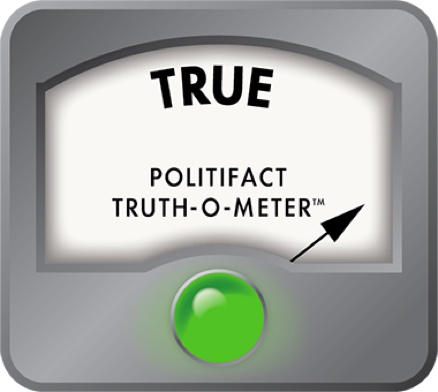
Doherty claimed, “There is little if any evidence that the use of red light cameras in New Jersey has reduced the number or severity of accidents at the intersections where they are used.” A state DOT report showed some decreases in certain types of crashes and the costs of damages, but emphasized that the data collected through June 1, 2011 is too small to make definitive decisions about the cameras’ effectiveness. We rate Doherty’s statement True.
To comment on this story, go to NJ.com.
Our Sources
Email interview with Sen. Michael Doherty, June 13, 2012
Phone interview with Bill Dressel, executive director, New Jersey League Of Municipalities, June 13, 2012
E-mail interview with Joe Dee, spokesman, New Jersey Department of Transportation, June 14, 2012
E-mail interview with Jay Beeber, executive director, Safer Streets L.A., June 14, 2012
Safer Streets L.A. website, accessed June 14, 2012
The Federation Of State PIRGS website, "Caution: Red Light Cameras Ahead," Oct. 27, 2011, accessed June 14, 22 and 25, 2012
New Jersey Department Of Transportation, "Report On Red-Light Traffic Control Signal Monitoring Systems," November 2011, accessed June 18, 2012
National Motorists Association website, "A Detailed Investigation Of Crash Risk Reduction Resulting From Red-Light Cameras In Small Urban Areas," July 2004, accessed June 19, 2012
NJ.com, 2 N.J. lawmakers want an end to red-light cameras after program suspended, June 21, 2012
NJ.com, N.J. slams the brakes on controversial red-light cameras, June 20, 2012, accessed June 21, 2012
Phone interview with Steve Carrellas, spokesman, New Jersey chapter of National Motorists Association, June 25, 2012
Insurance Institute For Highway Safety website, accessed June 25, 2012