The United States has experienced “40 straight months of unemployment at 8 percent or higher.”
Tennessee Congresswoman Diane Black says jobless rate has been 8 percent or higher for 40 straight months
When the government’s jobs report for May offered a bleak picture of the economy, with employers adding just 69,000 jobs in May, U.S. Rep. Diane Black, R-Gallatin, and other lawmakers expressed their frustrations, often in very partisan terms.
The report said the unemployment rate edged up slightly to 8.2 percent, from 8.1 percent in April, and Black issued a press release that among other things said the prospects for unemployed or underemployed Americans finding full-time work are not very good “after 40 straight months of unemployment at 8 percent or higher.”
We know the unemployment has remained stubbornly high, but has it really been at 8 percent or higher for 40 straight months?
For the purposes of this ruling, we’re only going to look closely at the statistics Black cited and stay out of the political blame game. Suffice to say, it’s not hard to find Republicans blaming Democratic policies and Democrats blaming Republican obstruction for the inability to move the economy closer to full employment.
We called Black’s office and asked them to back up the claim. Her spokeswoman, Allison Huff, pointed us to a chart compiled by the Bureau of Labor Statistics, which is the gold standard for unemployment statistics.
According to the bureau, the last time unemployment was below 8 percent was in January 2009, when it was 7.8 percent — it then spiked quickly to 8.3 percent in February of 2009 and to 9.4 percent by May before topping out at 10.0 percent in October of 2009. It dropped gradually from there, and the May report listing unemployment at 8.2 percent marked the 40th consecutive month it has been at 8 percent or higher.
As dismal as that may be, it’s not the record.
“The rate of unemployment in the United States has exceeded 8 percent since February 2009, making the past three years the longest stretch of high unemployment in this country since the Great Depression,” the nonpartisan Congressional Budget Office reported in a study in February 2012.
In the Great Depression era, unemployment topped 15 percent annually for six straight years, from 1931 to 1936, and never fell below 8.7 percent over 12 years, according to estimates adopted by the Bureau of Labor Statistics. In four consecutive years, unemployment exceeded 20 percent a year.
Our colleagues at PolitiFact National cited those figures when they rated as False a claim by Republican National Committee chairman Reince Priebus, who said, “We have unemployment that rivals the Great Depression.”
There is a qualifier, though. The Depression-era unemployment data counted those age 14 and up, not 16 and up (the standard that began in 1948). In addition, monthly unemployment statistics were not kept until 1948 as well. Thus, all statistics during the Great Depression were on an annual basis.
Our ruling
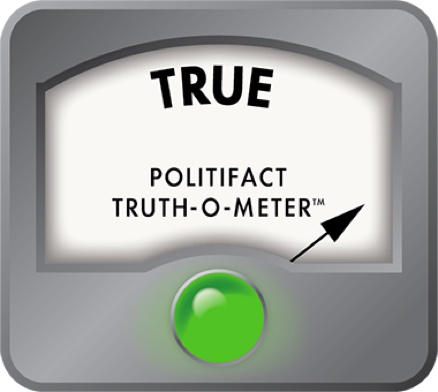
Rep. Black did not go as far as some other Republicans and claim that unemployment is as bad as during the Great Depression. She merely said it has been at 8 percent or higher for 40 straight months. Based upon the government’s own data, we rate her statement as True.
Our Sources
Bureau of Labor Statistics, Employment Situation Summary, June 1, 2012
Rep. Diane Black, Congressman Black’s Statement on May Jobs Report, June 1, 2012
Allison Huff, spokeswoman for Rep. Diane Black, in a phone interview and email with PolitiFact on June 5, 2012
Bureau of Labor Statistics, Labor Force Statistics from the Current Population Survey, accessed June 5, 2012
Congressional Budget Office, "Understanding and Responding to Persistently High Unemployment," February 2012
Bureau of Labor Statistics, "Compensation from World War I through the Great Depression," Jan. 30, 2003
PolitiFact National, item on Reince Priebus Great Depression claim, June 13, 2011