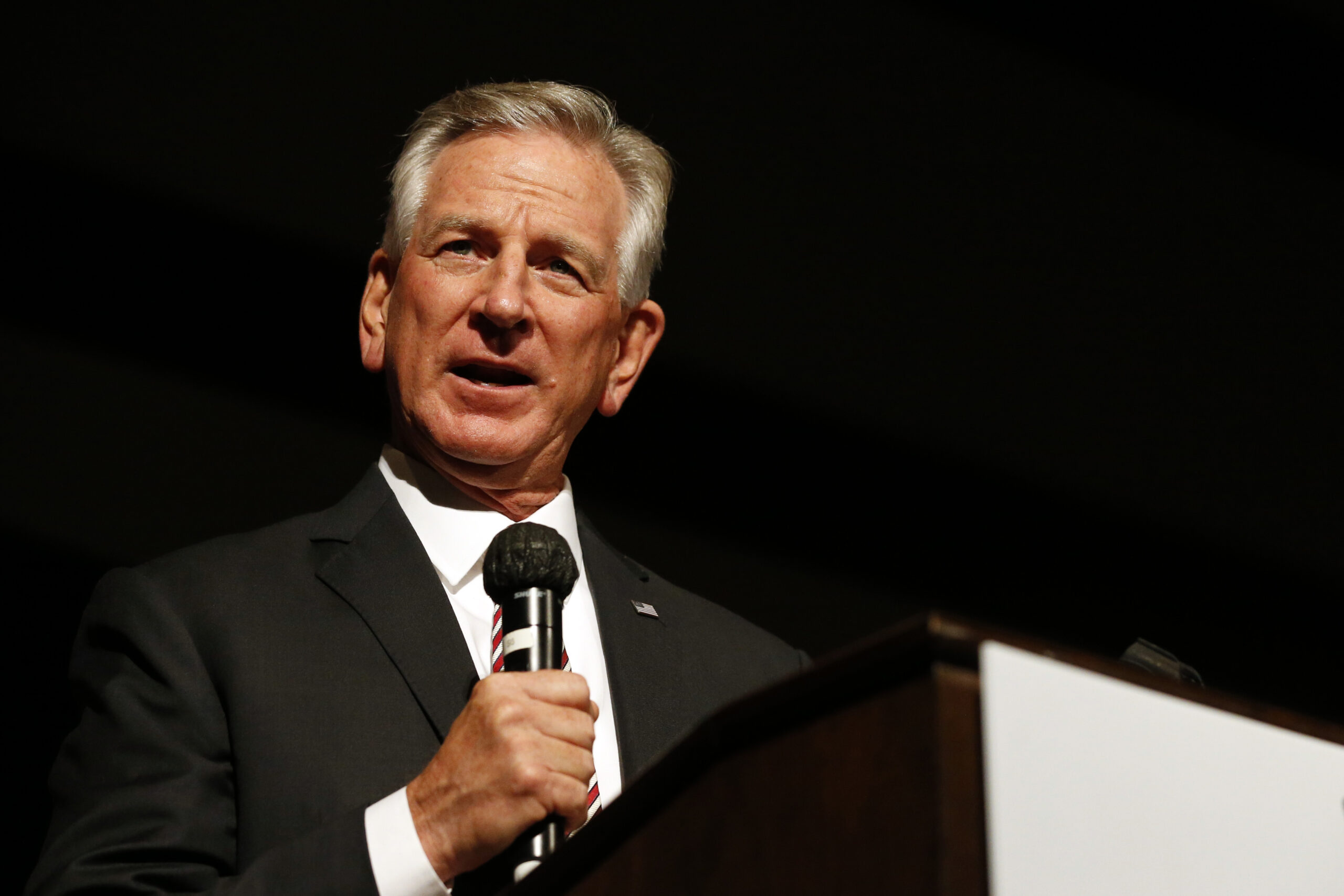
“From now on, we have to pay the Russians $50 million an astronaut to send Americans to the space station”


Marco Rubio says the United States will pay Russia $50 million per astronaut
The July 8, 2011, launch of space shuttle Atlantis from Kennedy Space Center in Florida marked the end of NASA’s shuttle program after three decades.
On CBS the day before the launch, Republican U.S. Sen. Marco Rubio voiced concerns about letting the shuttle program lapse, and made a point about the cost the United States will incur while the program is dormant.
“From now on, we are going to have to pay the Russians $50 million an astronaut to send Americans to the space station. And we have no plans to have anything in place to replace the shuttle any time before 2016,” Rubio said. “For Washington, it should be ashamed that it took so long to deal with this, and that something’s not in place. But it’s important for America moving forward, because other countries are, China, India, are investing heavily in their space programs. We cannot afford as Americans to lose space supremacy.”
We were curious about what sounded like an astronomical cost to hitch a ride into space. $50 million a round-trip ticket? (Can you at least check bags for free?)
The root of the claim comes from contract modifications the United States signed with the Russian Federal Space Agency for crew transportation, rescue and related services. The idea of having contracts with Russia isn’t new, but these contract modifications were crafted to offset the end of NASA’s shuttle program.
An April 6, 2010 a NASA press release stated that NASA had signed a modification to a contract with the Russian Federal Space Agency for crew transportation in 2013 and 2014. The additional cost — $335 million — would cover training, preparation and landing for six crew members. That math works out to about $55.8 million per astronaut.
Then in March 2011, NASA modified the contract with the Russians again to provide six seats a year in 2014 and 2015 for $752 million, or about $62.7 million per astronaut, per trip, said NASA spokeswoman Stephanie Schierholz. The increase reflects inflation in Russia, she said.
Rubio used the updated figure of $63 million in an op-ed piece published July 9, 2011 in the Tallahassee Democrat.
As we noted, contracts with the Russians started long before the shuttle shutdown. The United States has had a contract with the Russians for spaceflight support and services since 1993. During the 1990s, American astronauts traveled to the Russian space station Mir several times. The first U.S. astronaut to fly to the International Space Station on a Soyuz was Bill Shepherd on Oct. 31, 2000.
“The idea is that if we purchase services to the International Space Station — whether through the Russian Soyuz or when commercial providers come on line — eventually it frees up money for NASA to invest in developing a transportation system that will take us beyond low-earth orbit,” Schierholz said.
NASA already has contracts with private companies to provide remotely piloted flights and several are competing for NASA funds to develop flights to carry astronauts, according to Space.com.
A note about the costs. While $50 million or $63 million sounds awfully expensive, it is obviously less costly to taxpayers than if the United States continued its space shuttle program.
With the shuttle program ending, NASA’s space operations budget will shrink from $6.1 billion in fiscal year 2010 to $4.3 billion in fiscal year 2012. The space operations budget is broken into three categories: the space shuttle, International Space Station and Space and Flight support. The space shuttle line item is expected to dwindle during the next few years — from $664.9 million in fiscal year 2012 to less than $1 million in 2016. NASA will pay for the contract with the Russians out of the line item for the International Space Station — and that part of the budget is expected to rise from about $2.8 billion in 2012 to $3.2 billion in 2016.
(For the record, most of the costs associated with the shuttle program are fixed — meaning NASA would pay out hundreds of millions of dollars for salaries and for parts whether the shuttle flew 1 time a year or 12. Schierholz said the marginal cost — the additional cost associated with each individual shuttle launch is around $100 million, primarily for the external tank and two solid rocket boosters.)
Rubio spokesman Alex Burgos said the overall cost wasn’t Rubio’s point. The crux of the comment was to illustrate that the United States now has to rely on Russia to get into space. “The main point is that, whereas once the U.S. led the way in space travel, we’re now beholden to another country – Russia – to get to space and to the space station,” he said in an e-mail.
Back to Rubio’s original comment. He said, “From now on, we have to pay the Russians $50 million an astronaut to send Americans to the space station.” In an op-ed piece a few days later he noted that the contract had risen to $63 million — which is the current figure. That’s a lot of money per astronaut — but there are two caveats worth mentioning. First, NASA has had a contract to pay the Russians to send someone to the International Space Station for more than a decade. And second, the overall space operations part of NASA’s budget is dramatically declining so while $50 million or $63 million sounds outrageous — it’s something of a bargain. We rate this claim Mostly True.
Our Sources
NASA, Press release "NASA extends contract with federal Russian space agency," April 6, 2010
NASA, Budget, Fiscal year 2012
Space.com, "NASA signs new $335 million deal to fly astronauts on Russian spaceships,"April 6, 2010
AP, "Russian rocket ride: $63 million per astronaut," March 14, 2011
Space.com, "$63 million a seat? NASA will pay it to the Russians," March 14, 2011
Tallahassee Democrat, "Marco Rubio: NASA must continue looking ahead," July 9, 2011
Miami Herald, "End of an era: space shuttle Atlantis launched," July 8, 2011
CBS, Interview with U.S. Senator Marco Rubio, July 7, 2011
Interview, Stephanie Schierholz, NASA spokeswoman, July 12, 2011
Interview, Alex Burgos, spokesman for U.S. Senator Marco Rubio, July 12, 2011