“In this country … we have more natural gas than Saudi Arabia has oil.”

Jon Huntsman says U.S. natural gas in greater supply than Saudi Arabian oil
Former Utah Gov. Jon Huntsman says that protecting the environment while securing new sources of energy and creating jobs will be a “balancing act” for the next president.
“The job we’ve got to undertake as American people is to fuel our future,” Huntsman said in a Republican presidential debate in Iowa on Dec. 15, 2011.
Where does he want to find the fuel? Right here at home.
Huntsman frequently decries U.S. dependence on foreign oil while trumpeting the need for energy independence. To support his point, in the debate he cited a statistic that “in this country … we have more natural gas than Saudi Arabia has oil.”
Our New Hampshire team checked this exact claim before and found that Huntsman is comparing apples and oranges and getting it wrong.
Complex math
PolitiFact’s New Hampshire team contacted the U.S. Energy Information Administration to break down the issue, which involves comparing energy sources that are measured differently. Oil supplies are calculated in barrels, while natural gas supplies are calculated in cubic feet. And the two fuels have different energy content, which means it takes still more math to compare them.
Converting the energy content into the standard measure British thermal units, 1 trillion cubic feet of natural gas is equivalent to 165 million barrels of crude oil, according to Steven Grape, an EIA expert in the Office of Oil, Gas, and Coal Supply Statistics.
In addition, there are two ways to look at how much of each resource is available. One is to look at proved reserves — those that are likely to be developed under current economic and operating conditions.
Another, more uncertain approach is to look at technically recoverable resources. These are resources that could be developed using current exploration and production technology, without regard to cost.
Starting with proved reserves, Saudi Arabia has 24 percent of the world’s proved reserves of crude oil, or about 264 billion barrels, Grape said. The U.S. proved reserves of natural gas are 284 trillion cubic feet. Punch those figures into the equation, and U.S. proved reserves are equal in energy content to about 46.8 billion barrels of oil — considerably less than Saudi Arabia’s proved reserves of oil.
Now let’s look at the technically recoverable figures. Resource estimates for Saudi Arabia are thought to be as high as 700 billion barrels of crude oil, and the technically recoverable resource estimate for the United States is about 2,500 trillion cubic feet of natural gas, which is equivalent to 412.5 billion barrels of oil.
Again, that’s much less than the 700 billion barrel estimate for Saudi Arabia.
Current production
Huntsman’s claim is correct only if taken to be referring to production. “We don’t have more natural gas in this country than Saudi Arabia has oil, but we produce more natural gas in this country per year than Saudi Arabia produces oil,” Grape said.
The U.S. produces the equivalent of 12.14 million barrels per day, compared with Saudi Arabia’s 9.8 million barrels of oil per day, Grape said.
But Huntsman didn’t say we “produce” more natural gas than Saudi Arabia produces oil. He said we “have” more.
Our ruling
In the debate, Huntsman said, “we have more natural gas than Saudi Arabia has oil.”
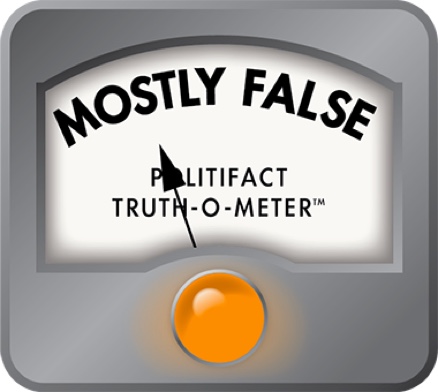
By two of the three measures to consider that claim, Huntsman is off base. Looking at proved resources, Saudi Arabia’s oil reserves are far larger than U.S. natural gas reserves. Considering technically recoverable resources, Saudi Arabia is still the front runner. Only when comparing current production levels does Huntsman’s statistic hold up. But Huntsman didn’t refer to production. Additionally, in talking about moving America toward energy independence, we think reserves are more relevant than current production and rule his claim Mostly False.
Our Sources
"Jon Huntsman says U.S. has more natural gas than Saudi Arabia has oil," PolitiFact New Hampshire, Dec. 8, 2011
Nashua Telegraph Edit Board with Jon Huntsman, Nov. 16, 2011
Web MIT, Technically Recoverable Resource, accessed Dec. 7, 2011
U.S. Energy Information Administration, EIA Country Analysis Brief; Saudi Arabia[1], accessed Dec. 2, 2011
U.S. Energy Information Administration, Summary: U.S. Crude Oil, Natural Gas, and Natural Gas Liquids Proved Reserves 2009, accessed Dec. 2, 2011
Saudi-British Relations, Saudi-European Economic Forum, Saudi Prince Turki al-Faisal, Sept.10, 2011, accessed Dec. 2, 2011
Saudi Arabia, U.S. Energy Information Administration, accessed Dec. 8, 2011
U.S. Energy Information Administration, EIA presentation on Shale Gas and the Outlook for U.S. Natural Gas Markets and Global Gas Resources (slide 13), June 21, 2011, Paris, France, accessed Dec. 2, 2011
E-mail interview with Steven Grape, U.S. Energy Information Administration, Office of Oil, Gas, and Coal Supply Statistics, Dec. 2, 2011
E-mail and phone interview with Steven Grape, U.S. Energy Information Administration, Office of Oil, Gas, and Coal Supply Statistics, Dec. 7, 2011
Phone interview with Hafeez Rahman, Petrolium Engineer, U.S. Energy Information Administration, Dec. 1, 2011.