“In the ’80s, Democrats promised spending cuts, but delivered only tax hikes.”
Ron Paul ad says Democrats only want tax increases
Rep. Ron Paul’s first television ad hits a popular Republican theme. It says Democrats aren’t serious about balancing the federal budget because they want only tax hikes, not spending cuts.
The ad’s narrator says:
“In the ’80s they did it to Reagan. A debt ceiling compromise. Democrats promising spending cuts, but delivering only tax hikes. The 90s brought more compromises, more broken promises and more new taxes. This August, the next chapter will be written. A defining moment. $14 trillion in debt. Millions unemployed. The dollar in decline. We know where they stand, but will our party’s leaders repeat the mistakes of the past? Will they choose compromise or conviction? One candidate has always been true: Ron Paul. Cut spending. Balance the budget. No deals. Standing up to the Washington machine, guided by principle. Restore America now.”
In this item, we’ll explore Paul’s claim that during the debt ceiling debate in the 1980s, the Democrats “delivered only tax hikes.”
After all, former President Ronald Reagan himself used “Trust, but verify,” as a signature phrase throughout his presidency.
We didn’t get a response to multiple calls to Paul’s campaign, but the ad cited a source for the claim: a New York Times story on Sept. 28, 1987.
The story talks about debates over the 1988 federal budget, during which President Reagan and Congress were working on an agreement to reach a deficit of no more than $144 billion, or face $23 billion in spending cuts.
The article refers to Reagan’s “reluctant agreement” on the Balanced Budget and Emergency Deficit Control Reaffirmation Act of 1987, which amended the Balanced Budget and Emergency Deficit and Control Act of 1985, commonly referred to as the Gramm-Rudman-Hollings Act after its three chief sponsors.
Contrary to Paul’s claim, we found Democrats were involved in that law and other efforts at cutting spending in the 1980s.
One of the sponsors of the 1985 act, Sen. Ernest Hollings, a Democrat from South Carolina, was one of the congressional leaders seeking deficit reduction in 1985. Hollings was a member of the Budget Committee in the 99th Congress, when the Gramm-Rudman-Hollings Act was enacted, a committee on which his co-sponsors Republican Senators Phil Gramm (Tex.) and Warren Rudman (N.H.) would later serve.
“The Gramm-Rudman-Hollings process was bipartisan, it was two Republican Senators and a Democratic Senator, and it allowed both spending cuts and tax increases,” Stan Collender, widely respected budget analyst and writer for Roll Call’s “Fiscal Fitness” column said, speaking of the 1985 act.
“It didn’t distinguish” between the two approaches, Collender said. “The original version only had deficit targets, it didn’t tell you how to get here from there,” Collender said. “It could’ve been easily used to raise funds or cut spending.”
The 1985 Balanced Budget Act aimed to eliminate the deficit by requiring fixed deficit targets, enforced through sequestration — automatic, across-the-board spending cuts made by the beginning of the fiscal year — if necessary, to keep the estimated deficit within determined limits. Its aim was reaching a balanced budget by FY 1991.
Since the spending cuts would be automatic unless a deficit reduction plan was agreed to, it was considered a severe but effective incentive for Congress and the President to come together on budgetary goals. It passed 271-154 in the Democratic majority House and 61-31 in the Republican majority Senate before President Reagan signed the bill into law December 12, 1985.
The process for determining the amount of automatic cuts was later determined unconstitutional in the case of Bowsher v. Synar in 1986. The U.S. Supreme Court ruled that the Gramm-Rudman-Hollings Act violated constitutional separation of powers, giving the Comptroller General (whom Congress can remove from office) authority to order the president to carry out the automatic cuts.
The Balanced Budget Reaffirmation Act of 1987 amended Gramm-Rudman-Hollings’ sequestration procedure by giving its authority to director of the OMB. In addition, automatic spending cuts would be split, 50-50, between the military budget and other domestic spending areas — excluding Social Security, federal pensions and many programs targeting the lower income Americans.
Senate Budget Committee chairman Lawton Chiles (D-Fla.) and Rep. Dan Rostenkowski (D-Ill.), chairman of the House Ways and Means Committee, were major supporters of the 1987 act, which is also referred to as Gramm-Rudman-Hollings.
A Chicago Tribune article Aug. 2, 1987 quotes Rostenkowski as saying, “‘I’d like to put it right on Ron`s desk and say, ‘Okay, pal, you sign the . . . bill’ or defense will be slashed.”
John B. Gilmour’s book, Reconcilable Differences?: Congress, the Budget Process, and the Deficit highlights Democrats’ efforts with the 1987 amendment, where “Prominent Democrats were among the (1987) plan’s most energetic supporters while Republican leaders hung back and voiced their growing doubts…(Chiles and Rostenkowski) both supported the revival of Gramm-Rudman because they believed that the threat of defense cuts would force the president to accept tax increases.”
After the 1987 Act underwent amendments to satisfy the House and the Senate, a conference report was agreed to in the Democratic-Majority House by 230 to 176 and agreed to in the Democratic-Majority Senate by 64 to 34, before President Reagan signed the act Sept. 29, 1987.
It is not accurate to say the Democrats supported only tax increases with Gramm-Rudman-Hollings and the amended version of the act of 1987, Collender said.
“It wasn’t all tax increases (with Gramm-Rudman-Hollings). That’s just campaign speech hyperbole,” Collender said.
Not only did the 1987 act allow deficit reduction through mechanisms other than tax increases, the act was shaped in part by Republican senators and signed by a Republican president.
Reagan was reluctant to sign the amended Gramm-Rudman-Hollings legislation because of potential harm it could cause through automatic cuts to military spending, if they were triggered.
He ended up signing the Reaffirmation Act of 1987, however, because it included a debt ceiling increase.
Following the signing of the 1987 Reaffirmation Act, efforts resumed between the president and Congress to reach a budget deficit compromise before the act’s Nov. 20 trigger for the automatic cuts. Over time, Reagan softened his stance that he would veto any tax increases.
President Reagan signed a final budget deficit reduction plan into law Dec. 23, 1987, a measure that included $9.1 billion in tax increases, spending cuts in a variety of domestic sectors and sales of some government assets.
Automatic cuts put into place by Gramm-Rudman-Hollings did take place in FY 1986, FY 1988 and FY 1990. In FY 1987 and FY 1989, deficit reduction plans exceeded the targets by $5 billion and $17 billion, respectively, and automatic cuts were not triggered.
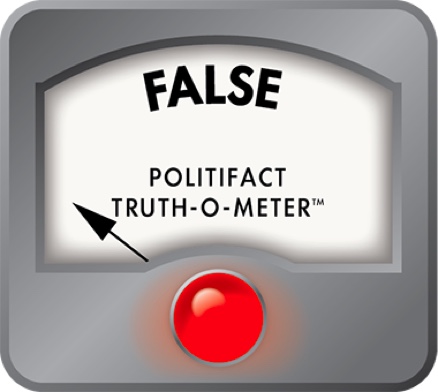
Our ruling
Paul claims that during the 1980 budget negotiations, Democrats only sought tax increases. But the record indicates that they supported deficit reduction packages that included significant reductions in spending. We find his claim False.
Our Sources
"Remarks on Signing the Bill to Increase the Federal Debt Ceiling," http://www.reagan.utexas.edu/archives/speeches/1987/092987c.htm
"Fee Rises Suggested to Reduce Deficit," John Cushman, Jr., September 28, 1987, The New York Times, http://www.nytimes.com/1987/09/28/us/fee-rise-suggested-to-reduce-deficit.html
Ron Paul Campaign Debuts First Presidential Campaign TV ad, http://www.youtube.com/watch?v=UUNIeOB0whI
Interview with Stan Collender, July 27, 2011
Gilmour, John B. Reconcilable Differences?: Congress, the Budget Process, and the Deficit. Berkeley: University of California Press, c1990 1990. http://ark.cdlib.org/ark:/13030/ft1t1nb1cw/
"Reagan’s Aides Hunt Deficit Deal," William R. Neikirk, Chicago Tribune, July 06, 1987.
http://articles.chicagotribune.com/1987-07-06/news/8702190212_1_oil-import-rep-dan-rostenkowski-tax-issue
"It’s Reagan Vs. Congress in Standoff," Dorothy Collin, Chicago Tribune, Aug. 2, 1987. http://articles.chicagotribune.com/1987-08-02/news/8702260219_1_democrats-and-president-reagan-republican-lame-duck-president-senate-republicans/2
"Sequestration Procedures Under the 1985 Balanced Budget Act," Robet Keith, Sept. 27, 2001. CRS Report for Congress, http://budget.senate.gov/republican/analysis/2011/BB/RL31137.pdf
"Committee on the Budget," United States Senate 1974-2006, U.S. Government Printing Office, Washington D.C., 2006 http://budget.senate.gov/republican/pressarchive/2007/BudgetCommittee.pdf
"Reagan’s News Conference on Domestic and Foreign Matters," The New York Times, Oct. 23, 1987, LexisNexis
"Great Fiscal Expectations," Jonathan Fuerbringer, The New York Times, September, 21, 1987, LexisNexis
"Agreement signed to reduce deficit $30 billion," Jonathan Fuerbringer, Nov. 21 1987, The New York Times, http://www.nytimes.com/1987/11/21/us/agreement-signed-to-reduce-deficit-30-billion-in-1988.html
"Reagan Approves Bills on Budget; Congress Finishes," Susan F. Rasky, Dec. 23, 1987, The New York Times, http://www.nytimes.com/1987/12/23/us/reagan-approves-bills-on-budget-congress-finishes.html
"Reagan planning to cut spending on deadline today," John Fuerbringer, Nov. 20, 1987 The New York Times, http://www.nytimes.com/1987/11/20/us/reagan-planning-to-cut-spending-on-deadline-today.html
Ronald Reagan "Remarks Announcing a Bipartisan Plan to Reduce the Federal Budget Deficit and a Question-and-Answer Session With Reporters," Nov. 20, 1987, http://www.presidency.ucsb.edu/ws/index.php?pid=33722&st=&st1=#axzz1S65jUa67
"Reagan to accept limits on budget, gives tax warning," Jonathan Fuerbringer, Sept. 27, 1987, The New York Times, http://www.nytimes.com/1987/09/27/us/reagan-to-accept-limits-on-budget-gives-tax-warning.html?src=pm
Bill Summary & Status, The Library of Congress, http://thomas.loc.gov/cgi-bin/bdquery/z?d100:HJ00324:@@@L&summ2=m&%7CTOM:/bss/d100query.html
White House Office of Management and Budget, Statutory Limits on Federal Debt: 1940-Current