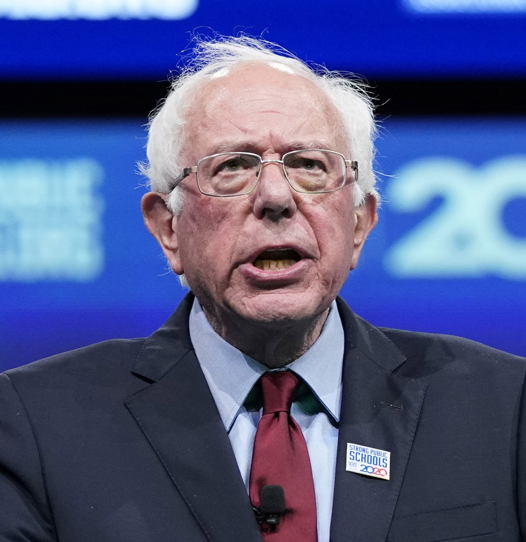
“If every small business in our state, on average, was able to create one new job we would cut our unemployment rate in half.”

Caprio says R.I. jobless rate could be cut in half if small businesses hired just one worker each
If you’ve heard Frank Caprio speak in the last few months, you’ve heard him talk about small businesses.
At campaign stops and on his website, the Democratic candidate for governor loves to chat about the small businesses he’s visited, the hurdles they face and what he would do to help them if he’s elected governor. He tells the stories so frequently and consistently, reporters know his talking points by heart.
Twice in 24 hours recently he repeated one of his favorites, promising voters that he would make Rhode Island’s “35,000 small businesses” his top priority if elected. Both times he capped that pledge with this mantra:
“If every small business in our state, on average, was able to create one new job, we would cut our unemployment rate in half and go from one of the highest in the country to one of the lowest.”
That sounds easy. But is his math right?
The facts on small businesses
There is an ongoing debate in Rhode Island about what constitutes a small business, depending on whether you define it by the number of employees, total revenues or other factors.
Caprio bases his calculations on the assumption that there are 35,000 small businesses. His campaign says it got that number from two sources. When we first asked them, they said they got that figure from the state Economic Development Corporation, which gets its data from the state Department of Labor and Training, which relied on state taxation figures to establish its fact sheet on small businesses.
Several days later, a campaign spokesman said Caprio first got the number from a Cranston accountant named Anthony V. Ricci, who brought it to one of Caprio’s small business forums. Ricci told us he got to 35,000 by taking the tax filings from companies that had less than $2.5 million in sales per year (his definition of a small business) and factoring in several other calculations.
We decided to go with the official sources. The problem is that both the EDC and the DLT peg the number at 32,372, not 35,000. And that’s all businesses, not just the small ones. Remove the 67 Rhode Island companies with more than 500 employees — a common dividing line between small and large businesses — and you’re left with 32,305.
Caprio’s campaign defends the higher figure, saying that if you factor in other types of companies such as sole proprietorships, which don’t fall under the general small business classification, the number inches up. Thirty-five thousand, they say, is a fair estimate.
But that number is still questionable because 6,490 of those companies are not easy to categorize. DLT spokeswoman Laura Hart said “the vast majority” of those 6,490 are “seasonal employers.” According to state Tax Administrator David Sullivan, that number could also include holding corporations or LLCs with no employees.
The point is, since it’s hard to know how many of them are functioning companies, it’s impossible to determine whether they’re capable of adding a worker, no matter how much the economy improves, or how much help a Caprio administration could provide.
The Caprio team argues that if you put enough “wind at their back,” those companies will add new workers. But is a holding corporation with no employees really going to hire someone new? We don’t think so.
Subtracting the 6,490 questionable companies from the DLT’s original 32,305 leaves you with 25,815.
Calculating the unemployment rate
Still with us? Hang in there, we’re almost finished.
As of June 9, when Caprio made his statement, there were 72,300 unemployed Rhode Islanders. The unemployment rate then — it has since dropped — was 12.5 percent. To cut that rate in half — to 6.25 percent — you would need to find jobs for 36,150 of them.
But remember that Caprio’s claim is based on the assumption that there are 35,000 small businesses. Even if each of them adds a new worker, using the formula the state uses to calculate unemployment figures, the rate would drop to 6.43 percent, not quite cutting it in half.
If you use the state’s number of small businesses, 32,305 — which we still think is a stretch — Caprio’s claim gets less accurate. The rate drops only to 6.9 percent. That’s a 44.8 percent decline. If you subtract those companies unlikely to add new employees, leaving 25,815 companies that might add workers, the statement is even further from the mark. In that case, the rate would fall only to 8 percent, a decrease of 36 percent.
That’s a long way from a 50-percent drop.
There’s one more flaw in Caprio’s logic. He is making an assumption that economists say is unrealistic — that every new job would be filled by someone who is statistically counted as unemployed. It’s likely that some jobs would be filled by people from a separate group that economists track, those who are considered “discouraged workers,” who are not included in the official number of unemployed.
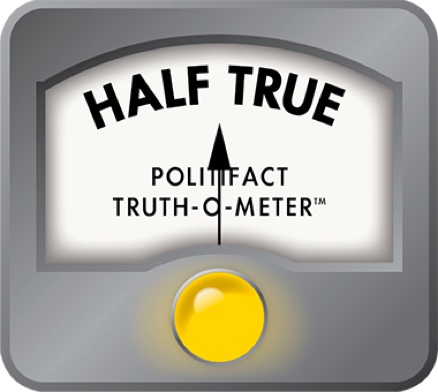
In a state with one of the nation’s highest unemployment rates, 25,815 new jobs sounds pretty good. But not as good as Caprio’s claims. Unemployment cut in half? Not quite. So we’re calling it Half True.
Our Sources
Frank Caprio, WPRI Gubernatorial Debate, June 10, 2010
Frank Caprio for Governor 2010 website, accessed June 10, 2010
R.I. Department of Labor and Training "Rhode Island Private Covered Employers, Size Class by Industry, March 2009," accessed June 10, 2010
R.I Department of Labor and Training press release, Unemployment Rate Drops to 12.5 percent, accessed June 10, 2010
Interviews, Nick Hemond, Caprio campaign spokesman, June 10, 16 and 18, 2010
Interview, Melissa Chambers, R.I. Economic Development Corporation spokeswoman, June 10, 2010
Interview, David Sullivan, state Tax Administrator, June 16, 2010
Interviews and email, Laura Hart, Department of Labor and Training spokeswoman, June 10 and 21, 2010