Kilmartin has helped pass laws to “create a witness protection program.”

Kilmartin says he helped create Rhode Island’s witness protection program
You might think a state like Rhode Island, with its legacy of organized crime and corruption, would have had a witness protection program for decades. So we were surprised when Peter Kilmartin, a Democrat running for attorney general, said he helped create it just nine years ago.
On his website, Kilmartin boasts about a host of professional accomplishments during his 20 years as a state representative. Among them, he says, he helped “create a witness protection program.”
Was there really no witness protection program before Kilmartin?
First, a history lesson. The federal Witness Security Program, the one that gives witnesses new identities and new lives, was created as part of the Organized Crime Control Act of 1970 and amended by the Comprehensive Crime Control Act of 1984. It is run by the U.S. Marshals Service.
But that program primarily covers federal cases. Witnesses in state-level cases have occasionally been placed in the program, but only in the most dangerous of circumstances. Several decades ago, states began to realize there was a need for less drastic, localized protection when witnesses needed temporary security before and after testifying, not a whole new identity. So they began creating their own programs.
Here in Rhode Island, the push for a state policy began in the wake of a scandal involving mob informant Peter Gilbert, who used drugs, carried weapons, collected welfare and went skydiving while under the protection of the Providence police. His case led then-Attorney General James O’Neil and the legislature to create new guidelines to control the costs of monitoring witnesses and establish a board to oversee who was eligible for protection.
But there were gaps in the new policy. Local police departments continued to run their own protection programs with little coordination.
Witnesses were typically afforded temporary protection only if they said they felt threatened. That meant it was mostly limited to criminal witnesses who agreed to testify in exchange for leniency. Innocent witnesses rarely participated, according to Michael J. Healey, spokesman for the attorney general’s office.
“It was a witness protection program in name only because it wasn’t what you think of when you think of protecting someone who witnessed a crime,” he said.
The flaws in the system were exposed a decade later. In the spring of 2000, 15-year-old Jennifer Rivera, a key witness in a Providence murder case, was fatally shot the day before she was to testify.
Then-Attorney General Sheldon Whitehouse, now a U.S. senator, came under fire for not protecting the teenager. He subsequently created a group to study how to remake the law to better identify and protect vulnerable witnesses.
Among its recommendations: centralize the program within the attorney general’s office and devote a full-time staff person to oversee it; require prosecutors and police to conduct independent assessments of the witness’s need for safety, instead of waiting for the witness to express concern; and seal the program’s records to protect participants.
This is when Kilmartin, a state representative from Pawtucket, entered the picture. With the outline of the bill in hand, Whitehouse asked Kilmartin to sponsor the legislation, according to both the attorney general’s office and Kilmartin.
Kilmartin was a city police officer at the time and had sponsored several law-enforcement related bills.
“I think the Rivera situation clearly showed that the statute we had was antiquated and wasn’t comprehensive enough. It didn’t provide the evaluation necessary to protect people,” Kilmartin recalled. “So we passed the bill and updated the law in response to that situation.”
The legislation was introduced in the spring of 2001 and became law that summer.
Did Kilmartin technically help create the Rhode Island’s witness protection program? No. He wasn’t even in office yet when the first version become law. But as the attorney general’s spokesman points out, that was a protection program in name only, since it provided little protection for innocent witnesses.
What Kilmartin did through his sponsorship of the 2001 bill was to help update and strengthen an existing witness protection program to centralize it and create necessary controls.
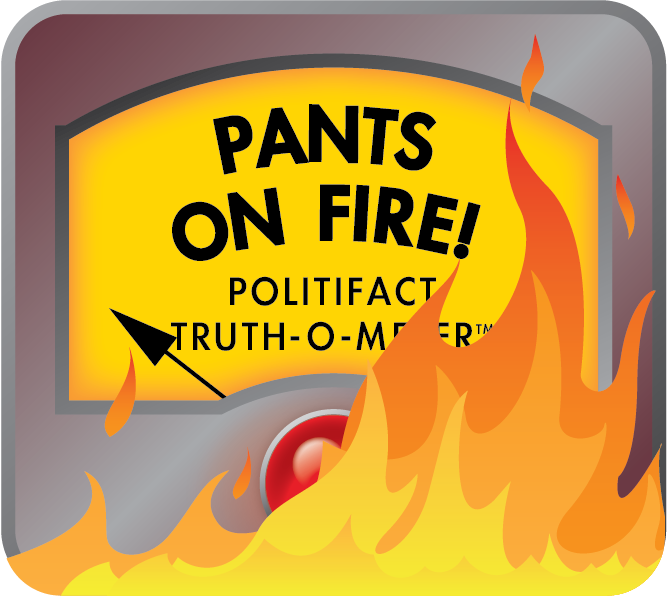
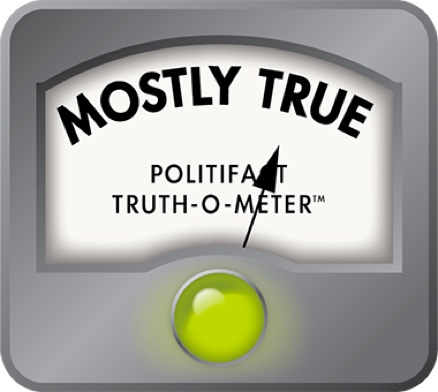
He can’t take all the credit, but we’ll give him his fair share and call it Mostly True.
Our Sources
Peter Kilmartin campaign website, "About Peter" section
U.S. Marshal's Service website, history of the Witness Security Program
Interview, Peter Kilmartin, Sept. 22, 2010
Interview, state librarian Tom Evans, Sept. 20, 2010
Interview, attorney general spokesman Michael J. Healey, Sept. 21-22, 2010
The Providence Journal, "Teitz calls for study of witness protection program," May 11, 1989
The Providence Journal, "Feuding kills mandatory car insurance, last-minute maneuvers rescue DEM bill but not zoning revamp," July 7, 1990
The Providence Journal, "The slaying of Jennifer Rivera -- Rhode Island's witness protection system on trial," May 28, 2000
The Providence Journal, "Witness-protection bill assailed by critics," April 10, 2001
The Providence Journal, "Witness bill goes too far, ACLU, media critics say," May 21, 2001