“For every dollar we put in unemployment, it pays back about $1.60.”
Lawmaker claims unemployment benefits boost economic growth
Extending aid to the unemployed is not only the “right” thing to do, it is also one of the best ways to stimulate economic growth. That, at least, is what has become a frequent talking point, especially among Democratic lawmakers.
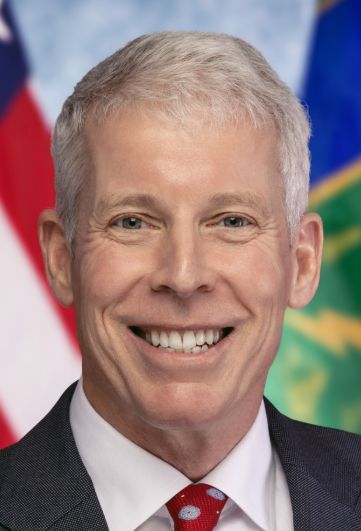
New Hampshire Senator Jeanne Shaheen reiterated the argument during a recent MSNBC interview. “This is one of the best things we can do to help stimulate the economy, because for every dollar we put in unemployment, it pays back about $1.60. And we know that people who are on unemployment are going to go out, and they’re going to spend that money, they’re going to pay for groceries at their local grocery store, they’re going to buy gas in their car.”
Using a dollar to make $1.60 sounds like a dream come true, so we decided to look into it.
Shaheen’s office told us that the number comes from Mark Zandi, the chief economist for Moody’s Economy.com and a former adviser to John McCain during the 2008 presidential campaign.
During testimony before the Senate Finance Committee on April 14, 2010, Zandi called on lawmakers to provide emergency benefits to individuals who have lost their jobs. “No form of the fiscal stimulus has proved more effective during the past two years than emergency UI benefits,” Zandi said, using the abbreviation for unemployment insurance. Specifically, he calculated that for every dollar spent in benefits, the Gross Domestic Product (GDP) grows by $1.61 one year later.
Next, we looked at a report issued in January 2010 by the Congressional Budget Office (CBO), the official nonpartisan number-cruncher for Congress. In its discussion of increasing unemployment aid, the report noted that the proposal is “both timely and cost-effective in spurring economic activity and employment.” For every dollar spent, the CBO wrote, the GDP would increase by anywhere from $0.70 to $1.90 per year from 2010 to 2015.
What accounts for such a large variation? Till von Wachter, an associate professof of economics at Columbia University, told us that this sort of a range “is typical in this kind of empirical analysis.” He said that one possible reason is “because different estimation methods or specifications give slightly different results.” David Card from the University of California-Berkeley added that the uncertainty “presumably illustrates the sad state of knowledge in the field.”
So, Shaheen is right on target if we go by Zandi’s numbers, but she picked a number that’s in the upper range of CBO’s estimated range. Still, there is more to the story.
For one, there is considerable question among academics about the accuracy of the unemployment benefits’ “multiplier effects.” Robert Barro, a Harvard economist, pointed out that before spending on unemployment benefits goes up, the GDP goes down, which makes it difficult to come up with a “serious estimate” of the impact of unemployment benefits. Lawrence Katz, also from Harvard, said that he has “many qualms with these standard macro forecasting models.” Still, Katz also pointed out that the current models are “the best we have right now to make such forecasts.” Alan Reynolds, an economist from the libertarian-leaning CATO Institute, wrote in a January 29, 2010 blog post that Zandi’s econometric model relies on assumptions that are contradicted by contemporary academic research.
There are also some researchers who maintain that not only does increased spending on unemployment provides minimal economic boost, but also that it may decrease output in the long run, in part because the government will have to recoup money paid out in benefits through increased taxes. In a November 2008 report, scholars Karen Campbell and James Sherk from the conservative Heritage Foundation argue that existing studies on the subject are flawed, because they do not take into account that unemployment insurance reduces workers’ incentives to work. The pro-benefits studies also assume that every dollar of spending funds new consumption, they said. Many studies since the 1970s “have concluded that unemployment insurance plays at best a small role in stabilizing the economy,” the report argued. Campbell added, however, that though she does not believe that economic stimulus is a good argument for extending benefits, welfare arguments could be made for doing so.
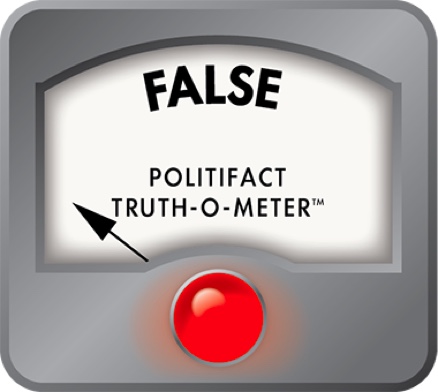
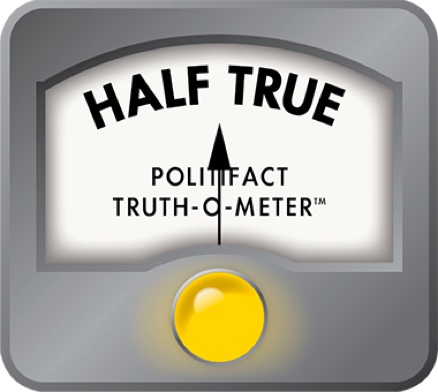
To recap: Sen. Shaheen said that “for every dollar we put in unemployment it, pays back about $1.60.” The CBO said that the increase is actually anywhere from $.70 to $1.90, so she picked a number that’s on the high end of that estimate. She’s right on target if we go by Mark Zandi’s economic study, but many of the scholars we spoke with are critical of attempts to accurately estimate the effect that spending on unemployment insurance has on the GDP. We rate this Half True.
Our Sources
CQ Transcripts Wire, Sen. Shaheen's MSNBC Interview, Jul 20, 2010
E-mail interview, Lawrence Katz, Harvard University, July 23, 2010
E-mail interview, Gary Burtless, Brookings Institute, July 23, 2010
E-mail interview, Jason Taylor, Central Michigan University, July 22, 2010
E-mail interview, David Card, University of California-Berkeley, July 23, 2010
E-mail interview, Robert Barro, Harvard University, July 23, 2010
E-mail interview, Casey Mulligan, University of Chicago, July 22, 2010
E-mail interview, Till von Wachter, Columbia University, July 22, 2010
E-mail interview, Heather Boushey, Center for American Progress, July 22, 2010
E-mail interview, Valerie Ramey, University of California-San Diego, July 23, 2010
E-mail interview, Karen Campbell, Heritage Foundation, Jul 26, 2010
Congressional Budget Office, Policies for Increasing Economic Growth and Employment in 2010 and 2011, Jan. 2010
CATO Institute, Can Unemployment Benefits Create Jobs?, by Alan Reynolds, Jan. 29, 2010
Economy.com, Mark Zandi testimony before Senate Finance Committee, April 14, 2010
Heritage Foundation, Extended Unemployment Insurance -- No Economic Stimulus, by Karen Campbell and James Sherk, Nov. 18, 2008
The Wall Street Journal, All the Candidate’s Economists: McCain’s Team, July 23, 2007