Have people been prosecuted for mishandling White House records?


When Lindsay Chervinsky, a presidential historian, checked Twitter the evening of Aug. 8, she uttered a phrase we couldn’t print.
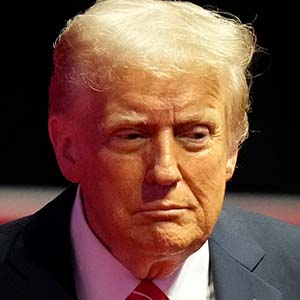
Although former President Donald Trump is banned from the platform, his presence loomed large that Monday night. In an emailed statement subsequently shared on Twitter, Trump said FBI agents had raided his Florida residence, Mar-a-Lago.
“Nothing like this has ever happened to a President of the United States before,” Trump wrote in the statement. Chervinsky agreed with this characterization, calling the search “unprecedented.”
According to news accounts, the search of Trump’s estate is the latest escalation in a probe examining his potential mishandling of classified information. In January, the National Archives and Records Administration, or NARA, retrieved 15 boxes of documents from Mar-a-Lago after discussions with Trump’s representatives.
The removal of documentary materials related to the political activities of a president and the White House staff — including call logs, emails and handwritten notes — from public custody violates the Presidential Records Act.
Presidents must cede these records to the NARA at the end of their terms. But can someone face criminal charges for violating the act? History provides some insight.
The Presidential Records Act does not contain criminal penalties
Former President Jimmy Carter signed the Presidential Records Act into law in 1978, which applied to records received or created after Jan. 20, 1981, according to the NARA. The act built upon previous legislation Congress passed in 1974 to stop former President Richard Nixon from destroying tapes linked to the Watergate scandal.
The Presidential Records Act transferred ownership of presidential records to the U.S. government. It also established a record-keeping structure under which presidents must maintain documents of their administrations.
According to a report from the nonpartisan Congressional Research Service, the Presidential Records Act lacks an enforcing mechanism and doesn’t allow for judicial review.
“Most presidents comply with the statute in good faith,” Chervinsky said. If the NARA discovers a document is missing, “they will just reach out to the administration and attempt to remedy that absence. It’s a collaborative process.”
While a president must “take all such steps as may be necessary” to preserve certain documentary materials, the act does not include a criminal penalty for removing or destroying these records.
However, experts told PolitiFact that by designating presidential records the property of the U.S. government, noncompliance could trigger other criminal laws.
“In such cases, the Department of Justice has the authority to pursue remedies under various provisions of the criminal code,” said Jason R. Baron, professor at the University of Maryland and former director of litigation at the NARA.
For example, under 18 USC 2071, which predates the Presidential Records Act, anyone who conceals, removes or destroys a record in the custody of the U.S. government can face fines or imprisonment. Mishandling classified information is covered by 18 USC 1924.
White House officials faced litigation for removing NARA records
Past administrations have faced allegations of violating the Presidential Records Act — but few of these instances led to prosecution, and even fewer led to a conviction.
Former President Ronald Reagan was the first president subject to the law’s record-keeping structure. And the transition was rough.
In 1988, members of Reagan’s administration faced criminal charges over the destruction of documents that violated the Presidential Records Act.
An investigation found that senior administration officials provided monetary assistance to Nicaraguan Contra rebels when such support was prohibited. It also found that officials facilitated the sale of U.S. arms to Iran to finance the aid.
John Poindexter, a national security adviser for Reagan, and U.S. Marine Corps Lt. Col. Oliver North were charged with removing and destroying documents, among other crimes. Poindexter’s conviction was reversed on appeal, and North’s charges were ultimately dropped.
In 2005, Sandy Berger, an official of former President Bill Clinton’s administration, was convicted of violating 18 USC 1924, or mishandling classified information, for removing classified records from the NARA.
Berger stuffed documents into his pant legs, Reuters reported. He later destroyed some of the classified material and denied ever taking them.
A federal judge levied a $50,000 fine against Berger. It’s worth noting that Berger was not a White House official when he mishandled the documents.
Our Sources
Congressional Research Service, The Presidential Records Act, Dec. 17, 2019
CNN, FBI executes search warrant at Trump's Mar-a-Lago in document investigation, Aug. 9, 2022
Just Security, Modern History of Disclosure of Presidential Records: On the Boundaries of 'Executive Privilege,' Sept. 30, 2021
Prologue Magazine, NARA’s Role under the Presidential Records Act and the Federal Records Act, assessed Aug. 9, 2022
National Archives, Presidential Records Act (PRA) of 1978, assessed Aug. 9, 2022
Federal Register, Further Implementation of the Presidential Records Act, Nov. 5, 2001
Phone interview with Anne Weismann, Citizens for Responsibility and Ethics in Washington’s chief counsel, Aug. 9, 2022
Cornell Law School, The concealment, removal, or mutilation generally, assessed Aug. 9, 2022
Cornell Law School, Unauthorized removal and retention of classified documents or material, assessed Aug. 10, 2022
New York Times, Judge in Iran-Contra trial drops case against North after prosecutor gives up, Sept. 17, 1991
Washington Post, Appeals court reverses Poindexter conviction, Nov. 16, 1991
Phone interview with Lindsay Chervinsky, presidential historian, Aug. 9, 2022
Email interview with Jason R. Baron, professor at the University of Maryland and former director of litigation at the NARA, Aug. 9, 2022
Email interview with Kel McClanahan, executive director for the National Security Counselors, Aug. 9, 2022
The New Yorker, Will Trump burn the evidence, Nov. 16, 2020
Reuters, Former U.S. national security adviser Sandy Berger dies, Dec. 2, 2015
Washington Post, Sandy Berger, national security adviser under President Clinton, dies at 70, Dec. 2, 2015
Tweet, Aug. 8, 2022