Fact-checking claims about Hillary Clinton

Former Secretary of State Hillary Clinton’s new memoir about her time heading the State Department arrives in a couple weeks, further fueling the “will-she-won’t-she?” chatter surrounding her potential 2016 presidential bid.
In anticipation of her book Hard Choices, Clinton has hit the speaking circuit, providing fact-checkers a renewed opportunity to put the former and perhaps future Democratic contender on the Truth-O-Meter. Republicans, too, are discussing (and attacking) the former first lady as they await her decision.
Here’s a round-up of recent fact-checks.
Clinton’s ‘brain injury’
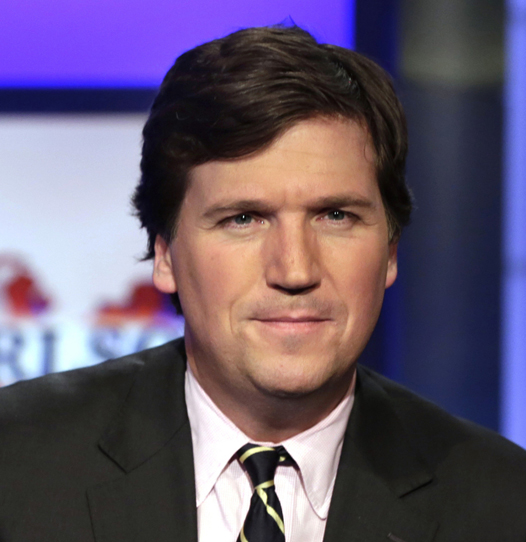
In remarks first reported in the New York Post, Fox News analyst Karl Rove raised questions about Clinton’s health following a mild concussion in 2012.
“Thirty days in the hospital,” Rove, a former adviser to President George W. Bush, said. “And when she reappears, she’s wearing glasses that are only for people who have traumatic brain injury? We need to know what’s up with that.”
Many people took Rove’s comments to mean that he thinks Clinton has a brain injury, though Rove says he was just raising the question and that it should be part of any presidential vetting. Whatever the case, Rove got his specifics wrong, PunditFact found.
In December 2012, a stomach virus kept Clinton at home where she fainted and hit her head. During a follow-up visit, doctors spotted a blood clot, admitted her to the hospital and treated her with blood thinners.
Clinton was in the hospital for about four days, not 30.
And while she was wearing special glasses, the glasses are not only for people who have traumatic brain injury, doctors told us.
The glasses Clinton wore — called primastic glasses — are designed to help with blurred or double vision, said Steven Galetta, chair of the Neurology Department at New York University Medical Center.
“About 30 to 50 percent of concussions lead to some kind of visual problem,” Galetta said. “When there’s double vision, we can manage it by putting a prism over one eye. It bends the light to line up the image from the other eye.”
Galetta said the glasses are often optional. Whether someone wears them depends on how quickly the person wants to get back to work. “Most patients resolve (the issues) on their own,” he said. “I’d say 85 to 90 percent of these patients do incredibly well and have no recognizable symptoms afterwards.”
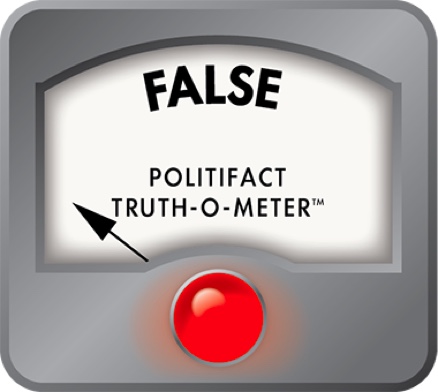
PunditFact rated Rove’s claim False.
Clinton on health care
Louisiana Gov. Bobby Jindal, a Republican who himself might run for president, opposes the individual mandate of the health care law. That’s no surprise.
But in a recent Politico op-ed, Jindal noted that Clinton was once against it, too.
“It is a well-known fact that Clinton came to strenuously support an individual health insurance mandate in her 2008 primary campaign against Barack Obama,” Jindal wrote. “Less well-remembered, however, is that Clinton considered an employer mandate — not an individual mandate — the best way to achieve ‘universal coverage’ in her health care task force’s ill-fated 1993 proposal, put forth while she was first lady.”
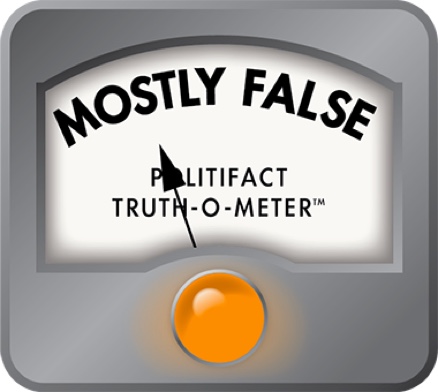
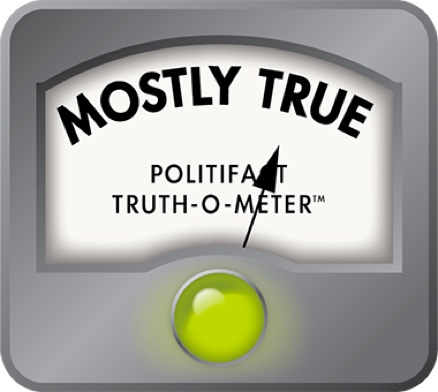
PolitiFact rated that claim Mostly True.
PolitiFact listened to several hours of Clinton’s testimony and read many news accounts from 1993. We can say with confidence that Jindal is right: Clinton opposed delivering universal coverage entirely through an individual mandate and supported an employer mandate instead.
But Jindal also picks out a couple of Clinton’s concerns and tries to tie them to current events, as though her comments in 1993 foreshadowed Obamacare’s impact on the health care industry. Perhaps Clinton’s misgivings are relevant to today’s debate, but not how Jindal portrayed them.
For instance, Clinton worried in 1993 that government couldn’t create a system to pull off the individual mandate. She had “great concerns about how the administrative structure to track the individual contribution, to collect it and to then connect it with health insurance would be set up.” Such a system, she said, would be “extremely complicated and bureaucratic.”
The technology the Obama administration utilized (eventually) to create a new market for buying and selling private health insurance is inconceivable to anything Clinton could have imagined back when the World Wide Web was an infant. That may have assuaged some of her concerns about the bureaucratic and logistical hurdles. Though, even with the technology, it hasn’t been easy.
Clinton, for the record, wasn’t all that down on the individual mandate, an idea promoted at the time by moderate Republicans like Sen. John Chafee, R-R.I. She said it was “in the same ballpark” as her plan because it was a means to universal coverage. It just wasn’t her preferred pathway.
Clinton on incomes
In a speech at the New America Foundation, a moderate-to-liberal think tank, Clinton compared the United States and Canada on several measures of well-being. Clinton found the United States wanting.
“Canadian middle class incomes are now higher than in the United States,” Clinton said. “They are working fewer hours for more pay, enjoying a stronger safety net, living longer on average, and facing less income inequality.”
PolitiFact set aside Clinton’s claim about a stronger safety net (because the comparisons are tricky.) But on the other measures, Clinton is about right.
PolitiFact rated her statement Mostly True.
Statistics backed up Clinton on all of her points, though measuring middle class incomes is a bit tricky.
Clinton find support in an article in the New York Times that looked at data from the Luxembourg Income Study database, which is based on surveys going back 35 years. The study surveyed people in various countries, asked them what they earned, then used a median to determine the mid-range income level.
The New York Times concluded that “median income in Canada pulled into a tie with median United States income in 2010 and has most likely surpassed it since then,” due to studies conducted by other groups since 2010 suggest that pay in Canada has risen faster than pay in the United States.
Staff writers Aaron Sharockman and Louis Jacobson contributed. Read the full fact-checks at PolitiFact.com.
Our Sources
See individual fact-checks.