Another look at Abraham Lincoln and the colonization of ex-slaves

Three historians wrote us to register concern about our recent fact-check of neo-Confederate websites that claimed that Abraham Lincoln made plans to send “all freed slaves” to Central America once the Civil War was over, and that only his assassination kept it from happening. We rated the claim False.
Phillip W. Magness of George Mason University, Michael Douma of James Madison University and Sebastian Page of Oxford University told us they agreed that Lincoln did not pursue forcible deportation of ex-slaves to overseas colonies. But they argued that a new trend in Civil War research suggests that he continued to pursue colonization policies quietly, behind the scenes, after he issued the Emancipation Proclamation on Jan. 1, 1863, the date historians we contacted cited as the point of no return for colonization.
“Far from turning away from the policy after Jan. 1, 1863, Lincoln actually shifted strategies away from the colonization arrangements with private contractors mentioned in his public appeals and toward a new approach of conducting colonization by way of a series of agreements with foreign governments that were willing to accept black colonists on a voluntary basis,” Magness wrote to PolitiFact.
These included an agreement to send up to 50,000 African-American recruits to British Honduras (now Belize), approved by the president in June 1863 and continuing until it faltered for political reasons at the end of the year, Magness said. He added that Lincoln’s administration negotiated and signed a formal treaty in 1863 with the government of the Netherlands to permit the voluntary colonization of freed slaves in their Caribbean colony of Suriname, though in early 1864 political reasons again prevented its submission to the U.S. Senate for ratification.
“These and a handful of other examples belie the notion that Lincoln was retreating from the policy until at least 1864 when Congress suspended funding for the program, and even then the matter of whether Lincoln ever fully abandoned the policy is far from certain” since there is no conclusive documentation either way, Magness wrote.
He added that Union Gen. Benjamin F. Butler recalled in his memoirs that Lincoln approached him about resuming some form of colonization program in Central America in April 1865, only a few days before his assassination. Magness acknowledges that Butler’s claim is “hotly contested” among historians.
“I have great respect for the work that your website does, but, as well as — rightly — slamming neo-Confederate bloggers, the topic also provides you with a chance to expose the 1960-2010 majority viewpoint on Lincoln and colonization for what it is, namely, an echo chamber based on an almost wilful absence of original research on wartime colonization policy,” Page wrote to PolitiFact.
We checked with a few of the scholars we had originally contacted for our fact check. James M. Cornelius, curator at the Abraham Lincoln Presidential Library and Museum, said the three historians who wrote us have produced credible work, but he added that our False rating seemed appropriate.
Cornelius said it took until July 2, 1864, for Congress to officially end disbursement of funds for colonization. So, even after the Emancipation Proclamation was issued, “Lincoln did need to continue to try to accommodate a range of opinion in his party, as well as try to oversee in some small manner the funds that Congress had appropriated,” Cornelius said. “At the same time, he was also trying to accommodate those few African-Americans who did wish to try colonizing other lands.”
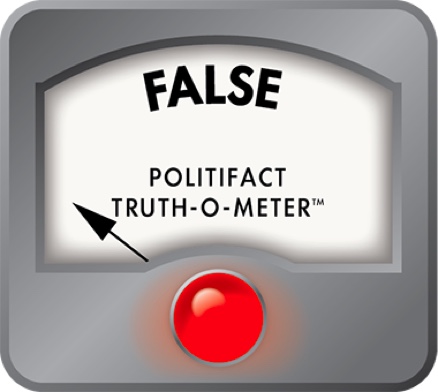
Bottom line: The additional research by Magness, Douma and Page adds nuance to our published account. But even if we accept their argument in full, we still find the neo-Confederate bloggers’ claims we were checking to be incorrect. The bloggers are flatly wrong that colonization would have been mandatory for “all freed slaves.” And even if one just looks at voluntary colonization plans — a far more limited approach than the bloggers indicate — it’s unclear that they finally ended due only to Lincoln’s assassination, since Congress had cut off funds nine months before his death. We stand by our rating of False.
Our Sources
Emails with historians Phillip W. Magness of George Mason University, Michael Douma of James Madison University and Sebastian Page of Oxford University.