The (now-rejected) Kenosha casino — jobs and money

The day before he and other potential presidential contenders headed for a political gathering in Iowa, Gov. Scott Walker announced he would not approve an $800 million Indian casino that had long been proposed for Kenosha, in southern Wisconsin.
With momentum behind Walker’s possible 2016 run building, the decision pleased Iowa conservatives who had urged him to say no to more gambling in the Badger State.
Given that supporters of the Kenosha casino had pushed it — and backers of an existing Indian casino in Milwaukee had fought it — for years, reaction to Walker’s announcement was mixed. There had been conflicting arguments about what the casino would mean for jobs, economic development and tax revenue.
In the wake of the news, here’s a look back at three claims about the Kenosha casino that were examined by PolitiFact Wisconsin.
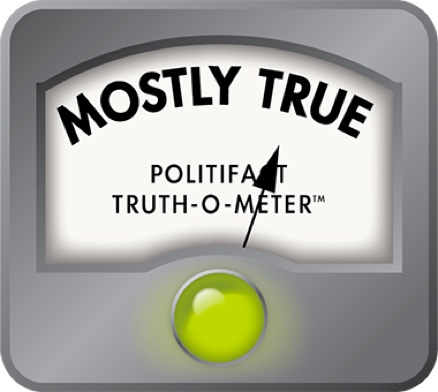
We rated that September 2013 claim by the Menominee tribe of Wisconsin, which would have built the casino, as Mostly True.
The 3,300 full-time jobs in the casino itself and related retail and hotel facilities — according to the tribe’s estimates, once the multi-phase was fully built — would have made the casino one of Wisconsin’s largest employers. But we noted the tribe was comparing current jobs figures at private companies to its projections down the road.
The Menominee would have been obligated to make annual payments to the state based on its casino revenue. We calculated that if the casino projections held up, the payments could have been more than $40 million a year within a few years of the casino’s opening. That would have been well above the income tax any private employer is paying the state.
The casino complex, including a spa and concert venue, were to be developed and managed by Hard Rock International, which is owned by the Seminole tribe of Florida. Enough Already, a Wisconsin group formed to fight the Kenosha casino, claimed that most of the Kenosha revenue would go to the Seminoles.
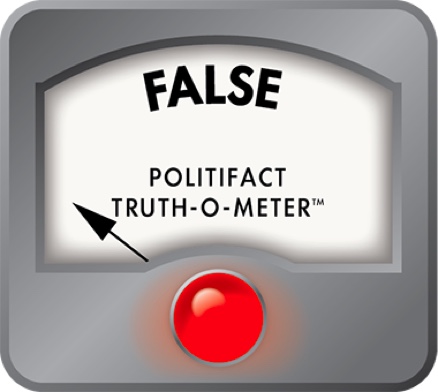
We rated that November 2014 claim False.
After we inquired, Enough Already walked back its statement, removing it from Twitter and saying it should have stated that the money would be sent out of Wisconsin, not just to Florida.
Projections were that the Kenosha casino would generate revenue of more than $400 million per year. But we found no evidence that more than half that amount would have ended up in Florida.
A Kenosha casino would drain 40% of the Milwaukee casino’s revenue
The Potawatomi tribe in Wisconsin claimed its Milwaukee casino would lose more than a third of its revenue to the Kenosha casino; the City of Milwaukee estimated the loss could be as high as 40 percent. Given that these were projections, we couldn’t test them on the Truth-O-Meter.
But all seven gambling experts we interviewed for our October 2012 article said they knew of no study documenting a 40 percent revenue drop at one casino as a result of the opening of another. And none of them expected the Kenosha casino to cause such a drop at the Milwaukee casino.
However, significant revenue declines had occurred in other markets and, the experts noted, no two markets are identical.
To comment on this item, go to the Milwaukee Journal Sentinel’s web page.
Our Sources
PolitiFact Wisconsin items as noted