Residency rules revisited

Should city workers be required to live in the city that employs them?
And should the same rule apply to public employees of other municipalities, and school districts, as well?
To hear the debate between Gov. Scott Walker and Milwaukee Mayor Tom Barrett, it’s about being allowed to live where you want, versus paying your fair share of taxes to the local government that employs you.
Those arguments and others took on a renewed relevancy Jan. 27, 2014, when a Milwaukee County circuit judge declared Milwaukee’s 75-year-old residency rule, which requires city workers to live within city limits, void and unenforceable.
Walker in June 2013 had signed into law a measure that essentially ends residency rules around the state. Meanwhile, Barrett and the City of Milwaukee went to court.
Here’s a quick review of ratings we gave to two Barrett claims about the rule and a related campaign promise made by Walker.
Fleeing the city
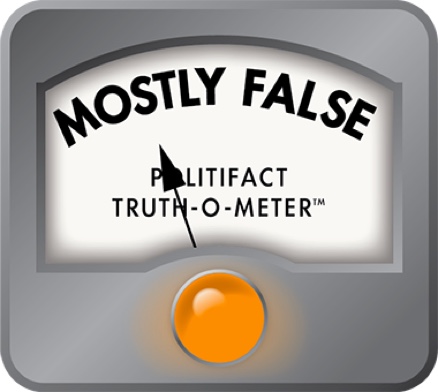
In May 2013, the mayor said a state report had projected that “approximately half of public employees” would move outside of city limits within 10 years if local residency requirements were eliminated.
We rated his statement Mostly False.
The state report said experience with residency rules in other cities “may provide some insight” into Milwaukee’s fate. And the experience in other cities may well play out here over time.
But the report stopped well short of predicting Milwaukee’s experience.
Shrinking tax base
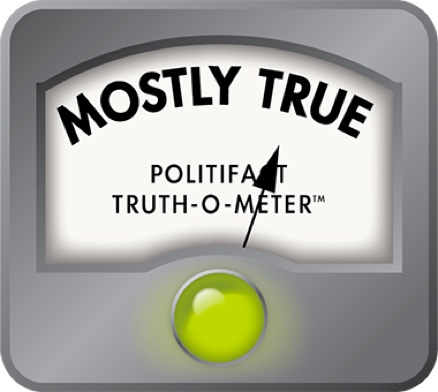
Barrett said in March 2011 that less than a decade after Detroit dropped residency, less than half its police force still lived in the city; and in the same breath, he tied the change to the “decimated” state of Detroit’s tax base.
That earned a Mostly True.
The statistic Barrett cited was confirmed by Detroit officials.
Evaluating the implicit claim that ties the residency issue to tax base loss was more difficult. Experts agreed there is at least some negative impact, but note there are many other factors at work.
Walker’s pledge
As a candidate, Walker pledged to “remove arbitrary barriers like residency requirements that keep qualified teachers out of struggling (school) districts.”
In October 2013, we rated his pledge a Promise Kept.
Walker’s 2013-’15 state budget, which became law in June 2013, blocked school districts and municipalities from making residency a condition of employment. (For police and firefighters, the budget provision limited but did not end residency requirements.)
Milwaukee, however, continued its legal fight for its residency rule.
In voiding the rule, Circuit Judge Paul Van Grunsven said in his January 2014 ruling that the Walker measure applied uniformly to all local government units in the state. That state law, he said, removes the issue of residency from the scope of home rule authority, undercutting the city’s position.
The new state law, the judge concluded, “creates a constitutional liberty interest in being free from residency requirements as a condition of municipal employment.”
Barrett, who was in court for the judge’s decision, promised to appeal in court.
He said: “What is the role of local government if a legislature, with the support of a state court, can come in at the behest of a special interest and eviscerate 75 years of local decision making? Where does that leave local control?”
To comment on this item, go to the Milwaukee Journal Sentinel’s web page.
Our Sources
PolitiFact Wisconsin items as noted
Milwaukee Journal Sentinel, "Milwaukee County judge voids City of Milwaukee residency rule," Jan. 27, 2014