Barking dogs, racial profiling and the Ariz. law

The tough immigration law enacted in Arizona has continued to inspire national attention, both favorable and unfavorable. It has also become a fast-moving issue: The bill signed on April 23, 2010, is no longer the same as the one we fact-checked five days later.
On April 30, Arizona Gov. Jan Brewer, a Republican, signed a bill that made several important changes. Because of these changes, we’ve produced two new fact checks based on the revised bill. (Our old items are outdated, but they can still be found here and here.)
One of our new items addresses the role played by “racial profiling” — that is, the use of racial or ethnic characteristics as a justification for police questioning. The changes included additional language that said, “A law enforcement official or agency of this state or a county, city, town or other political subdivision of this state may not consider race, color or national origin in implementing the requirements of this subsection except to the extent permitted by the United States or Arizona Constitution.”
But experts we spoke to were skeptical of Brewer’s claim that this language would “lay to rest questions over the possibility of racial profiling.” We rated this statement Barely True.
The second item addresses the question of whether something as minor as an uncut lawn or a barking dog could permit a police officer to ask immigration status questions that could ultimately get someone deported.
Someone who thinks it does is Arizona state Rep. Kyrsten Sinema, a Democrat, who said that “when police officers encounter someone whose lawn is overgrown or who perhaps has a dog that’s barking too loudly, they’ll be required to inquire into their immigration status if they have reasonable suspicion to believe they may be undocumented.”
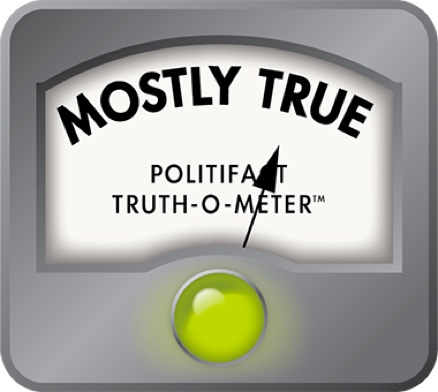
The answer comes from language added to the rewritten law that allows officers to ask immigration questions in the process of enforcing county, city and town laws and ordinances. While Sinema’s comment is a slight exaggeration, legal experts agreed that her general point holds. We rated her statement Mostly True.
Our Sources
See Truth-O-Meter items.