Escaping Bush’s gravitational pull
SUMMARY: An unpopular president and two candidates from the Senate create a host of strange-bedfellow problems in this presidential race.
As President Bush continues to register historically low public job-approval ratings, both presumptive presidential nominees are attacking each other for backing the commander in chief’s position in vote after vote in the Senate.
And it turns out Barack Obama and John McCain have plenty of ammunition to fire at one another. Voting studies compiled by
Congressional Quarterly
show both senators in recent times were squarely in the Bush administration’s camp on key votes and legislative battles more often than either would care to acknowledge.
Obama kicked off the exchange during a June 3, 2008, speech in St. Paul, Minn., asserting that electing McCain in November was akin to giving Bush a third term, in part, because the Arizona senator voted with Bush 95 percent of the time in 2007.
“It’s not change when John McCain decided to stand with George Bush 95 percent of the time, as he did in the Senate last year,” Obama said.
The number Obama cited comes from
Congressional Quarterly’s
annual vote studies, specifically the measurement known as “presidential support,” which tabulates the number of times a member of Congress votes with the president on an issue where he has taken a position. Although McCain was absent for more than half of those 2007 votes because he was busy campaigning,
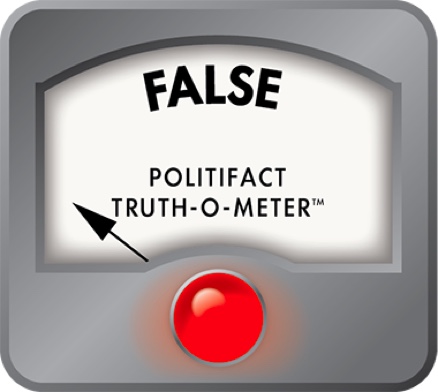
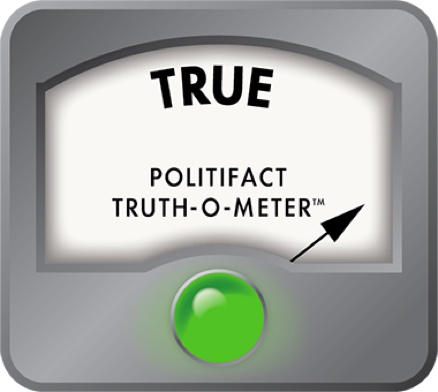
Obama’s charge is True.
In fact, 2007 was McCain’s highest “presidential support” score since Bush took office. That is in part because Democratic leaders scheduled repeated votes on immigration policy and the war in Iraq, issues on which McCain and the president hold similar views. At the same time, Republicans regularly filibustered Democratic initiatives, forcing votes on whether or not to continue endless debate. Filibuster votes typically are reserved for proposals most odious to the president, meaning Bush would often have had uniform support among Senate Republicans.
McCain earned a 95 percent rating, placing him among the president’s staunchest supporters. McCain has on average voted the president’s position 89 percent of the time, which makes him a solid supporter, but not exactly an ideological soulmate.
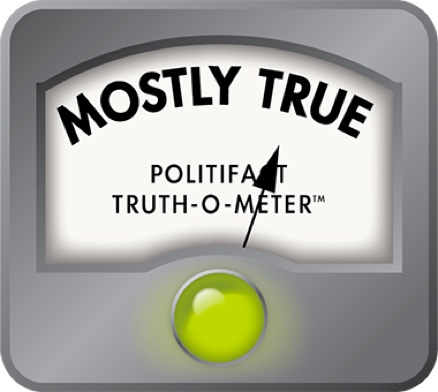
McCain’s camp didn’t take the charge lying down. It decided to turn the accusation around on Obama by using some of the same CQ vote studies to show the Illinois freshman voted with Bush between 40 and 50 percent of the time the past two years. Indeed, that is Obama’s record,
so we rate that one True, too.
Though Obama has been a loyal Democrat and opposed Bush on legislation more often than the average for Senate Democrats, he has not become significantly more partisan as a presidential candidate. In fact, he backed Bush about half of the time during the election year of 2006, and 40 percent of the time in 2007. That doesn’t always square with some of his fiery campaign rhetoric about Bush’s “failed policies.”
CQ measures “presidential support” by closely tracking the president’s official messages to Congress, remarks he makes at news conferences and other public statements and documents. It uses these sources to establish the president’s position at the time of the vote, then tabulates the lawmakers in the Senate and House of Representatives who vote likewise. (The administration doesn’t weigh in on every bill that’s considered.) CQ has been measuring presidential support in this fashion since 1987.
Many of the tallies CQ tracks are not straightforward yea-or-nay votes on a particular policy or bill, but are more arcane votes on motions for procedural actions, such as setting aside a bill. These often turn out to be key tests that decide the legislative outcome, because they can reflect the precise moment lawmakers decide they want to vote on some public policy matter, or when they don’t.
But in a year when two senators have become their party’s presumptive nominees, and at a time when public disapproval of Bush shows no sign of reversing, voting records cannot be ignored. In this respect, the CQ vote studies are very revealing, though they don’t always reveal what the candidates would like them to.