“The single biggest driver of our national debt since 2001 has been Republican tax cuts.”

Is Sen. Patty Murray right that Republican tax cuts are the biggest federal debt driver since 2001?
If your time is short
-
A 2024 Committee for a Responsible Federal Budget analysis found that tax cuts were the biggest of four types of legislation that have added to the federal debt since 2001.
-
The analysis also showed that two other types of legislation trailed close behind tax cuts in fiscal impact: large stimulus bills and annual spending increases.
-
The analysis concluded that several of the five tax cut bills since 2001 also had buy-in from congressional Democrats who voted for them or a Democratic president who signed them.
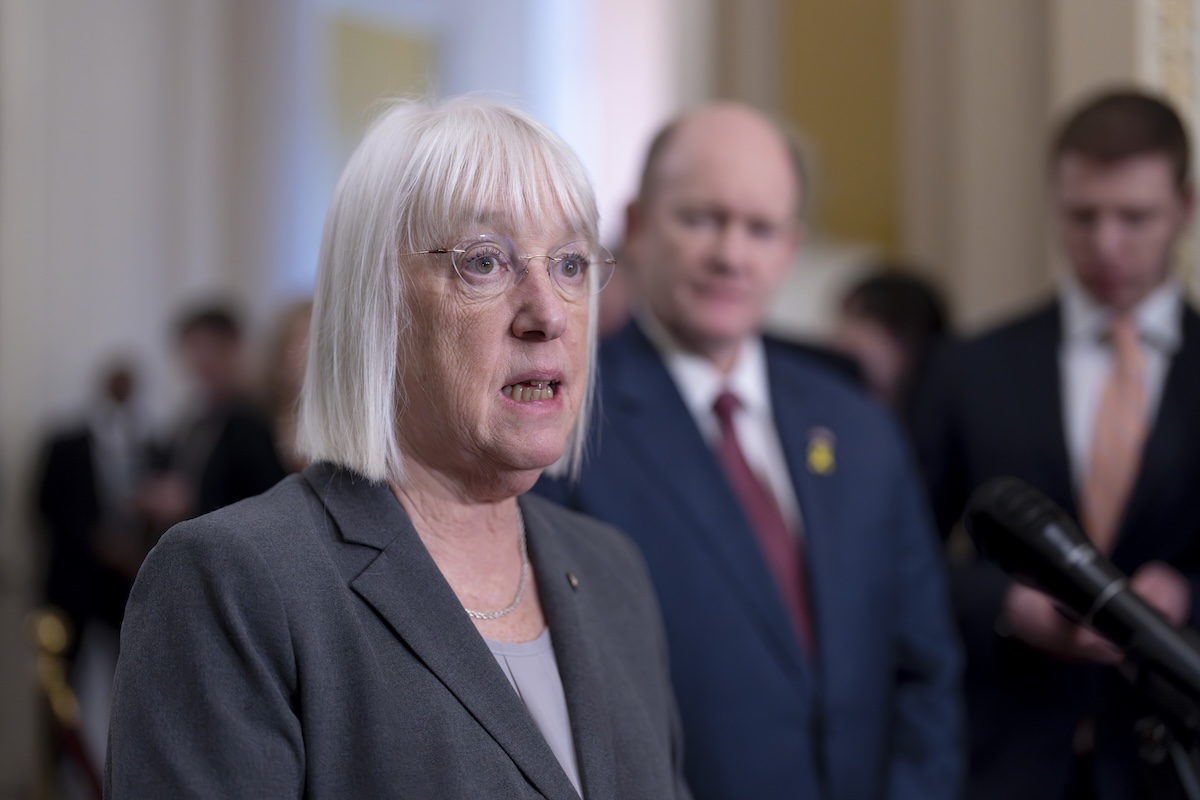
During a Senate floor debate over a budget resolution that could tee up President Donald Trump’s fiscal policies, Sen. Patty Murray, D-Wash., warned her colleagues to proceed with caution before approving tax cuts for wealthier Americans.
The Republican budget resolution being debated, Murray said Feb. 20, is “not about balancing the budget. We all know that. Because they don’t plan to reverse one of the biggest drivers of the debt: Republican tax cuts. Despite all the boogeymen the Republicans like to point to as driving the national debt, the reality is that the single biggest driver of our national debt since 2001 has been Republican tax cuts.”
Murray is accurate when it comes to tax cuts and the federal debt, but she’s wrong to assert that Republicans acted alone.
A 2024 analysis by the Committee for a Responsible Federal Budget, a fiscally hawkish group, found that tax cuts were the biggest of four types of legislation that have added to the federal debt since 2001. Two other types of legislation trailed close behind tax cuts in fiscal impact: large stimulus bills and annual spending increases.
However, the tax cuts were enacted not only by Republicans; when the laws were extended, much of the debt they spurred was also ratified by congressional Democrats, President Barack Obama, or both. In fact, of five tax cut bills enacted since 2001, Murray ended up voting for two, the first directly and the second by not objecting to the unanimous consent motion.
Tax cuts rank first among factors contributing to the debt since 2001
The Committee for a Responsible Federal Budget analysis examined legislation enacted since 2001 that had the biggest impacts on the federal government’s bottom line. The analysis did not factor in additional spending for mandatory programs such as Social Security because they were authorized before the 2001 cutoff.
The report broke down the new fiscal burdens into four broad categories:
-
The biggest category was tax cuts, at $8.4 trillion. These included revenue losses caused by the passage of major tax bills in 2001, 2003, 2010, 2013 and 2017.
-
Next was stimulus spending totaling $6.8 trillion, to counter the 2007-2009 Great Recession, and to ease the economic fallout beginning in 2020 from the coronavirus pandemic.
-
In third place was $5.9 trillion in new spending to keep the government running, enacted outside of major stimulus packages, typically through annual bills
-
The final piece was $1.1 trillion in Medicare expansion, notably the 2003 creation of the Medicare Part D prescription drug benefit.
By this accounting, tax cuts accounted for a plurality, though not a majority, of the new debt created. The difference between first and second place was modest.
Are the tax cuts solely because of Republicans?
The Committee for a Responsible Federal Budget’s analysis looked at whether the laws in question were passed by overwhelmingly partisan margins in Congress:
-
Republican President George W. Bush signed the 2001 tax law and it received near-unanimous Republican backing. But it also attracted a dozen Democratic votes in the Senate and 28 in the House.
-
Bush also signed the 2003 tax law; this measure received only two Democratic votes in the Senate and seven in the House.
-
Democratic President Barack Obama signed the 2010 tax law after its passage in the Senate by an 81-19 bipartisan margin and in the House by a 277-148 vote that included 139 Democratic and 138 Republican votes in favor.
-
Obama also signed the 2013 tax law, after its passage in the Senate by unanimous consent, meaning no objections from any member of either party, and in the House with more Democrats voting in favor than Republicans.
-
Trump signed the 2017 tax law. Democrats did not vote for the bill in either the House or Senate.
In other words, Bush’s 2003 tax law and Trump’s 2017 tax law were clearly Republican-backed bills without significant Democratic support, and Bush’s 2001 tax law was substantially, although not entirely, supported by Republicans.
But two of the five laws, in 2010 and 2013, were signed by Obama and supported by a broad swath of Democrats in both chambers.
The 2010 and 2013 laws related to extending tax laws that originated under Bush.
In a statement, Murray’s office told PolitiFact that the 2010 and 2013 laws were “technically bipartisan” but added that “context is badly needed.”
“Democrats did not want to extend tax cuts for the wealthiest,” Murray’s office said in a statement.
The negotiations for the 2010 tax bill occurred during the Great Recession, and the 2013 bill negotiations occurred before key expirations of laws, known as a “fiscal cliff.” The looming expirations gave Republicans leverage to include higher-income taxpayers as beneficiaries of the legislation, against Democratic wishes.
Still, many congressional Democrats, and Obama, did move to extend tax laws that originated under Bush, effectively buying into their provisions. Murray ended up voting for both the 2010 and 2013 bills, the first directly and the second by not objecting to the unanimous consent motion.
The Committee for a Responsible Federal Budget found that in general, lawmakers expressed bipartisan support for the tax bills passed since 2001 and for the stimulus bills, the annual spending increases and the Medicare expansions.
Our ruling
Murray said, “The single biggest driver of our national debt since 2001 has been Republican tax cuts.”
A 2024 Committee for a Responsible Federal Budget analysis found that tax cuts were the biggest of four types of legislation that have added to the debt since 2001. Two other types of legislation trailed close behind in impact: large stimulus bills and annual spending increases.
However, the committee concluded that several of these tax cut bills also had Democratic buy-in from Congress or the president, or both, undercutting Murray’s assertion that Republicans acted unilaterally to pass the tax cuts. In fact, of five tax cut bills enacted since 2001, Murray ended up voting for two, the first directly and the second by not objecting to the unanimous consent motion.
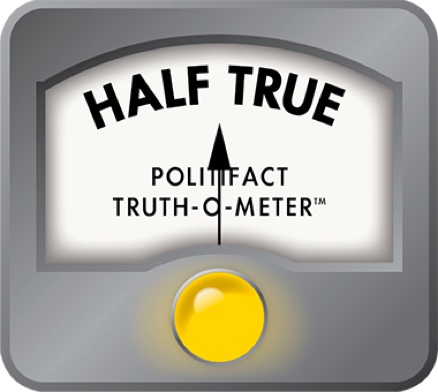
We rate the statement Half True.
Update, Feb. 26, 2025: The story was updated with further comment from Murray’s office. The rating remains unchanged.
Our Sources
Patty Murray, X post, Feb. 20, 2025
Committee for a Responsible Federal Budget, "From Riches to Rags: Causes of Fiscal Deterioration Since 2001," Jan 10, 2024
Congressional Budget Office, analyses of major tax bills in 2001, 2003, 2010, 2013 and 2017
Congress.gov, major tax bills from 2001, 2003, 2010, 2013 and 2017
Senate votes on major tax bills from 2001, 2003, 2010, and 2017
House votes on major tax bills from 2001, 2003, 2010, 2013, and 2017
Email interview with Chris Towner, policy director for the Committee for a Responsible Federal Budget, Feb. 24, 2025
Statement from the office of Patty Murray, Feb. 25, 2025