
Rand Paul rightly says the government shutdown was more expensive than keeping it open
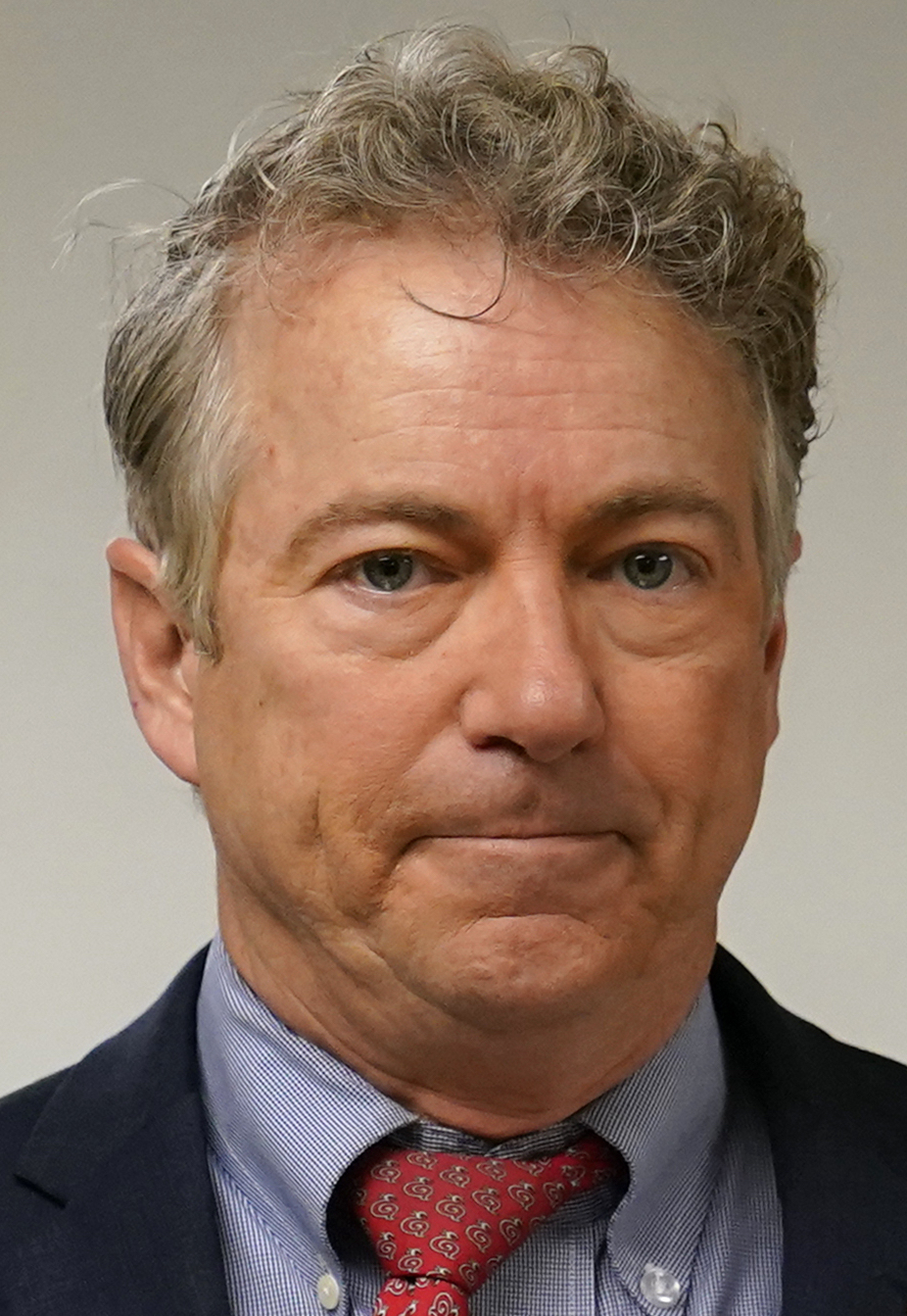
This week, Rand Paul is on a 10-stop tour of Iowa, seen by many as a trial run for a 2016 presidential campaign.
He’s been touting out his campaign positions, such as raising the retirement age and trying to play up his support for Israel. In a speech in Iowa City Tuesday, stumping for Republican House candidate Mariannette Miller-Meeks, Paul spoke about what he sees as out-of-control government spending.
He also talked about the government shutdown last fall. Paul voted against the budget deals that led to the shutdown, but he said he thought shutting down the government was a “bad idea.” And he carried the same position in Iowa this week.
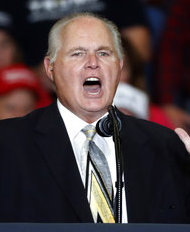
“It cost us more to shut the government down than to keep it open,” Paul said. “You know your government’s dysfunctional if it costs more to shut it down than to keep it open, because we paid all these people.”
Coming from someone like Paul, who has been known to oppose government spending, that comment intrigued us. (We noticed it when Yahoo! News political reporter Chris Moody, who was there, tweeted it out.)
The economics
Paul’s comment referred to the 2013 government shutdown, which lasted just over two weeks from Oct. 1 to Oct. 16.
During those two weeks, up to 850,000 workers were furloughed per day, national parks shut their doors, government-funded scientific research halted, and various health and safety inspections — out of agencies like the Environmental Protection Agency and the Food and Drug Administration — were put on hold.
So how does not spending money come at a cost?
“Sen. Paul was making the point that the government never actually shut down during the so called ‘shutdown,'” a spokesman told us. “Even though some government employees were furloughed, salaries were still paid for those who didn’t work and government had to pay interest on late payments.”
We found that this was true. The government still functioned partially during the shutdown, and furloughed employees got back pay. On top of doling out delayed payments, the government faced late payment penalties and other logistical costs associated with preparing or recuperating from two weeks of stalled activity. They also lost revenue from national parks and museums.
But a more significant and documented blow was to the economy as a whole. We found a solid consensus among economists that the shutdown was expensive to the U.S. economy in terms of actual costs and lost productivity.
The most thorough report examining the shutdown came out of Nov. 7, 2013, from the Office of Management and Budget, which reports directly to the president. (Paul’s spokesman pointed us to this New York Times article about the White House report as evidence.)
Here’s a few highlights:
-
$2.5 billion in compensation costs for furloughed workers (whose lack of pay for two weeks hampered consumer spending);
-
120,000 fewer private-sector jobs created in the first half of October;
-
$500 million lost in visitor spending because of closed National Parks ;
-
$11 million in lost National Parks and Smithsonian Institution revenue;
-
Interest accrued on billions of dollars of payments owed to third parties that the government was unable to pay during the shutdown;
-
Resources spent on putting activities in standby or maintaining them in an idle mode;
-
1.2 million Internal Revenue Service identity verification requests that couldn’t be processed, causing a delay in private-sector lending and other activities;
-
Stalled approvals from the U.S. Food and Drug Administration delayed moving products to market.
We also found estimates from financial analytics companies in the private sector. All of these (about a dozen) showed a negative effect on the economy, though. Most of the estimates predicted that the shutdown would not affect the economy’s growth path substantially. (The nonpartisan Congressional Research Service compiled the reports in 2013.)
Mark Zandi, chief economist for Moody’s Analytics, said the shutdown stunted fourth quarter GDP growth by 0.5 points, resulting in a $20 billion hit. The shutdown disrupted federal spending, global trade and investments in housing and businesses. Additionally, in the shutdown’s aftermath, consumers held back spending and foreign confidence in the American economy waned.
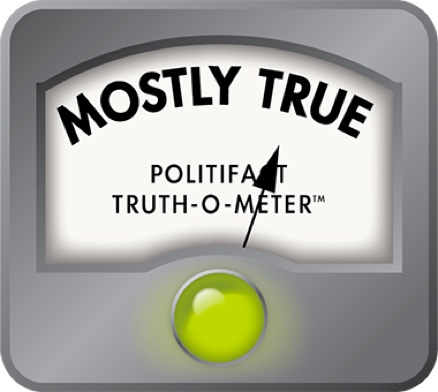
Standard and Poor’s said the shutdown took $24 billion out of the economy and reduced yearly fourth quarter GDP growth by 0.6 percent. (In December, the comic strip Doonesbury referenced this report, and we rated it Mostly True.)
Macroeconomic Advisers (in a report for the Peterson Foundation) estimated the shutdown cut 0.3 points off of fourth-quarter growth, “mainly by interrupting the flow of services produced by federal employees.”
The Macroeconomic Advisers report said private-sector effects were limited, especially because the furloughed workers received back pay.
Bloomberg News surveyed 71 economists and found the median GDP growth projection immediately after the shutdown was 0.4 points lower than a survey conducted a month earlier.
The counterargument
In consulting experts and scouring shutdown coverage, we found no economic modeling or analysis that showed the economy staying neutral or experiencing positive growth as a result of the shutdown.
Some libertarians argue — such as economist Jeff Dorfman for Forbes — that just because the government didn’t spend money for two weeks doesn’t mean that the same amount of money didn’t get spent elsewhere in the private sector, though he did not provide data or other proof that this was happening.
Dan Mitchell of the Cato Institute, a libertarian think tank, made a similar argument, but offered a caveat — that when government spending is suddenly reduced, the economy doesn’t instantaneously recalibrate itself, so there can be economic “bumps” in the immediate aftermath — such as what was seen in the shutdown.
Our ruling:
Paul said, “It cost us more to shut the government down than to keep it open.”
Numerous independent economic research groups found that the shutdown resulted in overall costs, in terms of lost revenue, hindered GDP growth, stalled private-sector activity and actual expenditures associated with the logistics of closing the government for two weeks. The government had to pay all of what it normally would have spent during that two-week period and then some. There was very little evidence to the contrary.
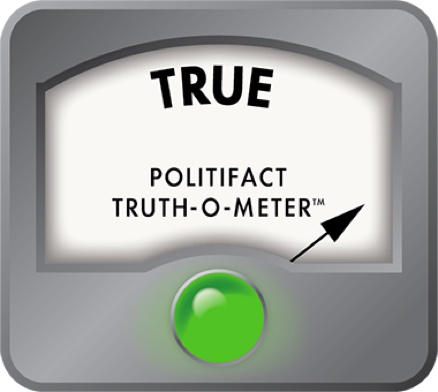
We rate this claim True.
Our Sources
YouTube, Rand Paul Campaigns in Iowa for Miller-Meeks, Aug. 5, 2014
Office of Management and Budget, "Impacts and Costs of the October 2013 Federal Government Shutdown," Nov. 7, 2013
Congressional Research Service, "The FY2014 Government Shutdown: Economic Effects," Nov. 1, 2013
Moody’s Analytics, "A Budget Battle Postmortem," Oct. 2013
Business Insider, "S&P: The Shutdown Took $24 Billion Out Of The US Economy," Oct. 16, 2013
Politifact, "Doonesbury says government shutdown took $24 billion out of the economy," Dec. 3, 2013
Dan Mitchell blog, "Keynesian Economics, Government Shutdowns, and Economic Growth," Oct. 30, 2013
Macroeconomic Advisers, "The Cost of Crisis-Driven Fiscal Policy," Oct. 2013
New York Times, "White House puts price on government shutdown," Nov. 8, 2013
Forbes, "There Will Be No $24B Economic Loss From The Government Shutdown," Oct. 22, 2013
Bloomberg News, "Fourth-Quarter U.S. GDP Forecasts Lowered on Shutdown," Nov. 1, 2013
Email interview, Chris Moody, Yahoo! News reporter, Aug. 5, 2014
Email interview, Brian Darling, Paul spokesman, Aug. 5, 2014
Email interview, Emily Cain, OMB spokeswoman, Aug. 6, 2014
Email interview, Austan Goolsbee, former chairman of the Council on Economic Advisers, Aug. 6, 2014
Email interview, Alice Rivlin, senior fellow at the Brookings Institution, Aug. 6, 2014
Email interview, Dan Mitchell, senior fellow at the Cato Institute, Aug. 6, 2014
Email interview, Chris Edwards, editor of DownsizingGovernment.org, Aug. 6, 2014