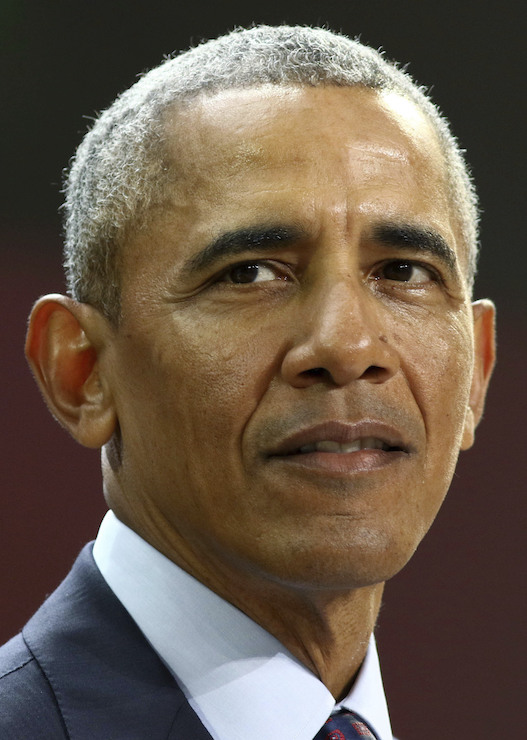
“Over the last several months, there was a review board headed by two distinguished Americans, Mike Mullen and Tom Pickering, who investigated every element of”…

Barack Obama says review of Benghazi attack “investigated every element”
President Barack Obama has been facing tough questions from journalists about recent congressional hearings that addressed the Sept. 11, 2012, attack against a U.S. facility in Benghazi, Libya. The attack, which left four Americans dead, has led to months of criticism by members of Congress about how the administration handled the incident.
During a joint appearance with British Prime Minister David Cameron on May 13, 2013, Obama said Benghazi is being politicized by some members of Congress. “The day after it happened, I acknowledged that this was an act of terrorism,” Obama said. “And what I pledged to the American people was that we would find out what happened, we would make sure that it did not happen again, and we would make sure that we held accountable those who had perpetrated this terrible crime.”
Obama said that a review board headed by former Joint Chiefs of Staff Chairman Mike Mullen and veteran diplomat Thomas Pickering “investigated every element of this. And what they discovered was some pretty harsh judgments in terms of how we had worked to protect consulates and embassies around the world.”
The office of House Speaker John Boehner, R-Ohio, jumped on Obama’s comments in a Web post and in an email to reporters. Boehner’s office contended that Obama was wrong to argue that the review board co-chaired by Mullen and Pickering “investigated every element” of the Benghazi incident, contending that the review was actually quite limited.
So who’s right?
First, we turned to the publicly released report of the Accountability Review Board. The report states that it looked specifically at “whether the attacks were security related; whether security systems and procedures were adequate and implemented properly; the impact of intelligence and information availability; whether any other facts or circumstances in these cases may be relevant to appropriate security management of U.S. missions worldwide; and, finally, whether any U.S. government employee or contractor, as defined by the Act, breached her or his duty.”
That’s a pretty broad purview, but it doesn’t include everything related to the Benghazi incident. For starters, the FBI — not the review board — was charged with determining who exactly attacked the embassy, as Pickering noted in a Dec. 19, 2012, briefing in which the board’s final report was released. The FBI is tasked with determining whether the incident stemmed from a pre-planned terrorist attack, a demonstration against an anti-Islamic film, a combination of the two, or something else entirely.
In addition, the report covers security-related issues leading up to the attack as well as the attack itself — not what happened afterward, as the administration was explaining what had taken place to the American public.
This distinction is important because some of the most pointed questions that have been raised since the attack include how the administration portrayed the incident in its public announcements and the talking points administration officials used on television. (See a related fact-check on the talking points here.)
Critics of the administration get some support on this point from Pickering himself, who went on three Sunday-morning shows on May 12 and offered a consistent argument that the board he co-chaired had a limited purview, looking only at security issues, not communications with the public.
• “With full respect,” he told David Gregory on NBC’s Meet the Press. “the Accountability Review Board was there to look at the question of security. We did not examine talking points after the fact.”
• On CBS’ Face the Nation, host Bob Schieffer asked Pickering why the board didn’t look at the talking points. He responded, “Because we were asked to look in under the law at five questions, all of which had to do with security, with the adequacy of security, with the preparation of security, with intelligence and whether anyone breached their duties. That was in effect, our mandate. At the time, and still now, I find it hard to see how the talking points issues relate to the security at the Benghazi mission.”
• On CNN’s State of the Union, host Candy Crowley asked a similar question. “Candy, that was not in our mandate,” Pickering replied. “We were looking into security, security warnings, security capacity, those kinds of things. And so, I have been very clear that since it wasn’t our mandate, I didn’t do the investigation.”
Our ruling
Obama said, “Over the last several months, there was a review board headed by two distinguished Americans, Mike Mullen and Tom Pickering, who investigated every element of” the Benghazi incident.
The definition of what constitutes “Benghazi” is a highly politicized bone of contention between the administration and its critics. Obama’s apparent decision to define the Benghazi incident as the security concerns before and during the attack is understandable, given that Obama said at the same briefing that “the whole issue of talking points, frankly, throughout this process has been a sideshow.” But this isn’t the only definition, nor is it an unassailable one.
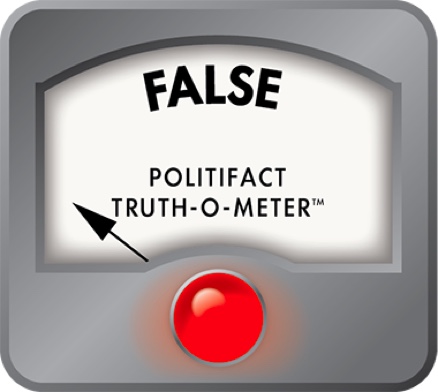
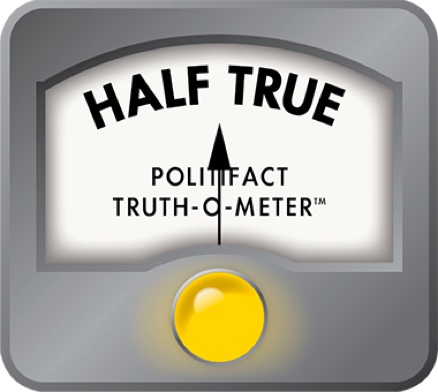
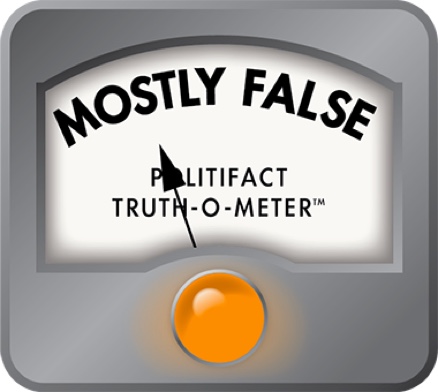
While the board did investigate numerous angles of the security issues, it didn’t look at who perpetrated the attack, nor did it probe the administration’s public communications afterward. No less an authority than the board’s co-chairman undercut Obama’s sweeping claim that the board “investigated every element” with repeated comments on three Sunday shows. On balance, we rate Obama’s claim Mostly False.
Our Sources
Barack Obama, remarks at a joint appearance with British Prime Minister David Cameron, May 13, 2013
State Department, briefing on the Accountability Review Board report, Dec. 19, 2012
State Department, Accountability Review Board report (unclassified), Dec. 19, 2012
Thomas Pickering, interview on CNN's State of the Union with Candy Crowley, May 12, 2013
Thomas Pickering, interview on NBC’s Meet the Press with David Gregory, May 12, 2013
Thomas Pickering, interview on CBS’ Face the Nation, May 12, 2013
Office of House Speaker John Boehner, "President Obama Still Can’t Keep the Facts Straight on Benghazi," May 13, 2013
New York Times, "Chairman of Benghazi Board Defends Its Decision Not to Question Clinton," May 12, 2013