Says New Jersey’s tenure law “has now been reformed to say that if teachers get two years of partially effective or ineffective ratings they lose…
Chris Christie says under new bill teachers who receive two negative evaluations lose tenure
Gov. Chris Christie didn’t get everything he had proposed from a tenure reform bill the state Legislature passed recently. But the Republican governor told a national audience this week teachers will lose tenure after receiving negative evaluations, one element of his education reform plan.
That’d be a win for the governor, if it were true.
But it’s not that simple.
Christie said after the New Jersey Education Association, the state’s largest teachers union, spent two years campaigning against his tenure reform proposals, they finally “came to the table. And we negotiated New Jersey’s tenure law, which is over 100 years old, the oldest tenure law for K to 12 education in the country, has now been reformed to say that if teachers get two years of partially effective or ineffective ratings they lose tenure,” Christie said during a July 9 speech at the Brookings Institution, a Washington, D.C.-based think tank. “We’re putting accountability back into the system.”
PolitiFact New Jersey found teachers who receive negative evaluations may be fired, but under the legislation — passed by both houses of the Legislature on June 25 but not yet signed by the governor — teachers still have the right to appeal, the core job protection afforded by tenure.
Christie has described tenure as a job for life, but a process through which districts can fire teachers has always existed. Critics, however, argue the system is so costly and time-consuming that it deters districts from using it except in extreme cases of misconduct.
State law says tenured teachers cannot have their pay reduced or be fired except for inefficiency, incapacity, unbecoming conduct or other just cause, and then only after a hearing.
That does not change with the new legislation. Tenure charges are still subject to a hearing, though the process has been overhauled in an effort to make it easier to dismiss teachers.
Michael Drewniak, a spokesman for Christie, said the governor “did not go into full detail and, for the sake of brevity in a speech, merely abbreviated the process which clears the way for revocation of tenure.”
“This is a sea change in the law,” Drewniak said. “Prior to the tenure bill, teachers could be removed for only a handful of reasons in a process that was massively expensive for school districts and ridiculously time consuming. For the first time, there is a statewide evaluation system that can be used to remove poor-performing teachers through a more streamlined process.”
The legislation creates an evaluation system with four possible ratings: ineffective, partially effective, effective and highly effective.
Superintendents will be required to file a charge of inefficiency against a teacher who receives either two consecutive ineffective ratings or a partially effective rating and then an ineffective rating the next year.
Superintendents, under exceptional circumstances, may defer filing tenure charges for a year against a teacher who receives two consecutive partially effective ratings or an ineffective rating and then a partially effective rating the next year.
But the charges must be filed if the teacher does not receive a positive evaluation the next year.
Still, tenured teachers facing a charge of inefficiency maintain the right to dispute those charges with a third-party, though the process has been changed. For instance, arbitrators, rather than administrative law judges, will now hear cases involving tenure charges.
We can’t know now whether that process will definitely make firing inefficient teachers easier, but what is clear is that tenure isn’t immediately revoked after two negative evaluations.
Our ruling
Christie said New Jersey’s teacher tenure law “has now been reformed to say that if teachers get two years of partially effective or ineffective ratings they lose tenure.”
For the large part, superintendents must file tenure charges against teachers who receive two consecutive negative ratings on annual evaluations.
In those cases, teachers may ultimately be fired, but they don’t automatically lose their tenure and, therefore, maintain the right to appeal the charges levied against them.
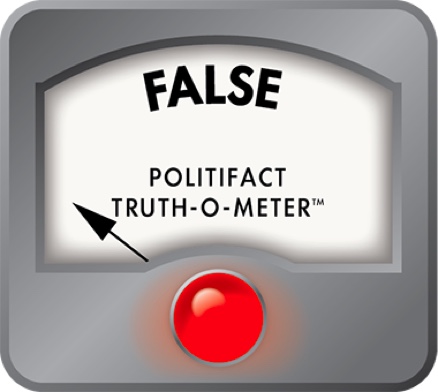
We rate this claim False.
To comment on this ruling, go to NJ.com.
Our Sources
Brookings Institution, Restoring Fiscal Integrity and Accountability: A Discussion with Governor Chris Christie (R-NJ), July 9, 2012
PolitiFact New Jersey, Steve Sweeney claims new legislation doesn’t eliminate teacher tenure, July 9, 2012
E-mail interview with Michael Drewniak, spokesman for Gov. Chris Christie, July 10, 2012
New Jersey Legislature, Senate Bill No. 1455, accessed July 9, 2012
New Jersey Legislature, Senate Bill No. 1455 as introduced, Feb. 6, 2012
PolitiFact New Jersey, Gov. Chris Christie says he doesn’t want to eliminate teacher tenure, June 21, 2011
Office of Gov. Chris Christie, Governor Chris Christie Puts Forward Fundamental Education Reform Legislative Package that Puts Children First and Protects Teachers, April 13, 2011
New Jersey Legislature, Statement for Senate Bill No. 1455, June 21, 2012