When he took office in 2009, President Barack Obama “had the biggest Democratic majorities in Congress since Lyndon Johnson.”
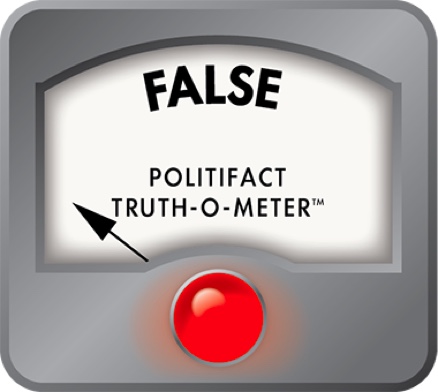

Haley Barbour says Barack Obama benefited from biggest Congressional Democratic majorities since Lyndon Johnson
During the Oct. 2, 2011, edition of CBS’s Face the Nation, two governors — Democrat Martin O’Malley of Maryland and Republican Haley Barbour of Mississippi — faced off over a variety of political and policy issues.
At one point, Barbour parried O’Malley’s criticism of Republican economic policies by noting the size of President Barack Obama’s congressional majorities after he took office in early 2009. His argument was that Obama had significant legislative advantages that should have enabled him to do what he wanted policy-wise — meaning that Obama can’t legitimately blame the Republicans for blocking what he wanted to do.
O’Malley, Barbour said, has “amnesia about the fact that Obama had the biggest Democratic majorities in Congress since Lyndon Johnson. They passed everything he wanted, including ramming health care, Obamacare, down the country’s throat and now they complain, well, jeez, we didn’t get everything we wanted, those mean Republicans. Bill Clinton never did that. Ronald Reagan never did that. When they had Congress in the other party, they led. And this president, he is going to learn how to lead, or he’s going to go back to Chicago.”
We thought we’d check whether Barbour was right that Obama had larger Democratic majorities than at any point since the Johnson presidency, which took place from November 1963 to January 1969.
The short answer: He’s wrong.
On opening day in 2009, the Democrats had a 257-178 edge over the Republicans in the House, and a 57-41 edge in the Senate, with two Independents caucusing with the Democrats. (Eventually, the Democrats got to 58 votes in the Senate, plus the two Independents, when Pennsylvania Republican Arlen Specter switched parties.)
Congressional margins typically change over the course of two years as lawmakers retire, die or win seats in special elections. So for simplicity, we’ll stick to the opening day numbers.
Here are the Congresses in which the Democrats had more House members than they had in 2009. The year listed is the year of the start of that Congress.
1993: 258 Democrats
1991: 267 Democrats
1989: 260 Democrats
1987: 258 Democrats
1983: 269 Democrats
1979: 277 Democrats
1977: 292 Democrats
1975: 291 Democrats
Now, here are the Congresses in which the number of Senate Democrats equaled or exceeded the 57 from 2009:
1993: 57 Democrats
1979: 58 Democrats
1977: 61 Democrats
1975: 61 Democrats
1969: 57 Democrats
So, both the House and Senate simultaneously equaled or exceeded 2009 levels for significant stretches of four Congresses — the ones beginning in 1975, 1977, 1979 and 1993. That’s about one-fifth of the Congresses since the Johnson presidency. And for three of those Congresses, there was also a Democratic president in office — first Jimmy Carter, then Bill Clinton.
Of course, internal splits within the Democratic caucuses made the party weaker than the numbers alone would suggest. But that was also true in 2009, the year to which Barbour was referring.
Our ruling
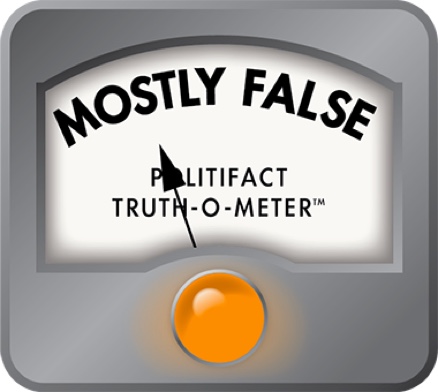
It’s true that Democratic strength in Congress at the beginning of Obama’s term was the strongest it had been in 16 years. But that’s not what Barbour said — he said the numbers were the strongest going back to President Johnson in the late 1960s. And that was not the case. We rate his statement False.
Our Sources
Office of the Clerk of the House, "Party Divisions of the House of Representatives," accessed Oct. 3, 2011
Secretary of the Senate, "Party Division in the Senate," accessed Oct. 3, 2011