
Mitt Romney says we’re in “the slowest job recovery since Hoover”
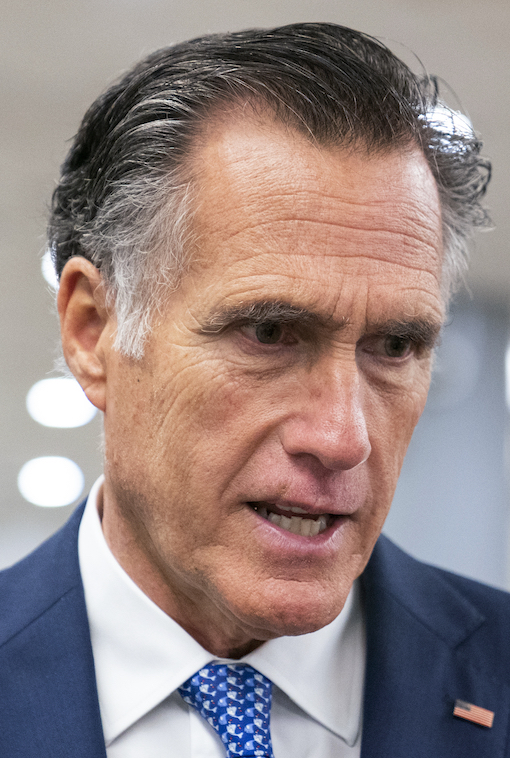
During a visit to the Buddy Brew Coffee shop in Tampa on June 16, 2011, presidential candidate Mitt Romney became the latest Republican to invoke the Great Depression while discussing today’s economy.
Taking a shot at the economic record of President Barack Obama, Romney said, “It’s been a failure in the last several years to get America back on track again. It’s taken longer to get Americans back to work than it took during the Great Depression. This is the slowest job recovery since Hoover. It breaks my heart. I want to get us back to work.” (By Hoover, Romney meant President Herbert Hoover, who held office from 1929 to early 1933 and presided over the early years of the Great Depression.)
We thought we’d check Romney’s history.
We turned to the Bureau of Labor Statistics, the federal government’s official source for employment figures. We believe there are two ways to analyze his claim, either by judging the number of jobs created or by tracking how much the unemployment rate decreased. The former is a pretty straightforward number, while the latter is shaped in part by how many people are looking for a job rather than dropping out of the labor market. But while the two statistics aren’t exactly parallel, either one can serve as a reasonable measure of a job recovery.
We also decided to compare recessions by looking at the first 23 months after a given recession officially ended (which is when the recovery officially begins). We chose that period because the last recession ended 23 months ago. Doing it this way provides an equal baseline for comparing all recessions.
The question of when to start counting jobs in a recovery is a point of some debate among economists. The issue came up in an earlier PolitiFact item. However, we’re taking Romney at his literal word, and he said “the slowest job recovery,” which is the period after the recession has ended and the recovery has begun.
We used the quasi-official arbiter of recessions — the National Bureau of Economic Research — to determine the start and end dates for recessions. We weren’t able to go further back than World War II, since that’s how far back monthly BLS data goes.
Viewers can see how our numbers stacked up for each recovery here. But here’s the gist:
Job creation. We compared the number of employed Americans at the start of the recovery to the number employed at the end of the 23-month period. Then we calculated the percentage increase (or decrease) in employment over that time period.
By this measure, there were two recoveries weaker than the one we’re currently experiencing — the one from November 2001 to October 2003, under President George W. Bush, and the one from July 1980 to June 1982, under presidents Jimmy Carter and Ronald Reagan. The George W. Bush recovery is especially striking, since the economy actually lost more than 700,000 jobs during the first 23 months after the recession ended.
So by this measure, Romney’s claim that “this is the slowest job recovery since Hoover” is incorrect. It’s the third slowest.
Unemployment rate. We compared the unemployment rate at the end of the 23-month period to what it was at the beginning of the period.
By this measure, too, the current recovery is not the weakest. Three recoveries actually saw an increase in the unemployment rate after 23 months (ones under George W. Bush, George H.W. Bush and Carter/Reagan), while another (under President Richard Nixon) produced a smaller decline in the unemployment rate than the current recovery has. (Because a budding recovery can entice discouraged workers back into the labor force, it’s not unusual for the unemployment rate to rise in a recovery.)
So, depending on the measure you use, there are either two or four recoveries since Hoover that were weaker than the current one.
None of this is to suggest that the current recovery is robust. It isn’t. Measured by jobs created, it has been exceeded on a percentage basis by 10 out of the 12 recessions we looked at. Part of this likely stems from the severity of the recession (which most experts agree is the worst since the Great Depression) and part stems from a long-term trend toward relatively jobless recoveries. The first seven recoveries on our list averaged a jobs bounceback of more than 8 percent; the final five averaged 2 percent. And the latter figure would have been even lower — half a percent — had it not been for the unusually strong recovery that started under Reagan in November 1982.
We asked the Romney campaign for a comment, but they did not immediately respond.
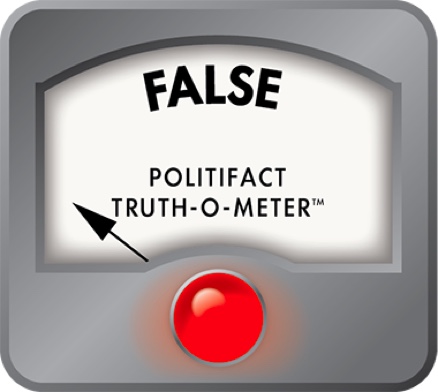
Where does this leave us? Romney has a point that the current recovery is relatively weak by historical standards. But it’s inaccurate to say that “it’s the slowest job recovery since Hoover.” Depending on what yardstick you use, it’s either the third worst or the fifth worst recovery since World War II. That’s not a great accomplishment for the Obama Administration, but we’re checking Romney here, and he chose to make his point in a way that isn’t accurate. So we rate the claim False.
Our Sources
Mitt Romney, comments at a Tampa coffee shop, June 16, 2011 (recorded by the St. Petersburg Times)
Bureau of Labor Statistics, "Labor Force Statistics from the Current Population Survey" (main index page), accessed June 16, 2011
Bureau of Labor Statistics, "Table A-12. Unemployed persons by duration of unemployment, seasonally adjusted," accessed June 16, 2011
National Bureau of Economic Research, "U.S. Business Cycle Expansions and Contractions," accessed June 16, 2011