Members of Congress did not have three days to read the bill “when the stimulus was rushed into law.”

John Boehner says stimulus bill was ‘rushed’ to passage
During his last Saturday radio address before the Nov. 2, 2010, elections, House Minority Leader John Boehner, R-Ohio — the likely speaker of the House if the Republicans take over — made a closing argument for his party that included a call for greater congressional transparency.
“There’s a third thing we need to do to help our economy, and that’s change Congress itself,” Boehner said. “The American people are in charge of this country, and they deserve a Congress that acts like it. Americans should have three days to read all bills before Congress votes on them – something they didn’t get when the ‘stimulus’ was rushed into law. We should put an end to so-called ‘comprehensive’ bills that make it easy to hide wasteful spending projects and job-killing policies. Bills should be written by legislators in committee in plain public view – not written in the Speaker’s office, behind closed doors.”
We wanted to see whether Boehner was right that lawmakers or the public didn’t get three days to pore over the stimulus prior to passage.
The bill in question is the American Recovery and Reinvestment Act, or H.R. 1. We should first point out that the bill went through more than one iteration, and Boehner didn’t specify which one he meant. The bill was first passed by the House, then passed by the Senate with amendments, then went to a joint House-Senate conference committee to iron out differences. Then the final bill was passed in turn by the House and the Senate before going to President Barack Obama for his signature.
According to THOMAS, the official legislative-tracking website of the Library of Congress, the bill was officially introduced in the House on Jan. 26, 2009 — just six days after Obama was sworn in. By 6:11 pm on Jan. 28, after various procedural hurdles were cleared, the House approved this initial version. While THOMAS doesn’t specify the exact hour the bill was introduced, the records indicate the vote took place less than three days after the bill was introduced.
At this point, the bill went to the Senate. It was officially transmitted to the Senate on Jan. 29, and on Feb. 2, the Senate officially took up its own version along with a slew of amendments, and they were under consideration from Feb. 2 until Feb. 7. However, as this was going on, a bipartisan group of moderate senators, led by Sen. Olympia Snowe, R-Maine, and Sen. Ben Nelson, D-Neb., was trying to craft a scaled-down version of the bill that could win the support of the required 60 Senators.
They succeeded, and on Feb. 7, the new Senate version was introduced. After moving through a series of steps, the Senate passed the measure at 12:27 p.m. on Feb. 10. So for the Senate version, the chamber and the public did have roughly three days to consider the bill, which was very similar to the initial version.
Because the versions passed in each chamber were different, leaders in the two chambers quickly established a conference committee — a panel of House and Senate members charged with hammering out a compromise. This conference committee officially filed its new bill at 10:25 p.m. on Feb. 12.
It was less than 24 hours before the House acted on the conference report, passing it at 2:24 p.m. on Feb. 13. The Senate quickly followed suit, passing the measure at 5:29 p.m. the same day. Four days later, on Feb. 17, the president signed it.
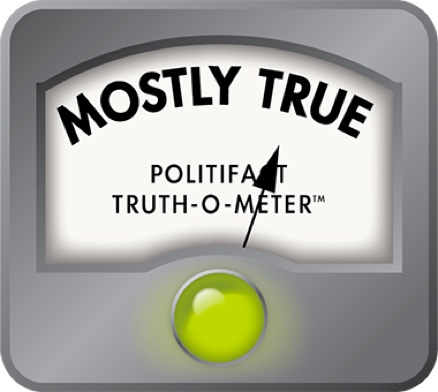
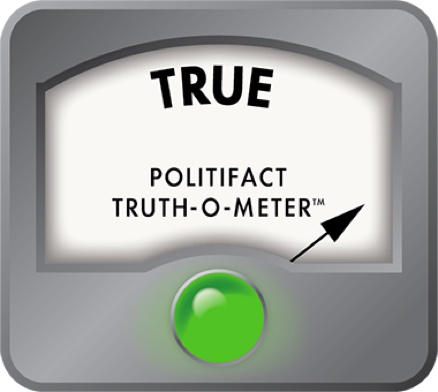
To summarize: The first version clearly passed the House less than three days after it was introduced, while the centrist compromise version passed the Senate roughly three days after it was formally introduced. Meanwhile, both chambers passed the conference report — the final version that became law — within 24 hours of the bill’s filing. So in all except cases except the main Senate vote, it’s clear Boehner is correct. And in the case of the Senate version, he’s cutting it close because it was right at three days. All in all, that’s strong support for his claim, so we rate it True.
Our Sources
John Boehner, weekly Republican address, Oct. 30, 2010
THOMAS (searches on H.R. 1 for 111th Congress, first session)
U.S. House, roll call vote on first version of H.R. 1, Jan. 28, 2010
U.S Senate, roll call vote on centrist amended version of stimulus, Feb. 10, 2010
U.S. House, roll call vote on conference report for stimulus, Feb. 13, 2010
U.S. Senate, roll call vote on conference report for stimulus, Feb. 13, 2010
CNN.com, "Vote expected Tuesday on stimulus after bipartisan deal," Feb. 7, 2009
New York Times, "House and Senate in Deal For $789 Billion Stimulus," Feb. 12, 2009 (accessed via Lexis-Nexis)
New York Times, "House and Senate in Deal For $789 Billion Stimulus," Feb. 11, 2009 (accessed via Lexis-Nexis)
New York Times, "By Narrow Margin, Economic Measure Clears Senate Hurdle," Feb. 10, 2010 (accessed via Lexis-Nexis)