Says more Republicans than Democrats voted for the Wall Street bailouts.
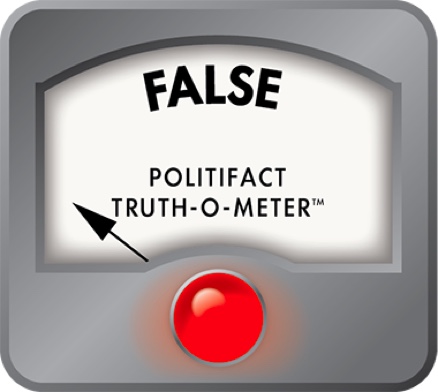
Kurt Schrader says more Republicans than Democrats voted in favor of the Wall Street bailout
The Wall Street bailout (or the Troubled Asset Relief Program, as pols would have us refer to it) is right up there with the stimulus and health care reform in terms of fodder for attack ads this year. Never mind that the bailout was, in fact, proposed and passed before the current Congress, during the very end of the George W. Bush presidency, or that it appears it will be much less expensive than originally expected.
Democratic Rep. Kurt Schrader tried to put the program in its proper historical context during a radio appearance on Oregon Public Broadcasting’s Think Out Loud this week. (It should be noted that neither Schrader nor his Republican challenger, Scott Bruun, was a member of Congress when it passed the bailout.)
Let’s see what he had to say on OPB, while he and Bruun were debating fiscal policy:
Schrader: George Bush and the Republican administration is the guys that did the big bank bailout. Do you want to reinstall those people to power? I’m sorry. And Scott’s against the Wall Street reforms.
Bruun: Congressman, remind me when your speaker came into power as the speaker? Remind me what year that was. Was that 2009? No. That was 2007.
Schrader: Yeah, but the policies came directly out of the Republican administration. I mean — and more Republicans voted for that than Democrats.
That last bit stopped us. More Republicans than Democrats voted for the bailout? That would be ironic, given its widespread use as an attack against Democrats these days.
PolitiFact Oregon went straight to the voting records to check this claim.
As it turns out, the House actually had to vote twice for the particular bill in which TARP was included. The first vote was on Sept. 29, 2008. The legislation failed to move, though, with 205 representatives voting in favor and 228 against. Of those who voted for the the passage, 140 were Democrats and 65 were Republicans.
A few days later, with the economy worsening, the bill got a second life when Senate members took a completely unrelated piece of legislation that hadn’t much moved anywhere for months and stuffed it with the bailout language. The new bill passed the Senate on Oct. 1, 2008. On that day, 39 Democrats, 34 Republicans and one Independent voted in favor of the legislation. So, Schrader is wrong there.
The House then voted on the TARP language — for the second time — two days after the Senate, on Oct. 3, 2008. Ninety-one Republicans joined 172 Democrats in voting for the bill. Again, Schrader is wrong on this vote.
There’s not much use arguing with official numbers. Schrader’s right on this: The Wall Street bailout — one of this election year’s go-to boogeymen — was, at least in part, the product of the Bush administration.
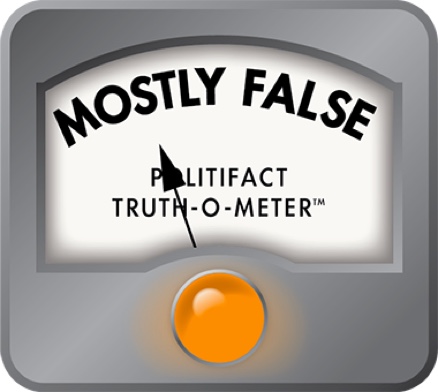
But, he’s definitely wrong when it comes to counting votes: 86 more Democrats than Republicans voted in favor of the program’s ultimate passage. A spokesman for the campaign now says Schrader simply misspoke. PolitiFact Oregon rates this statement False.
Our Sources
Think Out Loud, Candidate Conversation: 5th District, Oct. 12, 2010
H.R. 1424, the bill that created the Troubled Asset Relief Program
House vote on H.R. 1424
Senate vote on H.R. 1424