
Loughlin compares Social Security to a Ponzi scheme
As Democrats fight to hold on to Congressional seats across the country, they have repeatedly accused Republicans of trying to privatize or even do away with Social Security.
We checked one such claim by Rhode Island candidate David Cicilline on Saturday.
GOP candidates have struck back with their own charge: Social Security, they say, is like a Ponzi scheme.
Cicilline’s District 1 opponent, Republican John Loughlin, has drawn the parallel at least three times during his campaign. Last week, in an interview with PolitiFact Rhode Island, he went so far as to compare the U.S. government’s administration of Social Security with the scheme committed by convicted fraudster Bernard Madoff whom he said “went to jail for doing the exact same thing this country is doing with Social Security.”
In perhaps the most extensive example, Loughlin had this to say while speaking in February at a Rhode Island Voter Coalition forum:
“For those of you who haven’t retired yet, Social Security is a Ponzi scheme. The people who are working are paying for the people who are retired. There is no Social Security trust fund per se. Your money doesn’t go into a big bank and come out when you retire. You’re hoping there will be enough young people working to be able to pay your Social Security when you retire. That, ladies and gentlemen, is a classic Ponzi scheme. It’s a textbook definition.”
If he’s right and Social Security is indeed a Ponzi scheme it would make Madoff’s $65 billion fraud look like child’s play. So PolitiFact Rhode Island decided to take a look.
We had a little help on this one from our partners at PolitiFact Wisconsin, who conducted a thorough examination of the Ponzi scheme issue after a Senate candidate there made a similar claim. We’ll borrow from them.
Let’s start with some history. The scheme is named for Charles Ponzi, a Boston swindler who conned investors out of millions by promising them returns of up to 100 percent in just a few short weeks, then instead of investing their money, he used it to fund his personal habits. Ponzi kept the scam going by bringing in new investors, whose money he used to pay off existing ones.
The current definition on the U.S. Securities and Exchange Commission website identifies it this way: “A Ponzi scheme is an investment fraud that involves the payment of purported returns to existing investors from funds contributed by new investors.”
Sound familiar? Loughlin thinks so. He insists that’s the same process used to finance the federal Social Security program. And he believes that when benefits owed exceed the money coming in, the system will fall apart.
There are similarities. As PolitiFact Wisconsin notes, Social Security uses taxes on current wage earners to finance the retirement checks of millions of Americans. But what about Loughlin’s assertion that there is no Social Security trust fund with which to pay back wage earners?
In an email to PolitiFact Wisconsin, a spokeswoman for the Social Security Administration said “The Social Security Trust Funds currently holds over $2.5 trillion in interest-bearing Treasury securities backed by the full faith and credit of the United States government.”
As Wisconsin notes, that essentially makes it an I.O.U. for current wage earners.
But there is a second, critical component that defines a Ponzi scheme: fraud. To reach the level of this kind of scam, an investment setup must intentionally con investors, while making efforts to convince them that the finances are legitimate.
Loughlin might say that’s the case. And he’s right to say the Social Security system is struggling financially as more Baby boomers reach retirement age. But that’s very different than intentional deceit.
In fact, Social Security was set up in the midst of the Depression to serve as an insurance plan of sorts for the elderly. Since then, participants and those who pay into the system have been well aware of how the program is run.
For that reason, University of Rhode Island economics Prof. Rick McIntyre, called the comparison “unfair and inappropriate.”
A Ponzi scheme is guaranteed to run aground when the pool of investors is tapped out, whereas the Social Security administration’s troubles could be remedied by raising taxes or other restructuring, should the federal government choose to do so, he said.
“It is not a Ponzi scheme because there is no intent to deceive,” McIntyre added.
Mitchell Zuckoff, author of “Ponzi’s Scheme: The True Story of a Financial Legend,” and a URI graduate, addressed the persistent comparison in a recent interview with PolitiFact Wisconsin. “The important difference and the fundamental difference is that there is no secret to how Social Security is run,” he said. “No one is being misled; no one is taking the money and running…”
Without that key element of deceit, we find it hard to find Loughlin’s analogy — or that of anyone who uses it — credible.
But there’s one more thing. Loughlin doesn’t just compare Social Security to the Ponzi scheme concept, he takes it a step further and draws a parallel with the specific case of Madoff, who is believed to have run the largest fraud of this kind in history.
Publicly measuring a 75-year-old U.S. government program against such a massive crime is not only overstating the issue, it’s bordering on irresponsible.
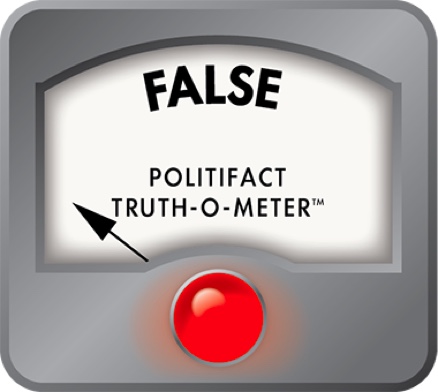
False.
Our Sources
Rhode Island Voter Coalition forum, video, Feb. 24, 2010, Ponzi scheme comments at approximately 6 minutes
Interview, John Loughlin, Sept. 28, 2010
Interview, Cicilline spokesman Eric Hyers, Sept. 29-Oct. 1, 2010
Cicilline campaign press release, "Loughlin reveals far right agenda, calls Social Security a 'Ponzi Scheme', Sept. 30, 2010
Interview, University of Rhode Island Economics Prof. Rick McIntyre, Oct. 1, 2010
Via PolitiFact Wisconsin, interviews and e-mail with Dororthy Clark spokeswoman for Social Security Administration, Sept. 16, 17 and 20, 2010
U.S. Securities and Exchange Commission website: "Ponzi schemes - Frequently Asked Questions."
Social Security Online, History: "Ponzi schemes vs. Social Security"
Via PolitiFact Wisconsin, Interview with Mitchell Zuckoff, author of "Ponzi’s Scheme", Sept. 16 and Sept. 20, 2010
Fortune magazine, via CNN.com: "Social Security a Ponzi scheme? No way," by Mitchell Zuckoff, Jan. 7, 2009