“Job losses are so certain under this new cap-and-tax plan that it includes a provision accommodating newly unemployed workers from the resulting dried-up energy sector,…

Palin claims that the cap-and-trade bill includes a $4.2 billion worker program
Alaska Gov. Sarah Palin has been making waves in the blogosphere with a recent op-ed on cap-and-trade.
Her critics say Palin’s July 14, 2009, piece in the Washington Post gets it all wrong. It “displays an ignorance for the subject so profound it’s almost gutsy,” Conor Clarke wrote in the Atlantic . Keith Olberman said on Countdown that she uses “the sky-is-falling tactics.”
We’ve explored other aspects of the cap-and-trade bill before, including how much it would cost lower-income consumers (Palin says it would hit them hardest, but the independent Congressional Budget Office predicts it would actually put money in the pockets of the poorest), as well as how much of an impact the bill would really have on climate.
Today, we’re tackling this claim from Palin’s op-ed: “Job losses are so certain under this new cap-and-tax plan that it includes a provision accommodating newly unemployed workers from the resulting dried-up energy sector, to the tune of $4.2 billion over eight years. So much for creating jobs.”
Before we dig into Palin’s statement, here’s a quick summary of how the cap-and-trade bill, authored by Reps. Henry Waxman of California and Edward Markey of Massachusetts, would work. The bill aims to slow climate change by lowering carbon pollution by 17 percent by 2020 and 83 percent by 2050. To do that, the bill would cap yearly carbon emissions, and to comply, companies will have to either upgrade to cleaner technologies or buy credits to continue polluting. Initially, the government’s permits for polluters would be given out for free. But eventually, companies would have to buy those permits from the government.
Palin and other Republicans say they are concerned that the transition will be costly to industry — particularly companies in the energy sector — and that workers will lose their jobs as a result.
The authors of the bill are also concerned — so much so that they included the program Palin refers to. Should workers lose their jobs, they would get 156 weeks of benefits, including 70 percent of their average weekly wage, help paying for health insurance, job training and employment search assistance.
So, Palin is correct that the bill has a program for displaced workers.
Funding for the program would come from selling those pollution allowances we mentioned earlier.
Supporters of cap-and-trade argue that Palin’s statement is misleading because she makes it seem like, overall, the bill is killing jobs. They say she neglects to point out that it will add thousands of jobs in industries that will grow because of the dramatic policy change. Bracken Hendricks, a senior fellow with the Center for American Progress, a left-leaning think tank, recently predicted the bill would create 1.7 million new jobs. The program Palin’s talking about will also help train those workers to participate in the emerging industry.
“In an economic shift from pollution to clean energy, some sectors will see impacts,” he said. “But this policy isn’t about job loss, it’s about anticipated growth. … The expectation is that there will be a net job creation.”
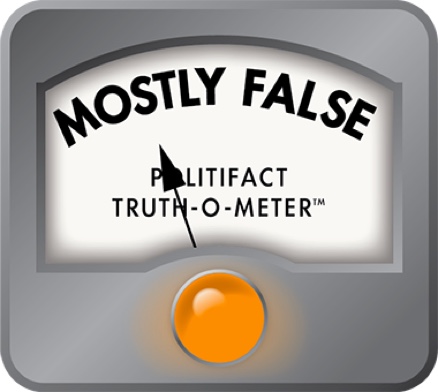
So, back to Palin’s claim. She’s correct that there is a program in the bill that would help displaced workers, but she paints a narrow view of how the bill will affect employment. Yes, some workers will be displaced and need to be retrained, but some experts are projecting growth and new jobs in industries that benefit from the new policy. We rate her claim Mostly True.
Our Sources
The Washington Post, The 'Cap and Tax' Dead End , by Gov. Sarah Palin, July 14, 2009
The Atlantic, Sarah Palin Does Not Understand Cap and Trade , by Conor Clarke, July 14, 2009
Countdown with Keith Olberman , July 14, 2009 episode
House Energy and Commerce Committee, summary of the cap-and-trade bill , accessed July 16, 2009
Congressional Budget Office, estimate of cap-and-trade cost , accessed July 16, 2009