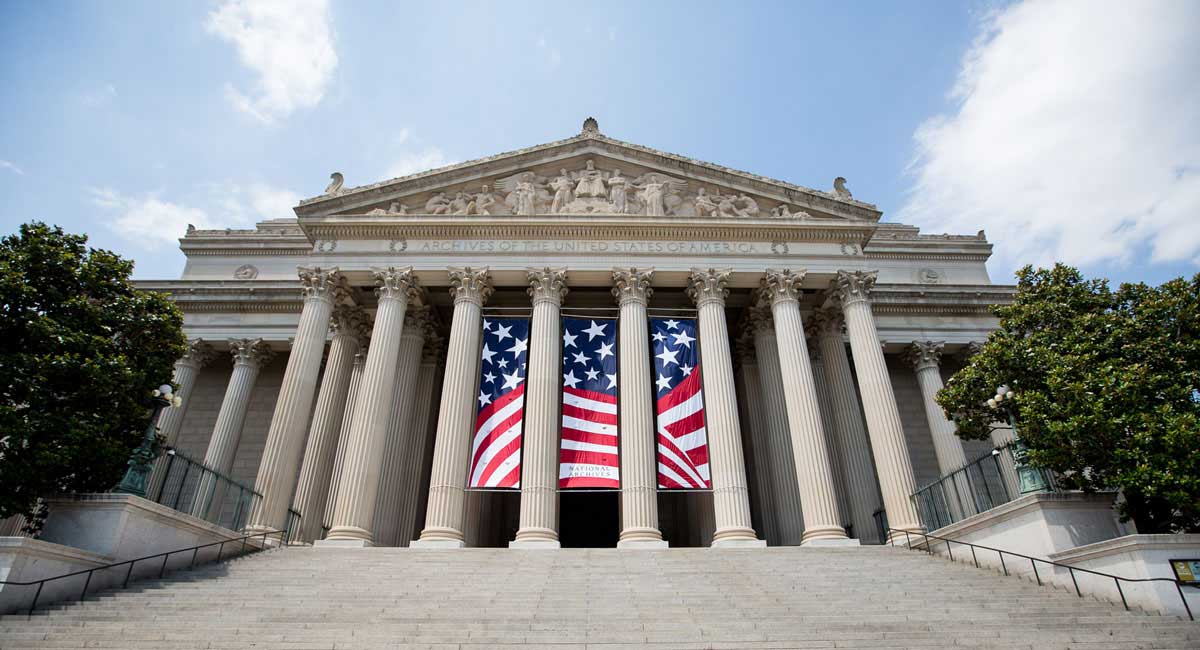
The National Archives is a repository for millions of documents chronicling the United States, from the creation of the federal government to rules, laws and more.
In addition to the physical copies of the documents, such as the Constitution and Declaration of Independence, the Archives provide access to much of its collection online.
That access comes with … a warning label?
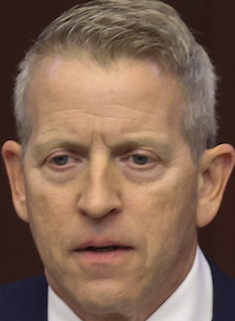
That’s what U.S. Rep. Glenn Grothman, R-Wisconsin, claimed in a Sept. 22, 2021 tweet:
“The @USNatArchives thought it would be a good idea to put a ‘harmful content’ warning on our nation’s Founding documents,” he wrote, adding: “This label is an attack on our history and undermines documents written to preserve individual liberties and fundamental rights.”
For the purpose of our check, we’re going to focus on the first part of the tweet.
Did the National Archives place “harmful content” warnings on some of the nation’s founding documents? And, as the tweet suggests, were those documents specifically targeted?
Behind the warnings
Grothman’s tweet was actually a retweet of another Republican U.S. Rep. Brian Babin of Texas.
Babin’s tweet included a link to an article published that day by the Daily Caller, a conservative leaning online publication, about how some Republicans were calling for the so-called “trigger warnings” on the documents to be removed.
When asked for backup for the claim Grothman’s office sent links to the Constitution, Declaration of Independence and the Bill of Rights on the National Archives website. On each of those documents, there is indeed a “Harmful Language Alert.”
In an online statement, the Archives — formally, the National Archives and Records Administration, or NARA — notes it provides public access to millions of records, adding:
“The Catalog and web pages contain some content that may be harmful or difficult to view. NARA’s records span the history of the United States, and it is our charge to preserve and make available these historical records. As a result, some of the materials presented here may reflect outdated, biased, offensive, and possibly violent views and opinions. In addition, some of the materials may relate to violent or graphic events and are preserved for their historical significance.”
The Archives are even more specific in a Q&A about the labels, noting some of the documents may:
-
Reflect racist, sexist, ableist, misogynistic/misogynoir and xenophobic opinions and attitudes
-
Be discriminatory towards or exclude diverse views on sexuality, gender, religion and more
-
Include graphic content of historical events such as violent death, medical procedures, crime, wars/terrorist acts, natural disasters and more
-
Demonstrate bias and exclusion in institutional collecting and digitization policies.
So, Grothman is generally on target, but here’s a key point he missed:
The Archives includes the warning on all documents across its collection of records of the U.S. federal government. In other words, the founding documents were not singled out, as Grothman’s tweet suggests.
The warning is general and automatically appears on every page of the online catalog, according to the National Archives communication staff.
It’s also important to note that none of the documents are altered or censored in any way.
Our ruling
Grothman claimed in a tweet that there were “harmful content” warnings added to the founding documents, such as the Declaration of Independence, the Constitution and the Bill of Rights, on the National Archives website.
That may surprise readers and historians alike.
He’s right that there are warnings on the founding documents, but the warnings appear on every page within the National Archives’ online database. They don’t single out the founding documents.
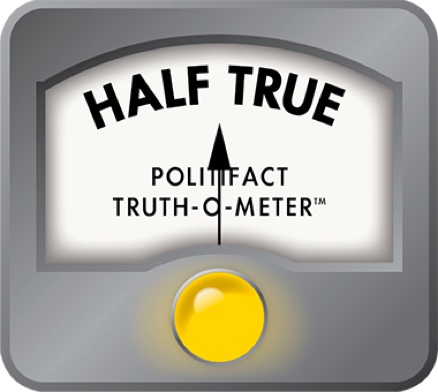
Our definition for Half True is “the statement is partially accurate but leaves out important details or takes things out of context.”
That fits here.