Says Donald Trump’s claim that “there was insufficient evidence and therefore, in our country, a person is innocent” directly contradicts Special Counsel Robert Mueller’s statement.

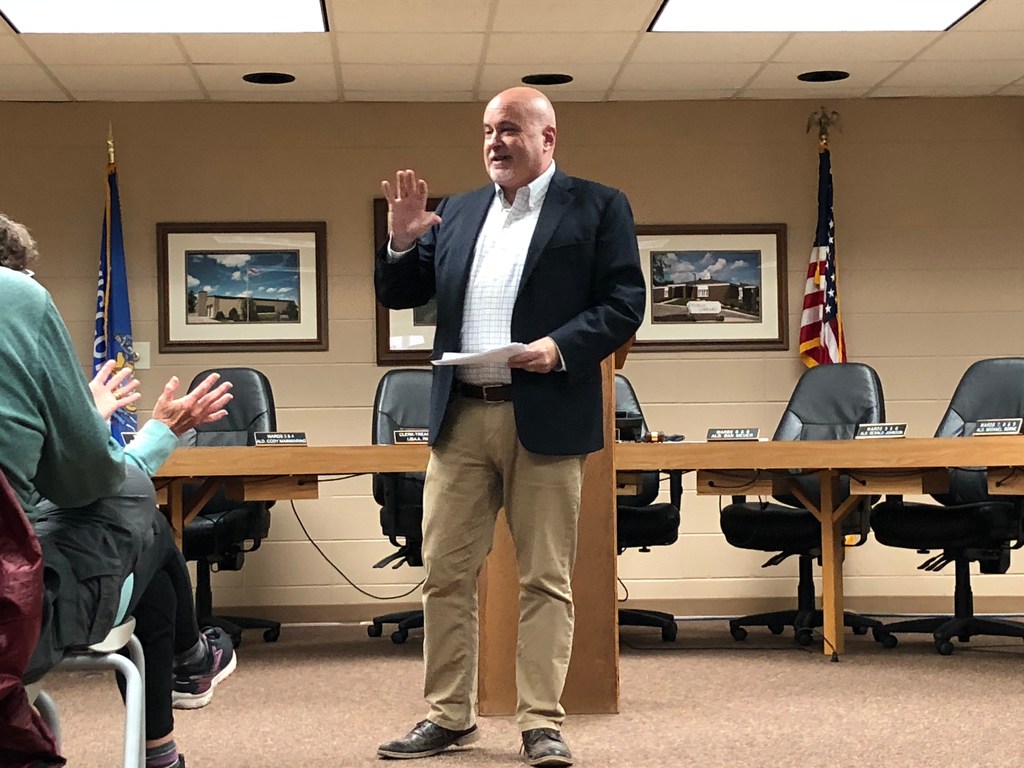

Pocan says Trump tweet “directly contradicted” Mueller comments
In a long-awaited public statement on the investigation into Russian involvement in the 2016 election, Special Counsel Robert Mueller said — and didn’t say — a lot.
Mueller leaned heavily on his previously released report in describing the two-year investigation, which left some elements open to interpretation.
President Donald Trump was quick to provide his own analysis, tweeting after the May 29, 2019 news conference, “Nothing changes from the Mueller Report. There was insufficient evidence and therefore, in our Country, a person is innocent. The case is closed! Thank you.”
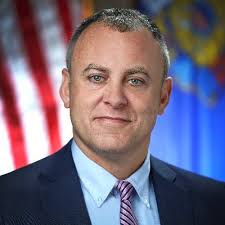
U.S. Rep. Mark Pocan, a Wisconsin Democrat, took issue with that characterization.
“The President’s claim that ‘There was insufficient evidence and therefore, in our Country, a person is innocent. The case is closed!’ is incorrect and in direct contradiction to what Special Counsel Mueller said earlier today,” Pocan tweeted.
Is Pocan — who has called for Trump to be impeached — right that the President contradicted Mueller’s comments?
These are murky waters, but let’s dive in.
A question of evidence
The core of Trump’s tweet — and therefore Pocan’s claim about it — is the reference to “insufficient evidence.”
What did Mueller say about that?
“The first volume of the report details numerous efforts emanating from Russia to influence the election,” Mueller said, reading from notes at the Justice Department news conference. “This volume includes a discussion of the Trump campaign’s response to this activity, as well as our conclusion that there was insufficient evidence to charge a broader conspiracy.”
So Mueller made a vague reference to “insufficient evidence” of a conspiracy related to Russian interference.
Trump’s tweet, meanwhile, implies a much more specific and far-reaching meaning — that there was no evidence Trump himself committed any crime. Mueller said no such thing.
In fact, Mueller addressed a potential interpretation like Trump’s in his comments.
“After that investigation, if we had had confidence that the president clearly did not commit a crime, we would have said so,” Mueller said. “We did not, however, make a determination as to whether the president did commit a crime.”
What’s more, Mueller said his office didn’t assess whether Trump committed a crime — because it could not issue any such charges against a sitting president anyway.
“Under longstanding department policy, a president cannot be charged with a federal crime while he is in office. That is unconstitutional,” Mueller said. “Charging the president with a crime was therefore not an option we could consider. … It would be unfair to potentially accuse somebody of a crime when there can be no court resolution of the actual charge.”
He went on to refer to impeachment as the only way to address such a matter.
“The (Department of Justice) opinion says that the Constitution requires a process other than the criminal justice system to formally accuse a sitting president of wrongdoing,” Mueller said. “Those were the principles under which we operated. And from them, we concluded that we would not reach a determination one way or the other about whether the president committed a crime.”
Ron Boehmer, a spokesman for Pocan, said the congressman’s tweet was referring to this limitation.
“Special Counsel Mueller did not reference insufficient evidence, but rather a restriction on being able to charge the President and made it very clear that he could not be cleared,” Boehmer said in an email.
So, Pocan’s “direct contradiction” claim isn’t exactly cut and dried. Trump did use the same term as Mueller.
But it’s clear Trump over-reached in his summary of Mueller’s comments, claiming a level of vindication that Mueller didn’t offer.
Our ruling
Pocan said Trump’s response to Mueller — that there was “insufficient evidence” and therefore Trump is innocent — is “in direct contradiction” to what Mueller said.
Mueller did use the term “insufficient evidence,” but that was in a generic reference to proof of a broad conspiracy involving Russian election interference. Trump’s tweet treats that statement as a commentary on his own guilt or innocence.
In actuality, Mueller was very clear that he cannot charge a sitting president with a crime, and therefore out of fairness couldn’t even accuse him of one. And Mueller was careful to note, “if we had had confidence that the president clearly did not commit a crime, we would have said so.”
Our definition of Mostly True is a statement that is accurate but needs clarification or additional information. That fits here.

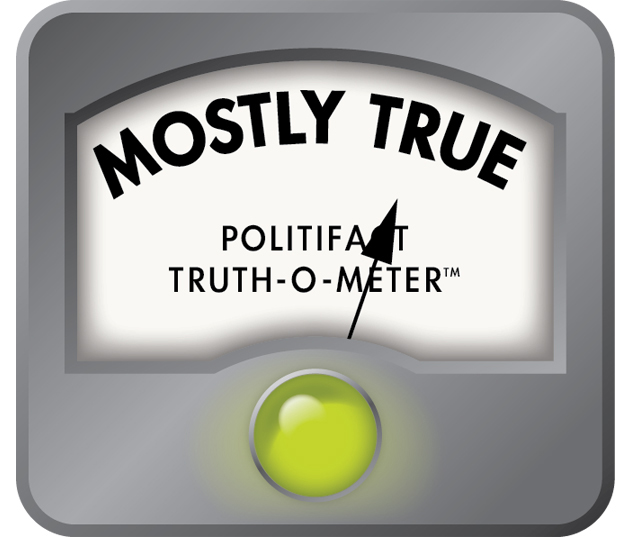 PolitiFact Rating:
Our Sources
Donald Trump, tweet, May 29, 2019
Mark Pocan, tweet, May 29, 2019
Email exchange with Ron Boehmer, spokesman for Mark Pocan, May 29, 2019
New York Times, Full Transcript of Mueller’s Statement on Russia Investigation, May 29, 2019