“The world’s 62 richest people own the same wealth as the 3.6 billion poorest.”
Oxfam: World’s 62 richest own as much as poorest 3.6 billion
Some of the starkest statistics we see center around income inequality. A recent post from Oxfam America, the U.S. branch of the global anti-poverty group, particularly piqued our interest. Oxfam wants the presidential candidates to tackle the issue in their upcoming debate.
“The world’s 62 richest people own the same wealth as the 3.6 billion poorest. What will you do to combat runaway inequality in the US and around the world?” Oxfam America asked on Twitter.
Is that so?
It turns out Oxfam America isn’t quite right. But the number is in the ballpark.
Oxfam came up with the comparison in January using two different reports. The first, from Credit Suisse, estimated the distribution of household wealth worldwide. The second was Forbes’ list of billionaires.
We’ll walk you through the calculations and a couple of caveats.
The Credit Suisse report
Analysts hired by Credit Suisse estimated total personal wealth at $250 trillion. From there, they estimated that the bottom half of the world’s population (approximately 3.6 billion people) owned less than 1 percent of all wealth. To be precise, (and you can find this on page 110 of the full Credit Suisse databook) the bottom half of the world’s population own .59 percent of world household wealth, which comes out to about $1.4 trillion.
There are some caveats about the calculation.
Raul Santaeulalia-Llopis, an economist at Washington University in St. Louis, said that Credit Suisse may have underestimated wealth in low-income countries but not enough to make the numbers much different.
The strongest criticism of the Credit Suisse report is that it includes a significant number of people in wealthy countries who are not poor but have large debts. That produces misleading results, experts told us.
“(They) are not actually living in poverty but simply have very low or even negative net worth due to amassment of debt to finance housing, education and consumption beyond current income,” Brent Beardsley, managing director at the Boston Consulting Group, said. “In this case, wealth — or rather net worth — is not an adequate measure of what is commonly understood as poverty.”
Forbes billionaire estimates
The second half of the comparison is relatively straightforward.
Oxfam used Forbes’ list of billionaires and counted how many people it would take to reach $1.4 trillion — the figure representing the wealth of the bottom half of the global population.
Forbes’ calculations aren’t perfect, but they are the best estimate publicly available. Forbes tracks changes in real time, but the base comparisons depend on estimates generated by members of the Forbes team. Sometimes the billionaires themselves say the numbers are off, because all the necessary information is not public knowledge. Then there are fluctuations due to changing currency exchange rates and the ups and downs of the stock market.
The list can’t deliver pinpoint accuracy, but it does represent a good faith effort to assess the net worth of the world’s wealthiest people. Like the wealth calculations in the Credit Suisse report, it should be seen as a reasonable estimate.
So what does Forbes say today, about 10 months after Oxfam wrote its report?
According to the publisher, the world’s wealthiest 54 people control $1.4 trillion — the same amount attributed to the combined wealth of the bottom 50 percent of people living in the world.
Our ruling
Oxfam America said the world’s 62 richest people own the same wealth as the 3.6 billion poorest. The Oxfam analysis was based on a report from Credit Suisse and the Forbes list of billionaires.
The exact number of billionaires might well be different from the 62 that Oxfam said. But out of world population of 7.3 billion, it makes little difference if the tally were 100. It still represents a tiny sliver of a percentage of the people in the world.
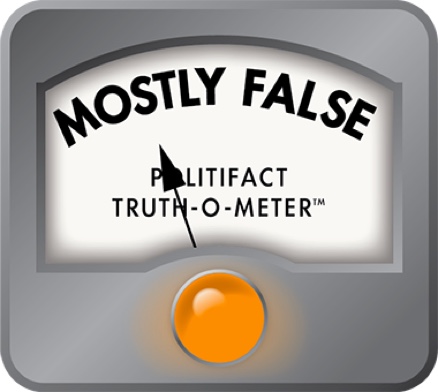
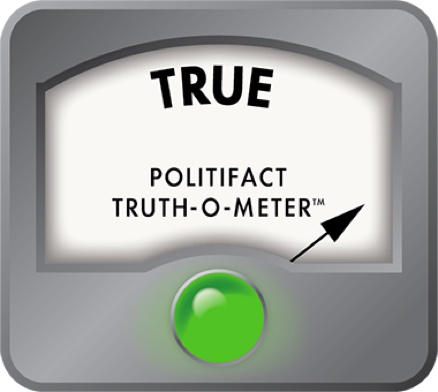
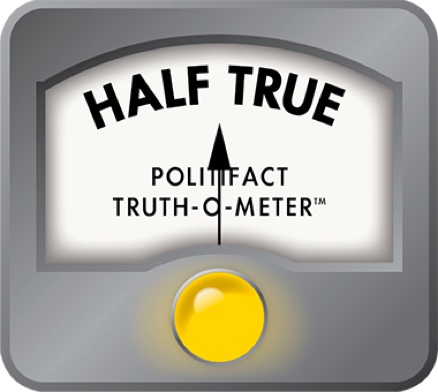
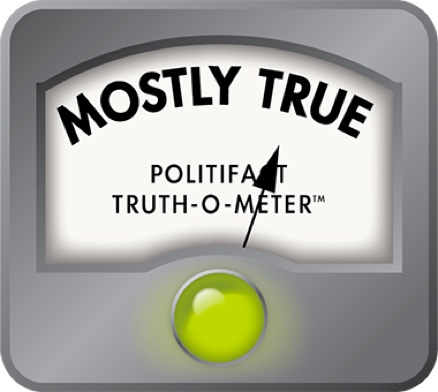
The statement is accurate but needs additional information. We rate it Mostly True.
https://www.sharethefacts.co/share/6158005b-55d8-4bf3-84eb-f25bd2df4025
Our Sources
Oxfam America, Debate tweet, Oct. 5, 2016
Oxfam International, 62 people own the same as half the world, reveals Oxfam Davos report, Jan. 18, 2016
Credit Suisse, Global Wealth Databook 2015, October, 2015
Oxfam International, An economy for the 1% - Methodology, Jan. 18, 2016
Forbes, The World's Billionaires, 2016
BCG Perspectives, Global Wealth 2015: Winning the Growth Game, 2015
Allianz, Global wealth report 2014
Email interview, Raul Santaeulalia-Llopis, assistant professor, Department of Economics, Washington University in St. Louis, Feb. 12, 2016
Email interview, Brent Beardsley, managing director, Boston Consulting Group, Feb. 5, 2016