“It’s been since 1888 that a Senate of a different party than the president in the White House confirmed a Supreme Court nominee.”
Cory Gardner flubs high court history exam
Senators are digging deep for historic ammunition in refusing to consider any nominee by President Barack Obama to replace the late Justice Antonin Scalia.
Some senators have been flunking their exams on Supreme Court nomination history.
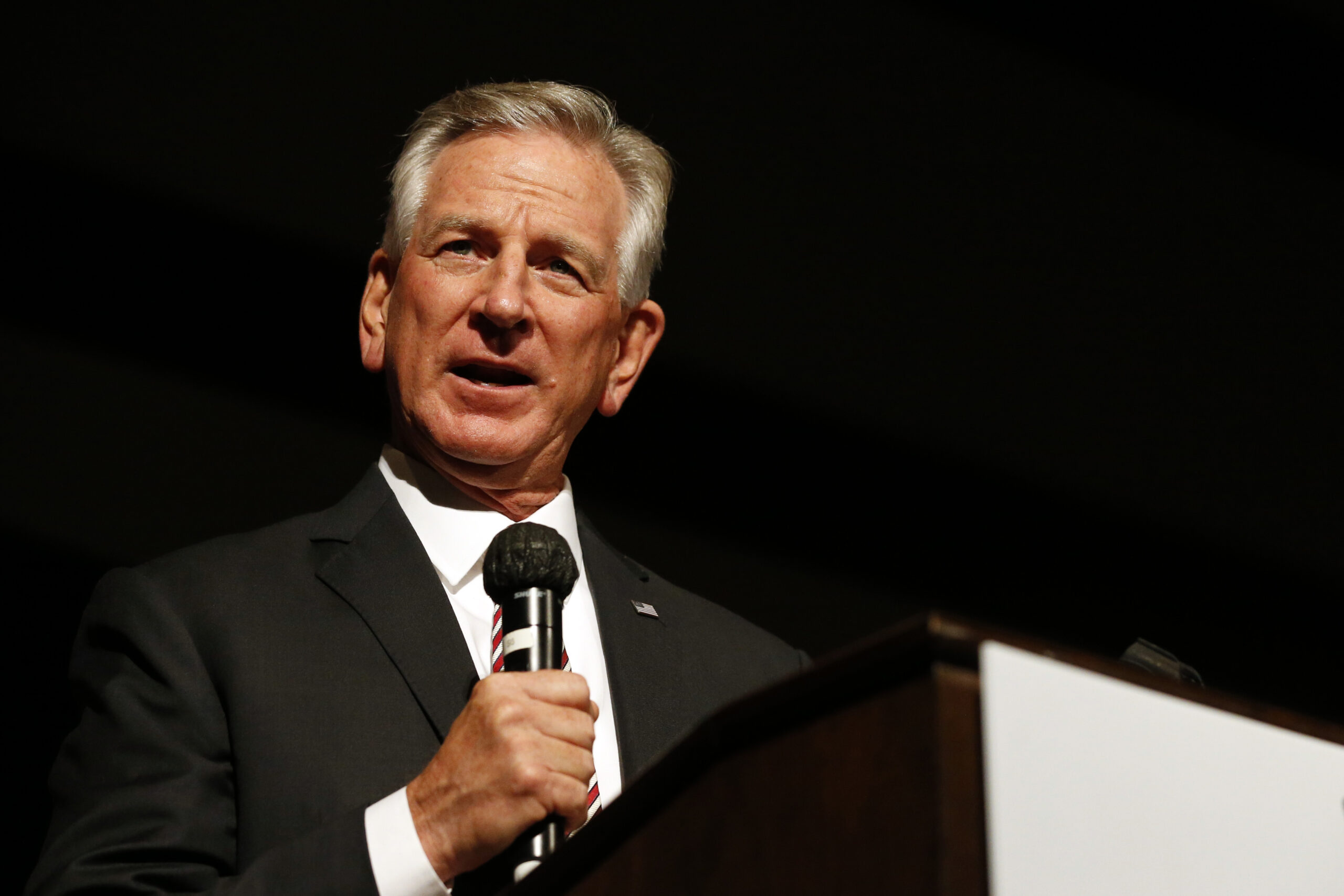
During a discussion on the high court’s election-year vacancy on Morning Joe this week, Republican Sen. Cory Gardner of Colorado said, “It’s been since 1888 that a Senate of a different party than the president in the White House confirmed a Supreme Court nominee.” (Watch the video.)
HELP US RAISE $15,000 TO HIRE AN IMMIGRATION FACT-CHECKER
We looked hard at Gardner’s claim and found he fumbled the facts.
Since 1895, there have been 14 times when a Senate controlled by a different party than the president’s party have confirmed his nominee.
A Democratic-controlled Senate has confirmed a Republican president’s high court nominee 13 times from 1954 to 1991:
- 1991: Justice Clarence Thomas, President George H. W. Bush.
- 1990: Justice David Souter, President George H. W. Bush.
- 1988: Justice Anthony Kennedy, President Ronald Reagan.
- 1975: Justice John Paul Stevens, President Gerald Ford.
- 1971: Justice William Rehnquist, President Richard Nixon.
- 1971: Justice Lewis F. Powell Jr., President Richard Nixon.
- 1970: Justice Harry Blackmun, President Richard Nixon.
- 1969: Chief Justice Warren E. Burger, President Richard Nixon.
- 1959: Justice Potter Stewart, President Dwight Eisenhower.
- 1957: Justice Charles Evans Whittaker, President Dwight Eisenhower.
- 1957: Justice William J. Brennan Jr., President Dwight Eisenhower.
- 1955: John Marshall Harlan II, President Dwight Eisenhower.
- 1954: Chief Justice Earl Warren, President Dwight Eisenhower.
For the last time a Republican-controlled Senate gave the nod to a Democratic president’s high court nominee you have to go back much further to 1895, when the GOP Senate confirmed Justice Rufus Peckham, President Grover Cleveland’s nominee.
The non-partisan National Constitution Center reports, “Of the 30 successful confirmations since 1945, 13 of the votes, or about 43 percent, came when the President’s party didn’t control the Senate. This was especially true when the Democrats ran the Senate for long periods during the 1960s and 1970s.”
A spokeswoman for Gardner told us Gardner intended to cite a narrower example from a recent Washington Post story: “While the [Morning Joe] panel was discussing the Supreme Court vacancy in the context of a presidential election year, Senator Gardner referred to the fact that ‘the last time a justice was nominated to the Court in a presidential election year and confirmed by a Senate controlled by the opposing party was 1888, when President Grover Cleveland nominated Justice Melville Fuller to be Chief Justice.'”
It’s true that in the 1888 presidential-election year, a Republican-controlled Senate confirmed not one but two high court nominees — Melville Fuller and Lucius Lamar — of Cleveland.
But Gardner’s actual comment cast a wider net — with no reference to the 1888 “presidential election year.”
The senator’s statement in a broader context: “If you look at the Constitution, the two clauses of the Constitution make it very clear the president shall nominate and the Senate shall provide advice and consent. It’s been since 1888 that a Senate of a different party than the president in the White House confirmed a Supreme Court nominee.”
Our ruling
Gardner claimed, “It’s been since 1888 that a Senate of a different party than the president in the White House confirmed a Supreme Court nominee.”
While he may have intended to invoke the example of Supreme Court nominations in the 1888 presidential election-year, he didn’t say that.
What he actually said is just wrong, contradicted by 14 instances of a Senate controlled by a different party than the president approving a nominee to the high court.
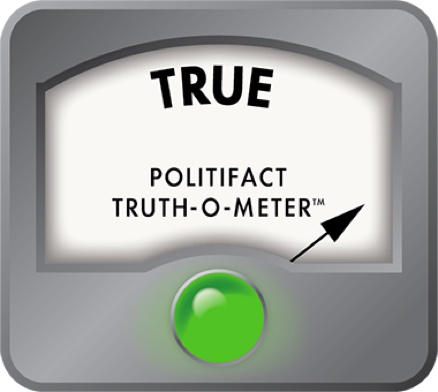
We rate his statement False.
Our Sources
Interview with Megan Taylor, Cory Gardner spokeswoman, on February 26, 2016.
PolitiFact, "Do presidents stop nominating judges in final year?" February 14, 2016
U.S. Senate, "Supreme Court Nominations, present-1789"
Infoplease.com, "Composition of Congress, by Political Party, 1855–2017"
ConstitutionCenter.org, "Presidents vs. opposing Senates in Supreme Court nominations," February 16, 2016