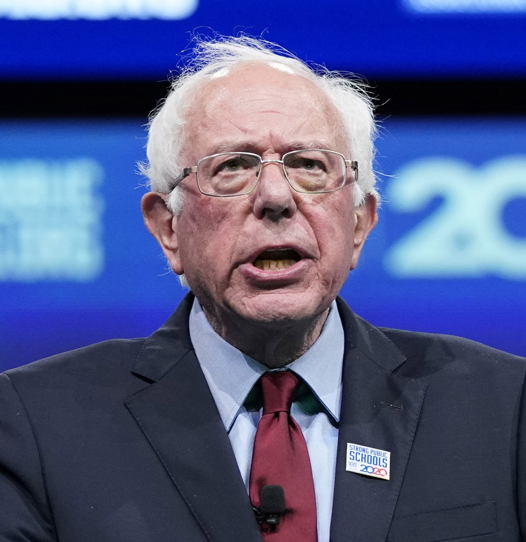
“When Jeb (Bush) was governor, his first four years as governor, his Medicaid program grew twice as fast as mine.”
Kasich: Medicaid spending rose twice as fast under Jeb Bush
Every Republican presidential candidate opposes Obamacare, but Ohio Gov. John Kasich stands out for being the only one who took advantage of the program’s Medicaid expansion option. Former Florida Gov. Jeb Bush wasn’t going to let that choice go unnoticed. Bush touted his opposition to expansion in Florida during a debate in South Carolina.
“The (Florida) governor was supportive of doing what John did,” Bush said Feb. 13. “So was the Florida Senate. A committed speaker of the House asked me to go as a private citizen to make the case against the expansion. I did, and it wasn’t expanded there.”
To which Kasich shot back, “When Jeb was governor — his first four years as governor — his Medicaid program grew twice as fast as mine. Okay? It’s just a fact.”
We can’t resolve which man is more fiscally responsible, but we can compare Medicaid spending trends. A decade and a half separates the periods — 1999-2003 for Florida and 2011-15 for Ohio — but with due regard for the vast change in circumstances, the numbers can speak for themselves.
Kasich’s campaign provided Medicaid spending numbers for both Ohio and Florida and we confirmed them with independent sources in both states. The spending amounts, in millions of dollars, include both federal and state contributions to Medicaid.
Ohio
2011
2012
2013
2014
2015
Change overall
$17,681
$18,401
$18,857
$20,859
$23,467
32.7%
Yearly change
4.1%
2.5%
10.6%
12.5%
Florida
1999
2000
2001
2002
2003
$6,947
$7,764
$8,901
$10,220
$11,437
64.6%
Yearly change
11.8%
14.6%
14.8%
11.9%
(In millions of dollars) Source: Florida State University; State of Ohio
You can’t compare the amounts directly because inflation changes the value of the dollars across the decades. But in terms of growth, Medicaid spending did rise twice as quickly under Bush than it has more recently under Kasich.
But we wouldn’t advise drawing simple conclusions from this.
The factors behind the numbers
Florida’s Medicaid budget did rise rapidly during Bush’s first term, largely due to more spending on long-term care. An Urban Institute report in 2002 said that as Bush took office, Florida had “a full-blown crisis” in nursing homes.
“Chronic staffing shortages led to an erosion in quality of care, which in turn led to lawsuits that resulted in extremely large awards for complainants and skyrocketing liability insurance rates for the industry,” the report said.
Larry Polivka now heads the Claude Pepper Center, a public policy analysis group at Florida State University. In the early 2000s, he served on an advisory committee set up to suggest ways to fix problems in the long-term care system. Bush adopted many of the recommendations, such as more nursing home staffing, and they were not cheap.
“Bush increased funding in the long-term care part of the budget very substantially,” Polivka told us.
A 2002 assessment by the U.S. Health and Human Services Department echoed Polivka’s point.
“In January 2001, Gov. Jeb Bush partly unveiled his ‘elder-friendly’ initiative, which called for significant increases in funding for nursing homes and nursing home quality of care reform,” according to the report, which noted Bush signed the changes into law in May 2001.
Polivka said the state has a higher proportion of senior citizens than other states and anything done with nursing homes and other long-term care services will have a substantial impact on spending.
Polivka said it didn’t help that the state also went through a brief recession in 2001. Unemployment rose over 2 percentage points in 2002. When the economy goes down, more people turn to Medicaid. Still, Polivka said the main driver in Florida centered on nursing home care, community-based care and at-home care.
In Ohio, 15 years later, the economy helped the state. Unemployment dropped by nearly half, from 9.2 percent down to 4.7 percent. That eased demand on Medicaid.
But the state did many things directly to rein in Medicaid spending. Amy Rohling McGee, president of the Health Policy Institute of Ohio, told us that Kasich focused on chronic illnesses, like asthma, and long-term care. McGee said administration policies played a significant role in trimming the rise in Medicaid costs, but she also noted that other trends were at play.
“It’s hard to tease out what reduces health care spending growth,” McGee said. “It’s likely a combination of factors. Experts around the country noted that healthcare spending was rising at a slower pace in recent years. Part of that was a post-recession slow down. Part of it might have been the Affordable Care Act. But changes in Ohio also made a difference here.”
Our ruling
Kasich said that Florida’s Medicaid spending in the first four years of the Bush administration went up twice as quickly as they did during Kasich’s first four years in Ohio. The spending numbers bear that out.
However, comparisons across very different states at very different times should be used with caution. Large national trends in health care inflation and the economy played a significant role in Medicaid spending in both states. Bush in Florida faced higher health care inflation and an economic slump. Ohio saw an easing of health care spending and an improving labor market.
Still, budget and policy decisions by the two governors had an impact on Medicaid spending.
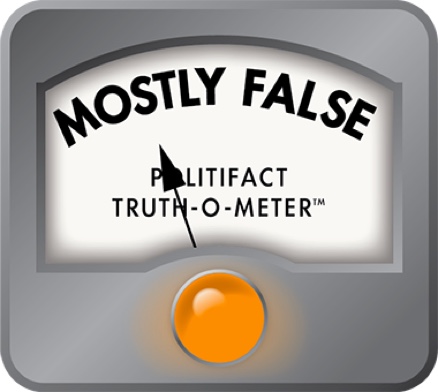
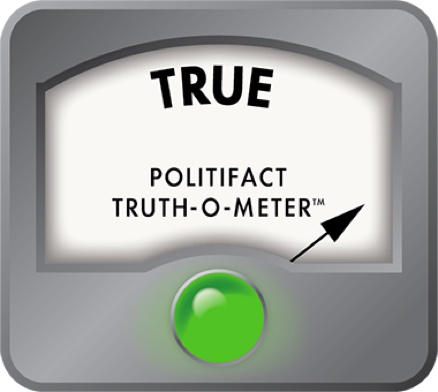
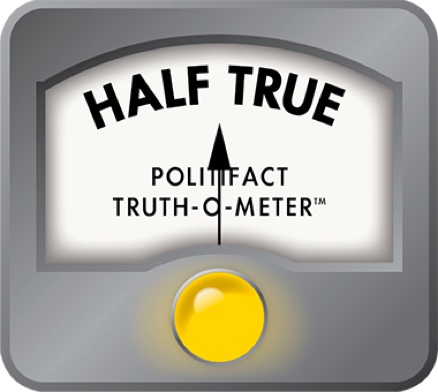
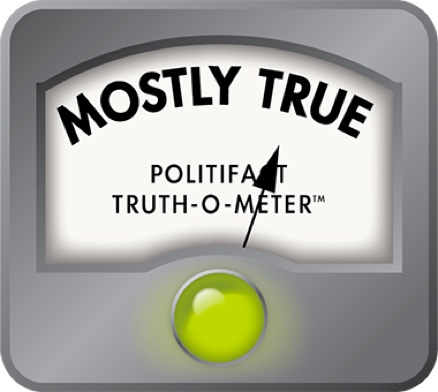
The statement is accurate but it needs additional information. We rate it Mostly True.
Our Sources
CBS News, Republican presidential debate in South Carolina, Feb. 13, 2016
Ohio Office of Health Transformation, Ohio Medicaid Reform, 2015
Florida State University, College of Social Sciences and Public Policy, Florida Medicaid spending
Bureau of Labor Statistics, State unemployment
Health Policy Institute of Ohio, Ohio Medicaid Basics 2015, June 2015
Urban Institute, Recent Changes in Health Policy for Low-Income People in Florida, April 2002
U.S. Department of Health and Human Services, State long-term care: recent developments and policy directions, July 1, 2002
Kaiser Family Foundation, Health Care Costs: A Primer, May 1, 2012
Census Bureau, Ohio quick facts, 1 Dec. 2015
Interview, Larry Polivka, executive director, Claude Pepper Center, Florida State University, Feb. 15, 2016
Interview, Amy Rohling McGee, president, Health Policy Institute of Ohio, Feb. 15, 2016
Interview, Scott Milburn, spokesman, John Kasich for President, Feb. 13, 2016
Interview, Tim Keen, director, Ohio Office of Budget and Management, Feb. 13, 2016