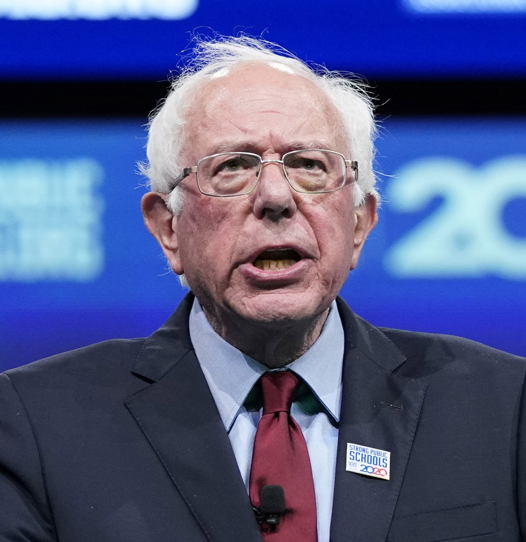
“There comes a point in the last year of the president, especially in their second term, where you stop nominating” both Supreme Court justices and…

Do presidents stop nominating judges in final year?
The sudden death of Supreme Court Justice Antonin Scalia has sparked a heated discussion over his replacement, raising the stakes in an already contentious presidential election.
Given the opposition of congressional Republicans, Sen. Marco Rubio of Florida suggested on NBC’s Meet the Press that there’s no need for President Barack Obama to even try making a nomination.
“But why not go through this process?” host Chuck Todd asked.
“Because actually, it’s not just for the Supreme Court, even for appellate courts, both parties have followed this precedent,” Rubio responded. “There comes a point in the last year of the president, especially in their second term, where you stop nominating, or you stop the advice and consent process.”
Is it true that presidents “stop nominating” both Supreme Court and appellate court judges in their last year in office?
We didn’t hear back from the Rubio campaign, but our research shows Rubio is overstating matters.
Late-term SCOTUS picks
Let’s first note that the scenario that Rubio is describing — a Supreme Court vacancy in the last year of a presidency — is pretty rare to begin with. Since 1900, it’s only happened once to a “lame duck” president, and twice more to presidents who lost re-election bids. All three times, the exiting president made nominations:
• 1968: President Lyndon Johnson — who announced he would not run for re-election — nominated Associate Justice Abe Fortas as Chief Justice and Homer Thornberry to fill Fortas’ vacancy. Fortas’ nomination failed, Thornberry withdrew his nomination and Chief Justice Earl Warren remained on the bench, delaying his retirement. (More on this later.)
• 1932, President Herbert Hoover nominated Benjamin Cardozo. Hoover lost to Franklin Delano Roosevelt.
• 1912: President William Taft successfully nominated Mahlon Pitney to the Supreme Court. Taft lost to Woodrow Wilson.
Three other presidents made successful Supreme Court nominations while running for re-election, but unlike Taft and Hoover, they won another term:
• 1956: Dwight Eisenhower made a recess appointment of William Brennan.
• 1940: Franklin Delano Roosevelt nominated Frank Murphy.
• 1916: Woodrow Wilson nominated John Clarke and Louis Brandeis.
Late-term lower court picks
When it comes to the lower courts, Rubio is on even less firm ground, experts told us.
“He’s clearly wrong,” said Russell Wheeler, a judicial expert with the Brookings Institution. Here’s a breakdown of the most recent examples of lower court nominations made in the last year of a presidency, courtesy of Wheeler:
District Court nominations
Court of Appeals nominations
2016 (Barack Obama)
4
4
2008 (George W. Bush)
26
6
2000 (Bill Clinton)
37
9
1988 (Ronald Reagan)
26
7
Confusion over judicial confirmations in the election years stems from the “myth of the so-called ‘Thurmond Rule,’ ” said Wheeler. Named for former Sen. Strom Thurmond, who opposed Johnson’s 1968 Supreme Court nominations, the informal rule suggests that judicial nominations shouldn’t be confirmed in the months leading up to a president election.
Though Wheeler and all the other experts we spoke with agreed that it becomes increasingly difficult to push through a nominee as the end of a presidency nears, the Thurmond Rule doesn’t actually hold up.
For example, George W. Bush forwarded nominees to the Court of Appeals “as late as September of his last year in office,” said Lisa Holmes, a University of Vermont professor who specializes in judicial politics.
And that month, the Democratic Senate Judiciary Committee “shepherded through” many of Bush’s nominations even though “it did look very promising for President Obama” at the time, said Sheldon Goldman, a University of Massachusetts at Amherst professor who specializes in the politics of judicial selection.
The evidence against Rubio’s claim also multiplies if we expand the criteria to beyond lame-duck presidents. From 1947 to 2014, there have been 79 appellate court nominations and 416 District Court nominations in presidential election years, according to Sarah Binder, a George Washington University professor who studies the federal judiciary.
In fact, there’s an example sitting on the Supreme Court right now that contradicts Rubio, pointed out Goldman. Justice Stephen Breyer was nominated by Jimmy Carter to the Court of Appeals in November of 1980, after Ronald Reagan won the White House.
Our ruling
Rubio said, “There comes a point in the last year of the president, especially in their second term, where you stop nominating” both Supreme Court justices and Court of Appeals judges. Rubio suggested that point is now.
The chance for an outgoing president to make a Supreme Court nomination in his last year in office has only happened once in the past century, in 1968.
But presidents do continue to nominate appellate judges in their final year. Out of the last four presidents who served two terms, all of them made nominations to the Court of Appeals (as well as the District Courts) in their last year.
We rate Rubio’s claim False.
Correction: Ronald Reagan’s final full year in office was 1988. An earlier version of this fact-check listed the incorrect year.

Politifact Rating:
 Politifact Rating:
Our Sources
NBC, "Meet the Press," Feb. 14, 2016
Senate.gov, "Supreme Court Nominations, present-1789," accessed Feb. 14, 2016
Email interview with Russell Wheeler, visiting fellow at the Brookings Institution, Feb. 14, 2016
Email interview with Lisa Holmes, professor of political science at the University of Vermont, Feb. 14, 2016
Interview with Sheldon Goldman, professor of political science at the University of Massachusetts at Amherst, Feb. 14, 2016
Email interview with Sarah Binder, professor of political science at George Washington University, Feb. 14, 2016
New York Times, "The Death of Justice Scalia: Reactions and Analysis," Feb. 13, 2016
New York Times, "Election-Year Supreme Court Nominations Are Rare," Feb. 13, 2016
SCOTUSblog, "Supreme Court vacancies in presidential election years," Feb. 13, 2016
PolitiFact, "Rubio exaggerates in saying it's been 80 years since a 'lame duck' made a Supreme Court nomination," Feb. 14, 2016
https://www.sharethefacts.co/share/a646c8d7-d2f5-45e2-a2cb-576c78bc90c5