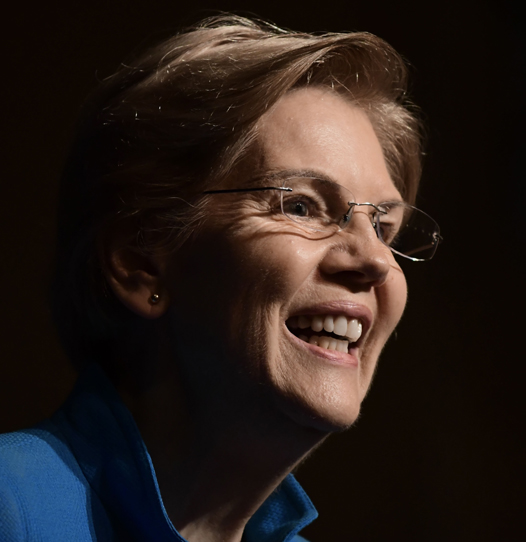
“Former Gov. Rick Perry signed a law that a federal court said was actually written with the purpose of discriminating against minority voters.”

A federal court said Rick Perry okayed a law intended to discriminate, says Hillary Clinton
In a speech at Texas Southern University, Democratic frontrunner Hillary Clinton had no qualms condemning GOP presidential candidate Rick Perry in his home state.
“Former Gov, Rick Perry signed a law that a federal court said was actually written with the purpose of discriminating against minority voters,” she said on June 4, 2015.
Perry called Clinton’s claim “way outside the norm of ridiculous” on CNN’s State of the Union a few days later. “I could probably find a federal judge to say just about anything,” he stated.
We did not hear back from the Perry campaign, so we delved into the law’s mired legal history.
Senate Bill 14 is the law Clinton is referring to. It requires Texas voters to present a limited number of acceptable government-issued photo IDs at the ballot box; gun licenses count while student IDs don’t. The Texas Legislature passed the bill in March 2011, and Perry signed it into law on May 27.
The law was in limbo for two years, until the Supreme Court struck down a section of the Voting Rights Act of 1965 on June 23, 2013. The section had mandated federal pre-approval of election laws in Texas and eight other states that historically discriminated against minority voters. With the court ruling, states could move ahead with changes. That same day, then-Texas Attorney General and current Gov. Greg Abbott announced the law would “take effect immediately.”
A few months later, in October 2013, federal Judge Nelva Gonzales Ramos struck down the voter ID law in a consolidated suit filed against the state by U.S. Rep. Marc Veasey, D-Texas, the NAACP, and the Mexican American Legislative Council.
“The court holds that SB 14 creates a substantial burden on the fundamental right to vote, has a discriminatory effect and purpose, and constitutes a poll tax,” Ramos wrote in her ruling.
“The evidence in the record demonstrates that proponents of SB 14 … were motivated, at the very least in part, because of and not merely in spite of the voter ID law’s detrimental effects on the African-American and Hispanic electorate.”
Ramos’ injunction against the voter ID law was temporarily stayed by the Fifth Circuit of Appeals, which permitted the law to remain in place in Texas for the 2014 midterm elections. That ruling was backed by the Supreme Court. The case is now back at the Fifth Circuit, which heard oral arguments in April 2015. So the law’s ultimate fate is still unknown.
Our ruling
Clinton said, “Former Gov. Rick Perry signed a law that a federal court said was actually written with the purpose of discriminating against minority voters.”
The law in question requires a photo ID from Texas voters and was greenlit by Perry in 2011. Federal judge Nelva Gonzales Ramos struck the law down in 2013. While that ruling was stayed by two higher courts, Ramos clearly described the law as discriminatory in her ruling. However, it’s important to note that courts are still considering whether or not the law will be allowed to stand.
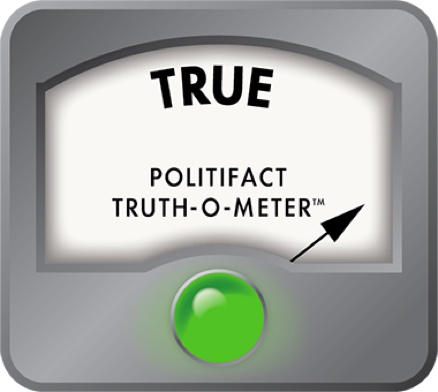
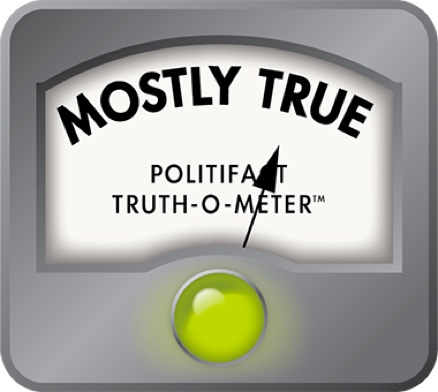
Clinton’s carefully worded statement is accurate but needs additional information. We rate it Mostly True.
Clarification, June 10, 2015: We revised the wording of the decisions from the Fifth Court of Appeals and the Supreme Court to clarify that the two higher courts did not overturn Ramos’ ruling. They temporarily stayed Ramos’ injunction against Texas’ voter ID law.
Our Sources
United States District Court Corpus Christi Division, Veasey v. Perry Opinion October 9, 2015
CNN Politics, "Supreme Court allows Texas voter ID law for now," October 19, 2014
Washington Post, "Texas case puts voter ID law to test," July 9, 2012
New York Times, "Supreme Court Allows Texas to Use Strict Voter ID Law in Coming Election," October 18, 2014
New York Times, "Supreme Court Invalidates Key Part of Voting Rights Act," June 25, 2013
New York Times, "Court Strikes Down Voter ID Law in Wisconsin and Texas," October 9, 2014
The Economist, "Texas voter-ID law: So, is it suppressing voters?" November 3, 2014
Texas Observer, "After Six-Year Fight, Perry Signs Voter ID into Law," May 27, 2011
U.S. Department of Justice, The Voting Rights Act of 1965
U.S. Department of Justice, "Section 4 of the Voting Rights Act of 1965"
Texas Senate Bill No. 14, January 12, 2011
The Attorney General of Texas, "Statement by Texas Attorney General Greg Abbott," June 25, 2013
Supreme Court of the United States, Veasey v. Perry Ruling, October 18, 2014
CNN, State of the Union, June 7, 2015
Interview, Josh Schwerin, Hillary Clinton spokesman, June 5, 2015