“One of the first states in the union to pass a voter ID bill was Rhode Island, 85 percent Democratic legislature.”
Ann Coulter says Rhode Island was one of first states to pass Voter ID law
Little Rhody got a national shout out on ABC’s talk show “The View” on Sept. 27, 2012. That’s when subtle-as-napalm conservative pundit Ann Coulter used Rhode Island’s 2011 voter-identification law to rebut the charge that such legislation is a Republican scheme to steal elections by making it harder for poor and minority voters to vote.
“One of the first states in the union to pass a voter ID bill was Rhode Island, 85 percent Democratic legislature,” she told cohost Joy Behar, after Behar suggested that Republicans were pushing voter identification not to stop fraud but to reduce Democratic turnout.
“And who pushed it?,” Coulter asked. “A black Democrat in the House, a black Democrat in the Senate. That’s a fact!”
Democrats in individual states, and nationally, have sought to discredit voter-identification initiatives, charging they are part of a Republican strategy to make it harder for people who have historically favored Democrats to get the paperwork they need.
As Coulter’s counterpunch showed, Rhode Island’s voter identification law, passed last year, has emerged as a Republican talking point to dispute accusations of partisanship.
In this item, we will check Coulter’s claim that Rhode Island was a leader in voter-identification legislation. We will examine the second part of her statement in a separate item.
Rhode Island, where 83.5 percent of the state’s legislators are Democrats, is an exception to the national trend on voter-identification, but, despite what Coulter claimed, it is far from being “one of the first” states to pass such legislation.
According to the National Conference of State Legislatures, as of Sept. 5, 2012, 31 states had enacted some form of voter identification law. At least 12 did so between 2003-2010, well before Governor Lincoln Chafee signed Rhode Island’s law in July 2011.
Which state actually was the first is unclear. For the modern era, it appears the first state to require voters to verify their identity appears to be South Carolina, in 1950, said Jennie Bower, a senior fellow who researches the issue for the council. Rhode Island isn’t even the first state in New England to require identification; Connecticut did it in 1993.
Our ruling
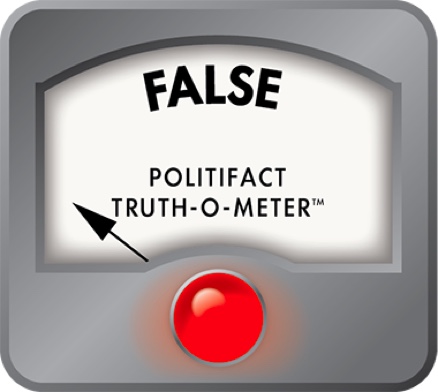
Ann Coulter said Rhode Island was one of the first states to enact voter-identification laws. It isn’t. At least a dozen states had such laws earlier, making Rhode Island closer to the middle of the pack.
We rule her statement False.
Our Sources
The View,"Ann Coulter causes mass hysteria on ‘The View,’ Whoopi bleeped..." Sept. 27, 2012, accessed Oct. 2, 2012
National Conference of State Legislatures, "Voter Identification Requirements," accessed Oct. 2, 2012
Interview: Jennie Bower, senior fellow, National Council of State Legislatures, Oct. 1, 2012.
Rhode Island General Laws, "Conduct of Election and Voting Equipment, and Supplies," 17-19-24.2
The Providence Journal, "Voter-ID measure had broad backing; Bills similar to the one signed by Governor Chafee opposed by minorities, Democrats elsewhere," July 7, 2011