Says the tax code is effectively subsidizing “the marketing efforts of fast food and junk food companies by as much as $19 billion over 10…

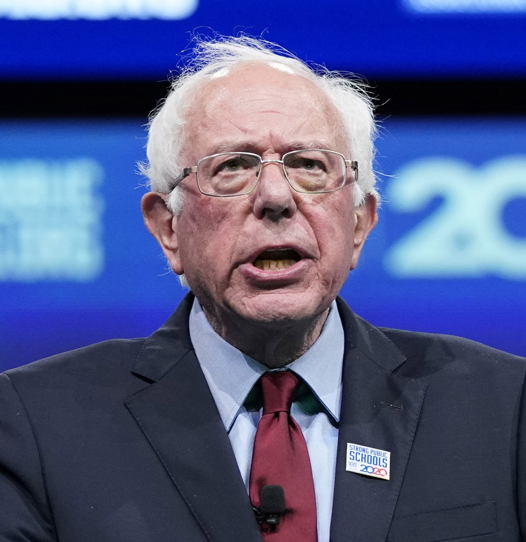
Dennis Kucinich says the tax code effectively subsidizes fast food and junk food marketing that targets children
Dennis Kucinich became a lame-duck member of Congress after the 10th District he has represented since 1997 was redrawn out of existence and he lost a primary contest to another sitting Democrat, Marcy Kaptur, in the new Ohio 9th District.
But Kucinich has not stopped working on the issues that have engaged him.
He issued a news release and video on Nov. 2 supporting HR 4310, the bill he introduced to “end the childhood obesity subsidy.”
“Congress — with your tax dollars — subsidizes the marketing efforts of fast food and junk food companies by as much as $19 billion over 10 years,” thereby “subsidizing the childhood obesity epidemic,” he said.
Do fast food and junk food companies really enjoy an advertising subsidy? PolitiFact Ohio decided to dig in.
Kucinich builds his case first by noting that childhood obesity — which has more than tripled in the past 30 years, according to the Centers for Disease Control and Prevention — has been linked to the influence of targeted marketing, though “partial blame does lie with a more sedentary lifestyle and a worsening diet.”
He cites several prominent studies in support, with the most recent study coming from the Institute of Medicine, the health arm of the National Academy of Sciences. It says: “Aggressive marketing of high-calorie foods to children and adolescents has been identified as one of the major contributors to childhood obesity.”
(Others with the same conclusion included the American Heart Association, the American Journal of Public Health and the Rudd Center for Food Policy and Obesity at Yale University.)
Kucinich’s bill would prohibit any company from claiming a tax deduction for the expense of marketing that is directed at children “to promote the consumption of food at fast food restaurants or of food of poor nutritional quality.”
Under current law, fast food marketers get the same break that other businesses do. The federal tax code allows companies to deduct “reasonable and necessary” expenses of marketing and advertising from their income taxes.
How is that a subsidy?
“The way the federal funding system works,” Kucinich said, “is that if we give a tax break in one place, we need to replace that lost income from somewhere else, like with higher taxes from the rest of us. In other words, this tax break is a massive subsidy for the junk food and fast food industry.”
The question then is how much the deduction, or tax break, is worth.
According to a report to Congress from the Federal Trade Commission, the most recent we could find, the fast food industry spent nearly $2 billion in 2006 on marketing and advertising specifically aimed at children. That would yield about $700 million in tax revenue at the top corporate tax rate of 35 percent.
A report in the New England Journal of Medicine put the marketing budgets for “kids’ foods” at $10 billion annually — which would yield $3.5 billion in revenue.
A study in the International Journal of Behavioral Nutrition and Physical Activity said “it It is unclear how much money is spent on food advertising specifically directed at children and adolescents,” but put the total for advertising, youth-targeted promotions and public relations and packaging especially designed for children at $10.5 billion.
The Economic Policy Institute estimated 10-year tax savings of $15 billion through legislation to “end subsidies for junk and fast food advertising to children to promote health.”
Kucinich relied on Congress’ nonpartisan Joint Committee on Taxation, which estimated “on a very preliminary basis” that his legislation could raise $15 billion to $19 billion in additional federal revenue over the 10-year budget period.
That is as much as $19 billion, as Kucinich asserted, though the committee also noted that unsettled issues surrounding his bill would affect its impact and the revenue it would raise. Those issues primarily include defining “fast food” and determining what advertising is “primarily directed at children.”
What’s our take-home?
PolitiFact examined Kucinich’s legislation two years ago, when he made a statement about it that we found relied too firmly on a high-end estimate of its potential tax saving and implied a direct cash payout by taxpayers to the food industry. He chose his words more carefully this time.
His assertion that the tax code provides a subsidy of “as much as $19 billion” needs additional information for clarification, but it is well supported.
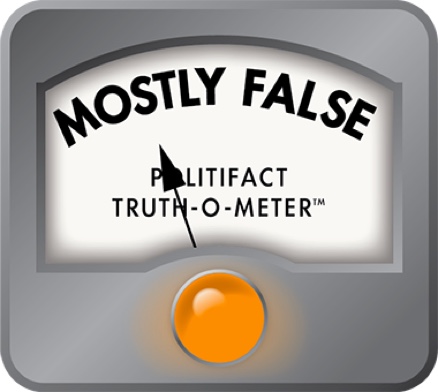
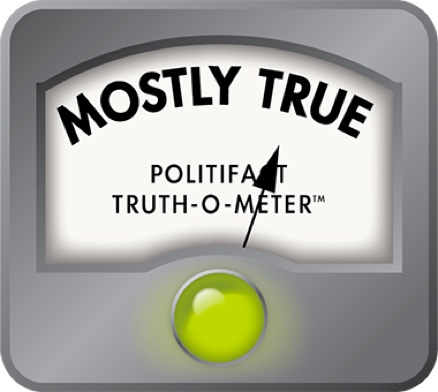
On the Truth-O-Meter, his claim rates Mostly True.
Our Sources
Rep. Dennis Kucinich, News release, "Save Billions and Protect our Children’s Health," Nov. 2, 2012
Library of Congress Bill Summary, 111th Congress, H.R. 4310
Centers for Disease Control, National Center for Chronic Disease Prevention and Health Promotion, "Childhood Obesity," June 03, 2010
Institute of Medicine, "Accelerating Progress in Obesity Prevention: Solving the Weight of the Nation," May 8, 2012
American Heart Association, "Unhealthy and Unregulated: Food Advertising and Marketing to Children," Jan. 27, 2009
The New York Times, "Commercials Are the Culprit in TV-Obesity Link," Feb. 9, 2010
American Journal of Public Health, "Associations of Television Content Type and Obesity in Children, " February 2010
Federal Trade Commission, "Marketing Food to Children and Adolescents: A Review of Industry Expenditures, Activities and Self-Regulation," report to Congress, July 2008
New England Journal of Medicine, "Food Marketing and Childhood Obesity — A Matter of Policy," June 15, 2006
International Journal of Behavioral Nutrition and Physical Activity, "Food Advertising and Marketing Directed at Children and Adolescents in the US," Feb. 10, 2004
Economic Policy Institute, "The Budget for All: A technical report on the Congressional Progressive Caucus budget for fiscal 2013," March 28, 2012
PolitiFact Ohio, "Rep. Dennis Kucinich assails tax deductions for fast food advertising that targets children," Dec. 6, 2010