Under energy efficiency legislation sponsored by U.S. Sen. Jeanne Shaheen, “federal bureaucrats could take over the local building code enforcement in your city if so-called…
Rick Perry says federal bureaucrats will take over local building codes
Texas Gov. Rick Perry didn’t refer to U.S. Sen. Jeanne Shaheen by name when he attacked the New Hampshire Democrat last month over her proposed energy efficiency bill. But, with a conservative audience before him, he didn’t have to.
“Instead of relieving the economic burden … you have your counterpart in the United States Senate who is working on a bill that would make things worse for home builders,” Perry said to great applause at the Cornerstone Action Dinner, October 28, 2011 in Manchester, N.H.
“Under her scheme, federal bureaucrats could take over the local building code enforcement in your city if so-called green mandates are not complied with quickly enough,” Perry said. “It is just simply bureaucratic overkill.”
Just as Perry didn’t mention Shaheen by name, he didn’t identify the specific legislation he was referring to. But a call to the Perry campaign found the governor was referring to the Energy Savings and Industrial Competitiveness Act of 2011.
The bill, introduced in May by co-sponsors Shaheen and Sen. Rob Portman, R-Ohio, proposes a host of changes to national energy policies and practices. If passed, it would launch a federal training program for energy-efficient building design and operation, and it would establish a loan program for energy improvements to homes and small businesses, among other initiatives.
But would it really hand control of local building codes over to the federal government? We’re on the case.
Under the proposal, which reinforces existing law, the federal Department of Energy would work with building industry groups, such as the American Society of Heating, Refrigerating and Air-Conditioning Engineers, to develop new model standards for residential and commercial buildings.
The new standards would adjust federal targets toward more efficient appliances, lighting, windows and insulation, according to the text of the bill, S. 1000. And states would have two years from the date the new codes are implemented to report whether they plan to adopt the standards or not.
“The 1992 Energy Policy Act mandated that states must review and consider adopting each revision of national model energy codes. S.1000 does not change this,” Jeff Sadosky, a spokesman for Sen. Portman, the bill co-sponsor, wrote in an e-mail statement.
“What it does is require the federal government to more frequently and consistently revise the national codes,” Sadosky wrote. “There remains no federal mandate on states to adopt national model energy codes.
Those states that do agree to the standards would be subject to a certification process, in which planners demonstrate their building codes meet the federal models or they are working towards them. But, according to the bill text and policy analysts alike, the legislation would not require any states to take part, nor would it offer provisions for any penalties for non-compliance.
“Notwithstanding any other provision of this section, any model building code or standard established under this section shall not be binding on a State, local government or Indian tribe as a matter of Federal law,” the legislation reads.
“The voluntary building codes provision contained in Senator Shaheen’s bipartisan energy efficiency bill provides models, not mandates, for the states,” Shaheen spokeswoman Faryl Ury added this week in a written statement.
“Adoption and enforcement is reserved for the states,” she wrote.
Financial incentives would be available to states that opt to participate. The bill, which passed the Senate Committee on Energy and Natural Resources in July 2011, proposes up to $200 million in incentives to be spread among participating states, among other training and educational resources.
But, without any federal mandates, the only thing states stand to lose is access to the incentive money.
The bill is awaiting a full Senate vote.
“Basically, there’s a lot of carrot with no stick,” said Deborah Estes, senior counsel for the Senate energy committee, which is chaired by Sen. Jeff Bingaman, a New Mexico Democrat.
“We hope that states do the right thing and participate in this. It’s for the good of their citizens and for the good of the nation,” Estes said. “But a lot of states, particularly smaller states, might not have the resident expertise to do this.”
Our ruling:
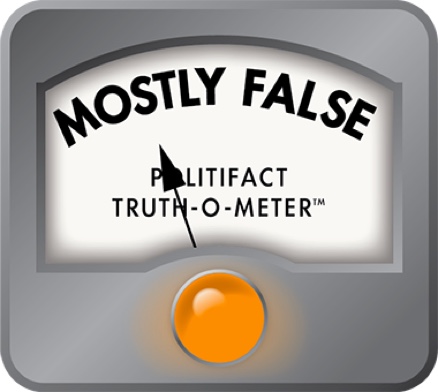
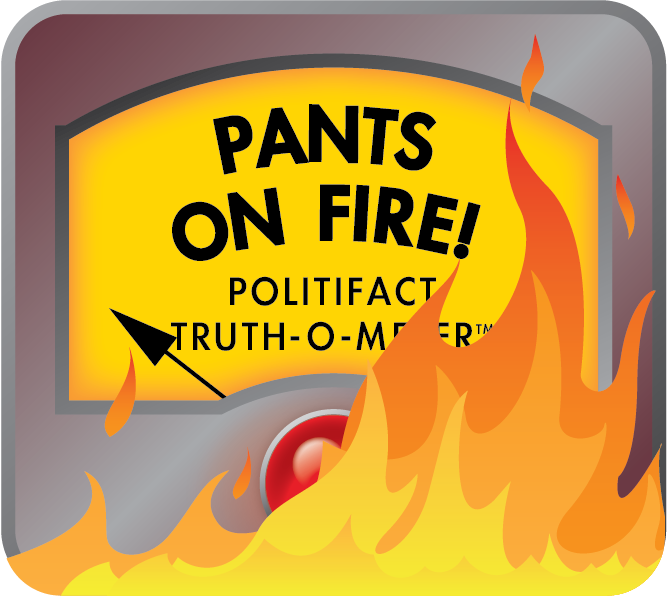
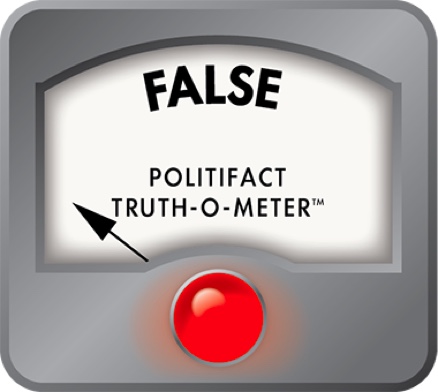
Under Shaheen’s energy legislation, states would be required to report whether they plan to meet the model building codes. Those states that agree to the standards and accept federal dollars would be subject to a certification process to ensure they meet the regulations. But there is nothing in the bill that requires states to take part, nor are there any penalties for non-compliance. The bill is voluntary, not mandatory. We rate Perry’s claim False.
Our Sources
Interview with Paul Young, spokesman for Texas Gov. Rick Perry, November 8, 2011
E-mail interview with Faryl Ury, spokeswoman for U.S. Senator Jeanne Shaheen, D-N.H., November 8, 2011
U.S. Senate Committee on Energy and Natural Resources, "The Energy Savings and Industrial Competitiveness Act of 2011," May 16, 2011
E-mail interview with Steve Nadel, executive director of the American Council for an Energy-Efficient Economy, November 9, 2011
Interview with Deborah Estes, senior council for the U.S. Senate Committee on Energy and Natural Resources, November 9, 2011
Interview with Lowell Ungar, director of policy for the Alliance to Save Energy, November 10, 2011
E-mail interview with Jeffrey Sadosky, spokesman for U.S. Senator Rob Portman, R-Ohio, November 14, 2011